A family heirloom bureau, and the envelope hidden inside it
A family heirloom, said to have been carried overseas before being handed down to our client's grandmother. The lid had broken off, several of the finer parts were broken or missing, and the whole piece was coated in years of grime and oil. It was to be used, not just displayed, so the work had to make it strong as well as presentable, and it needed to be cost-efficient. Partway through, the bureau gave up a secret: an old envelope of hand-painted feathers.
Piece
Antique slope-front bureau
Timbers
Flame mahogany veneer, beech and pitch pine repairs
Finish
Refinished, colour-matched and hard waxed
Completed
December 2024
01
As it arrived
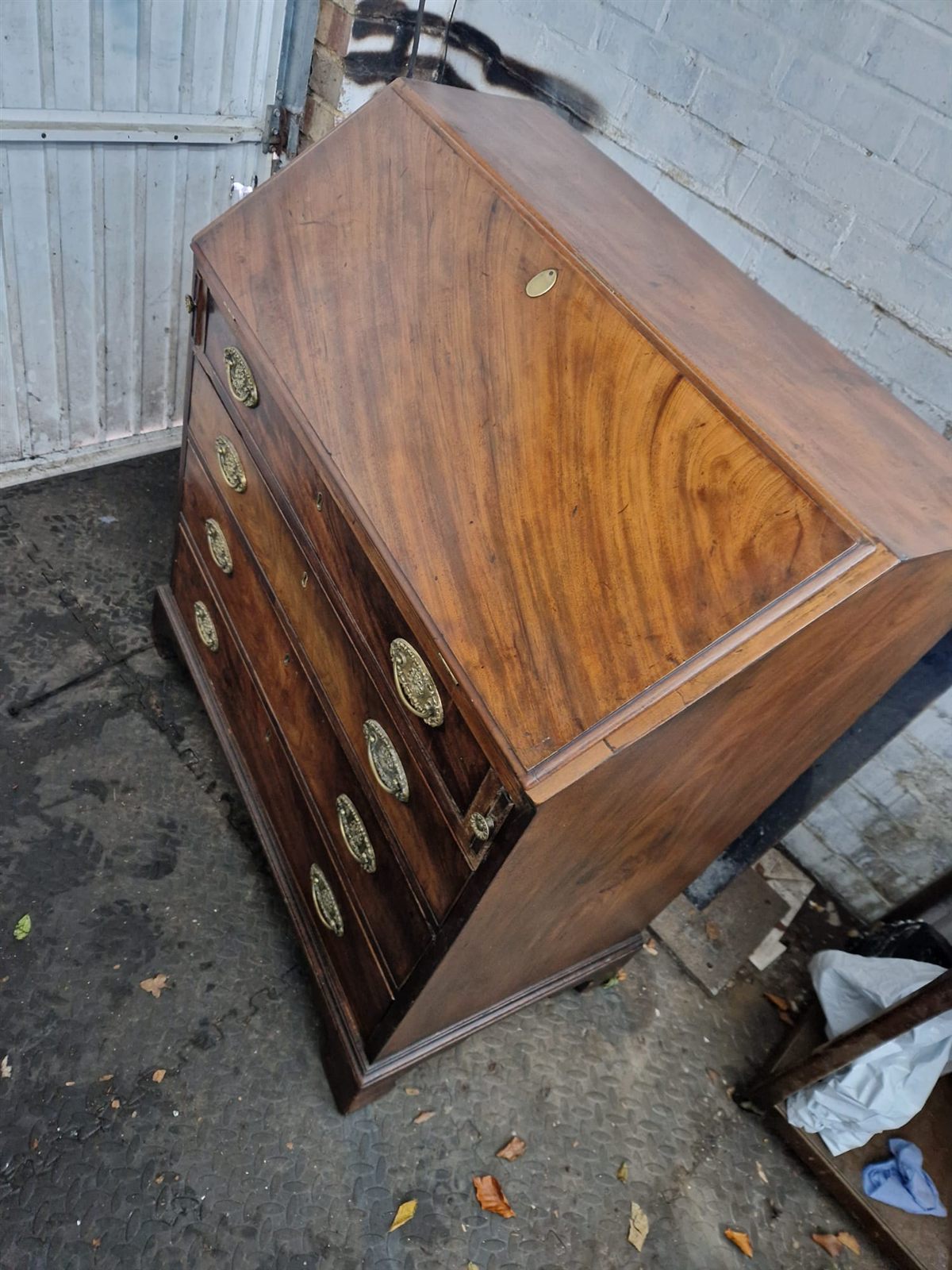
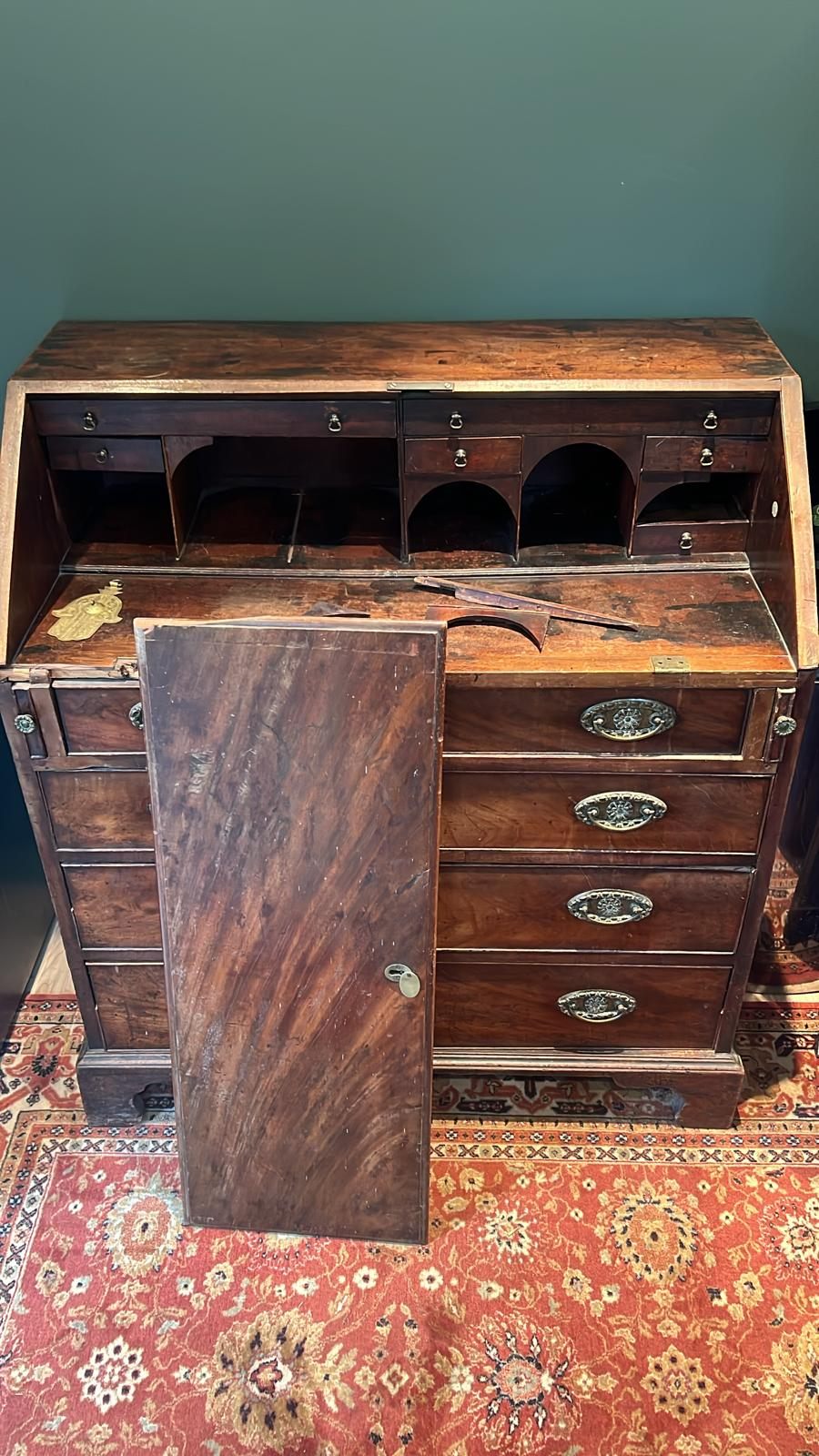
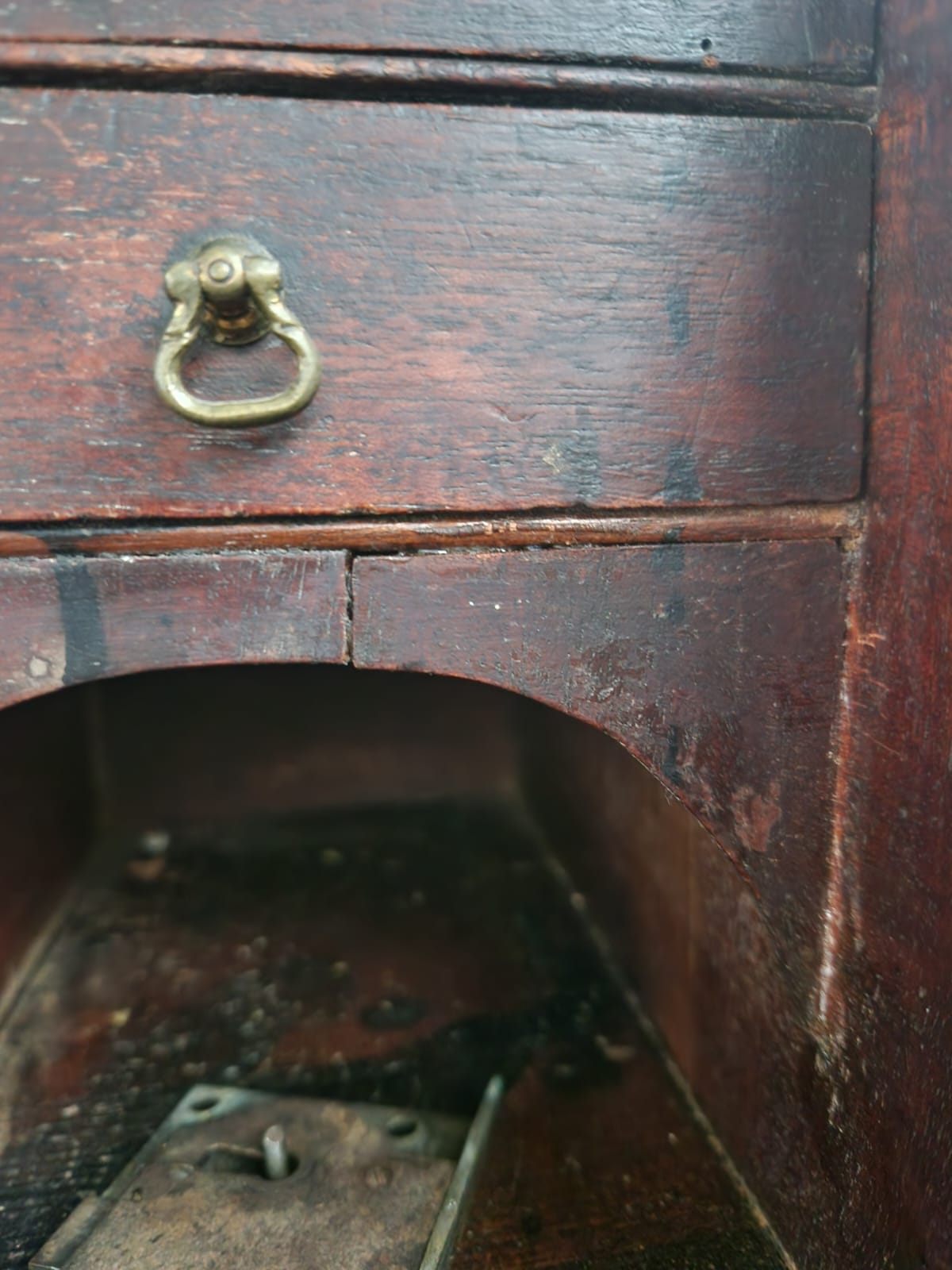
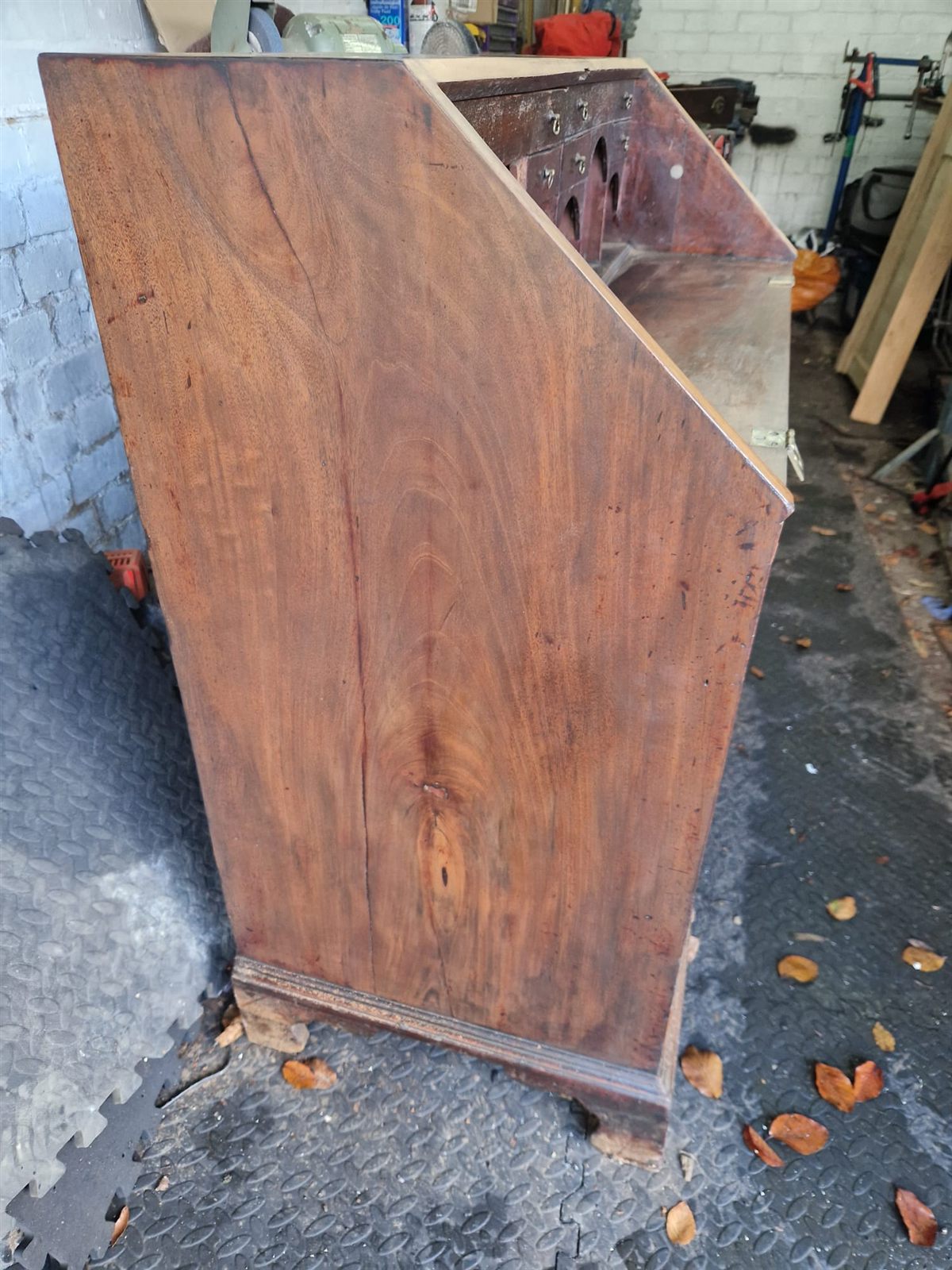
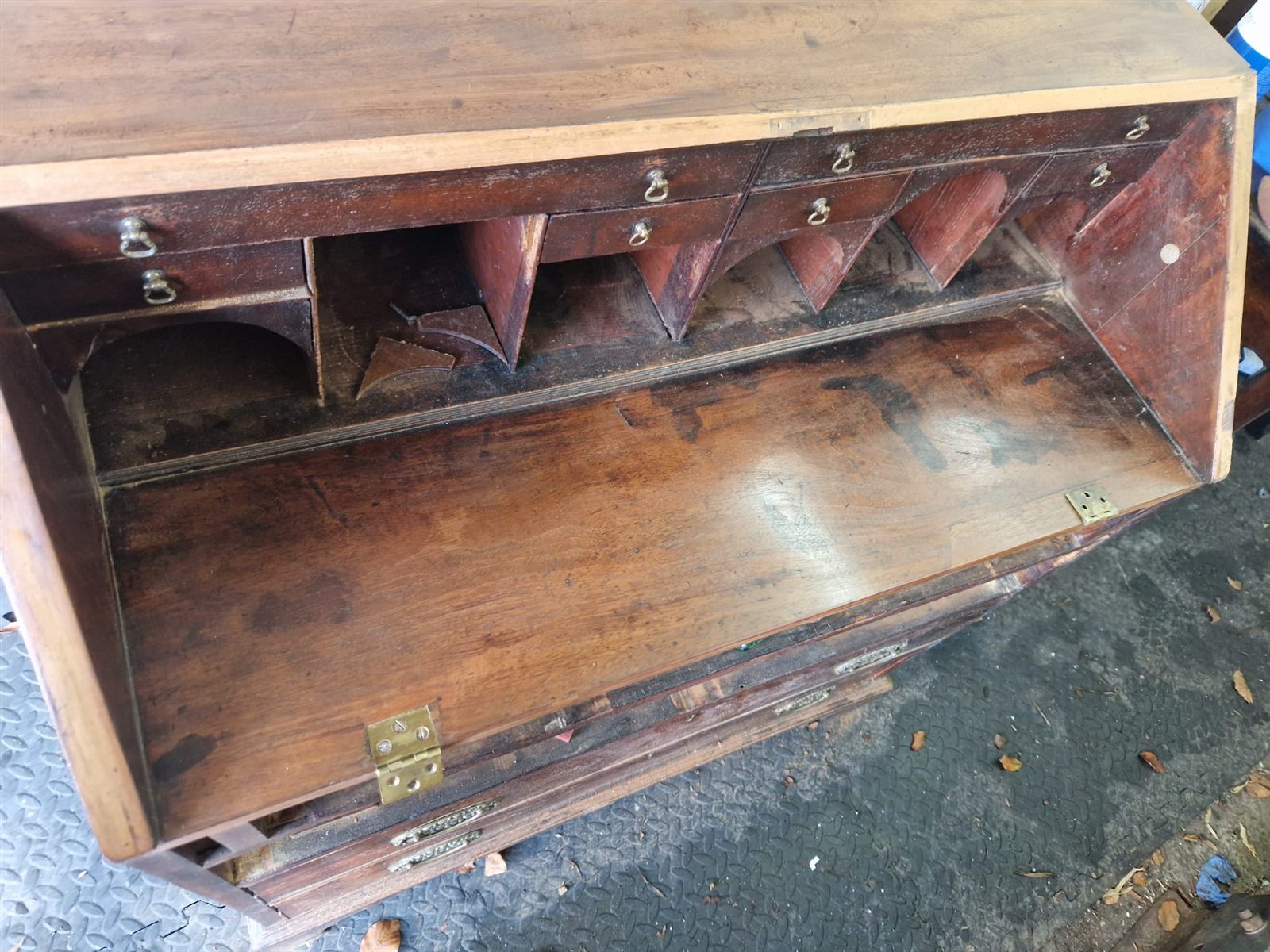
The lid had come away completely, and a number of the finer parts were broken or missing. Layers of grime and oil covered the timber, and a poor earlier repair on the left-hand side needed undoing.
There was significant warping and damage, including salt damage and water swelling, which fits with the family story of the bureau having travelled overseas.
Before, photographed by the clientThe lid had come away completely
02
The lid
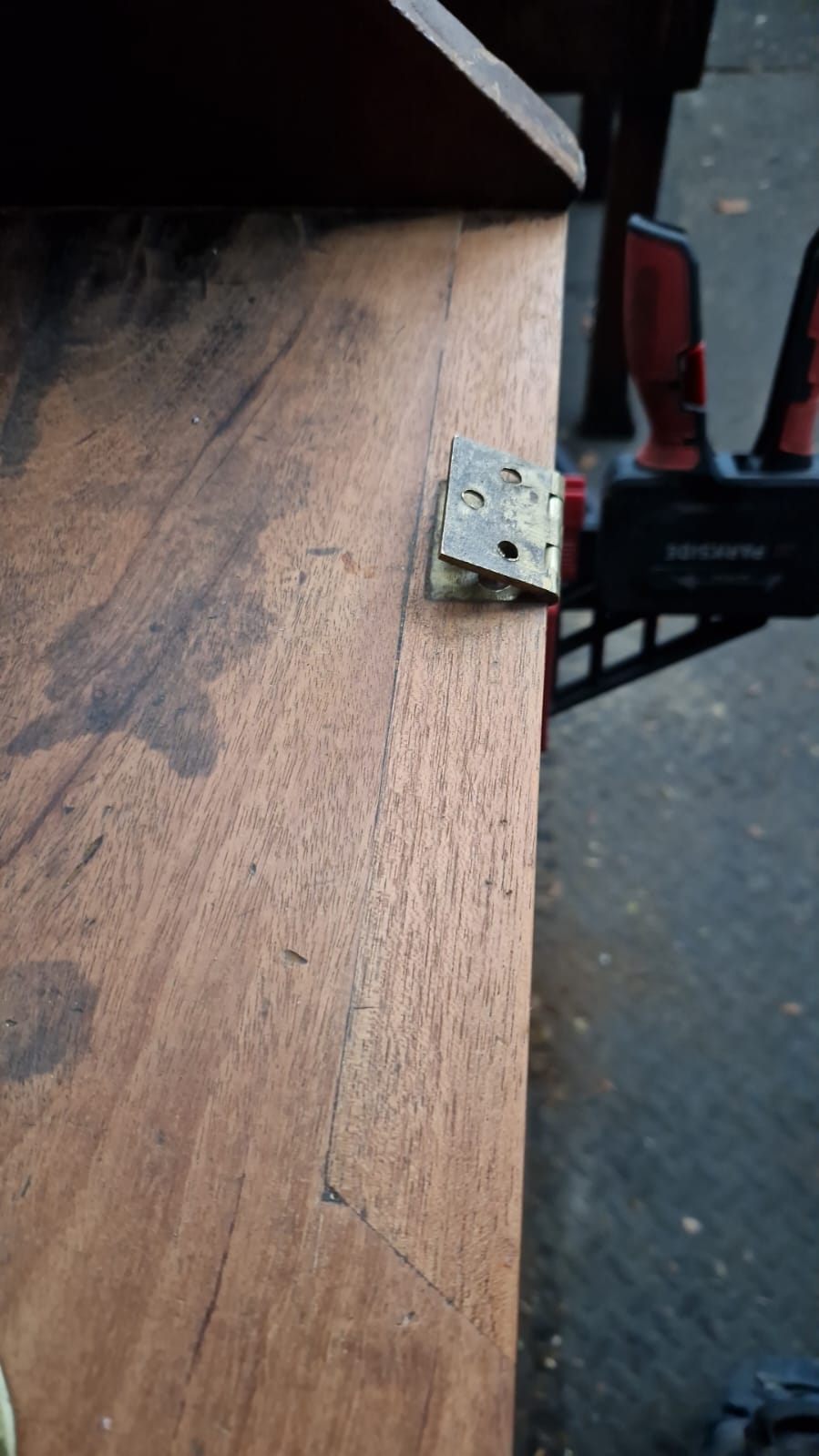
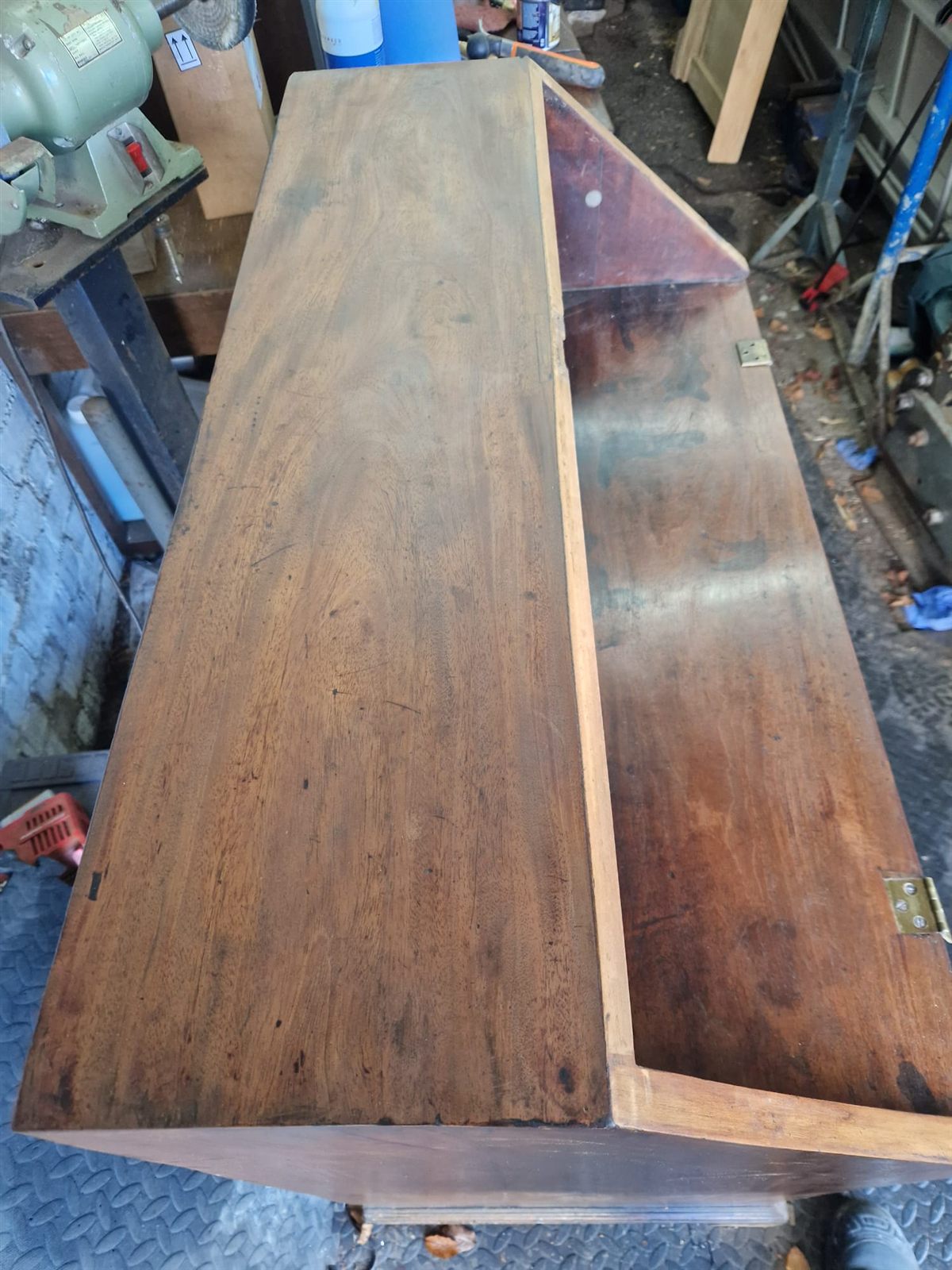
The lid had snapped where the hinge meets the writing surface, splitting right through and losing wood along the break. The missing wood was grafted back in, and the repair reinforced with strong steamed beech set underneath, out of sight, so the lid has the strength to be opened and leaned on every day without the repair showing.
The earlier repair on the other side was taken back and hidden as far as possible.
The major break, repairedAn earlier repair on the other side
03
A discovery
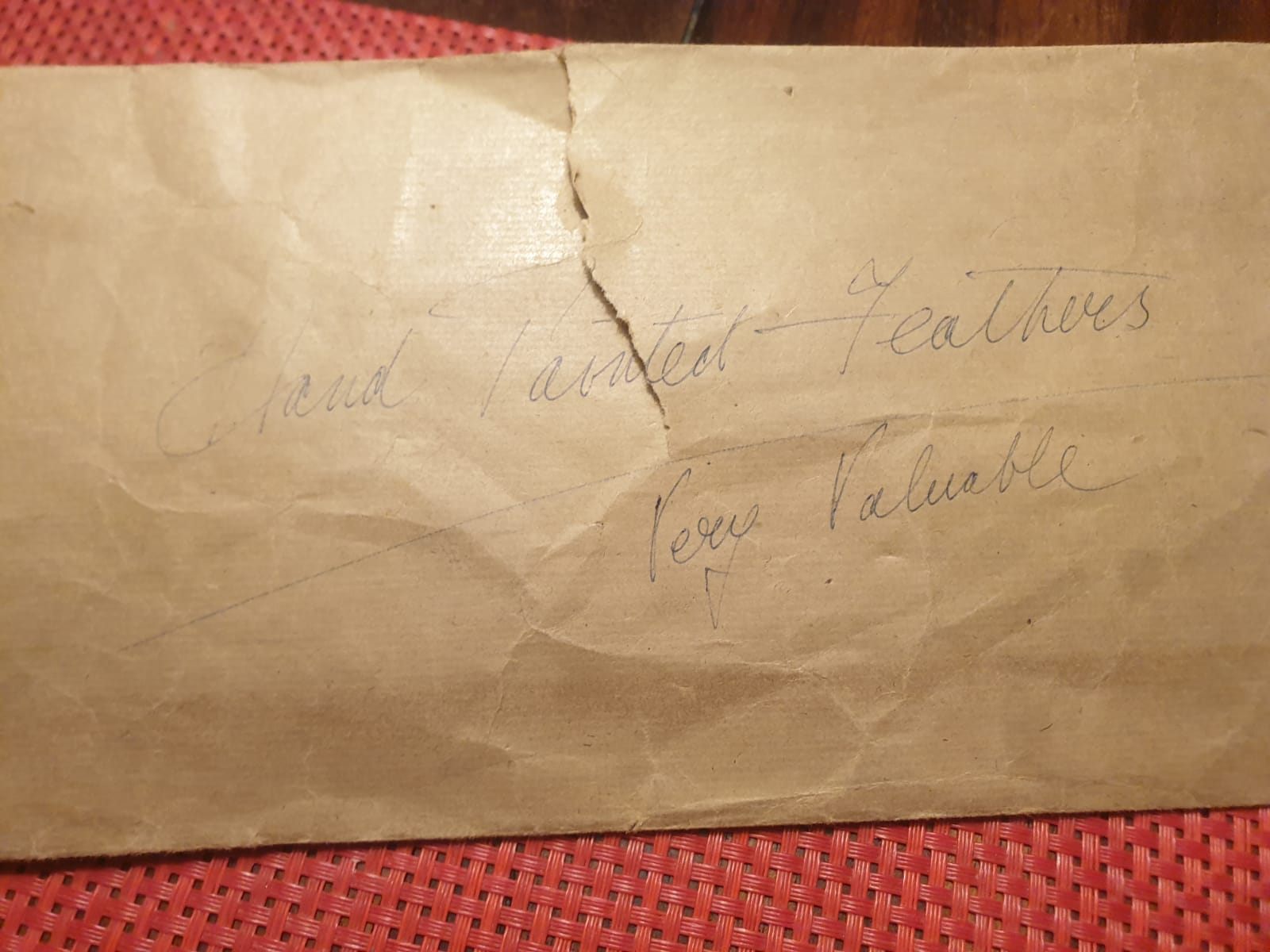
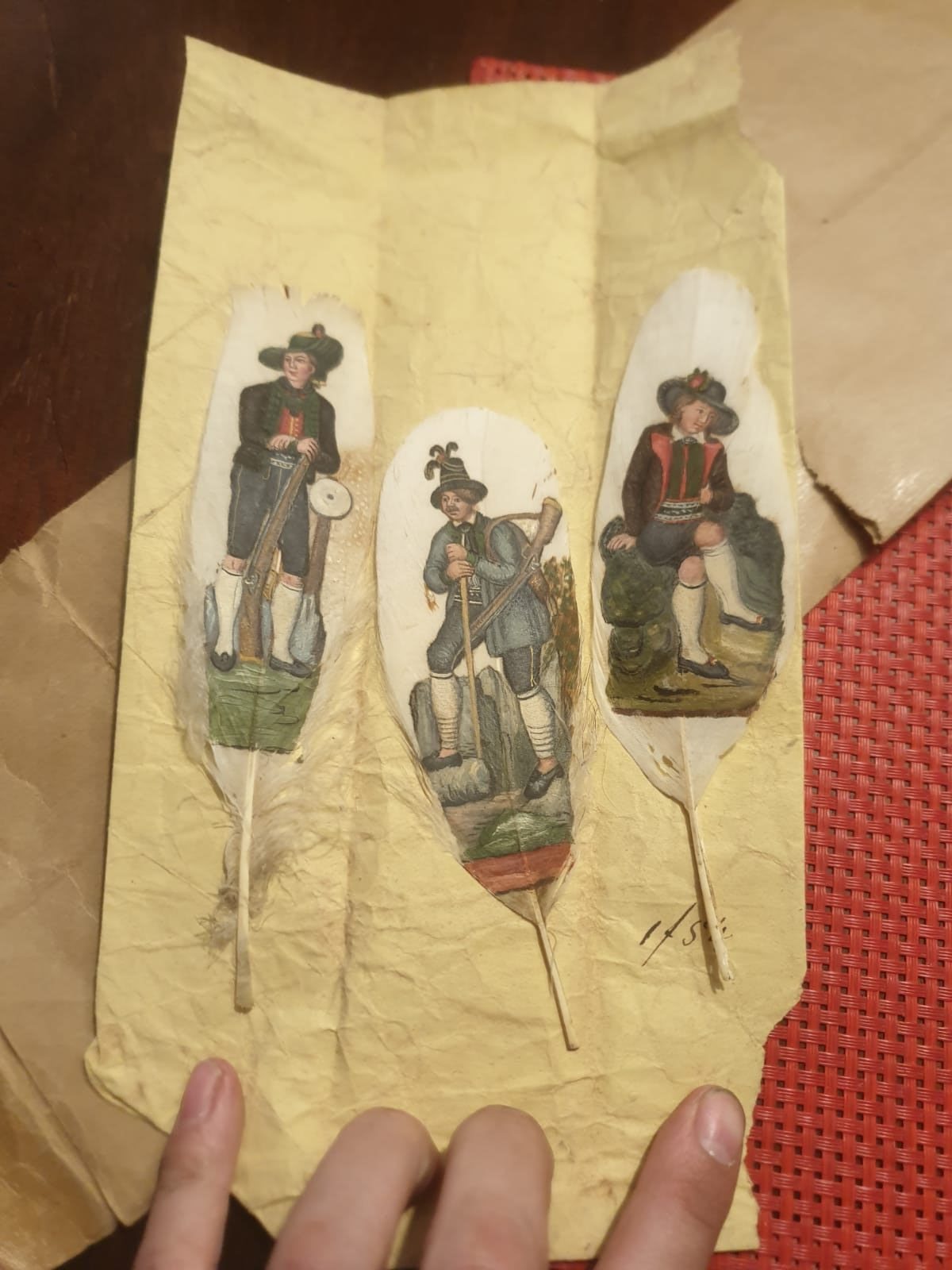
Wedged between the runners of the lid mechanism was a very old envelope, marked in pencil: "Hand Painted Feathers. Very Valuable." Inside, folded in paper, were three feathers, each painted in miniature with a figure in traditional dress. The client had no idea they were there, and they went straight back to the family.
The envelope, as foundThe three painted feathers
04
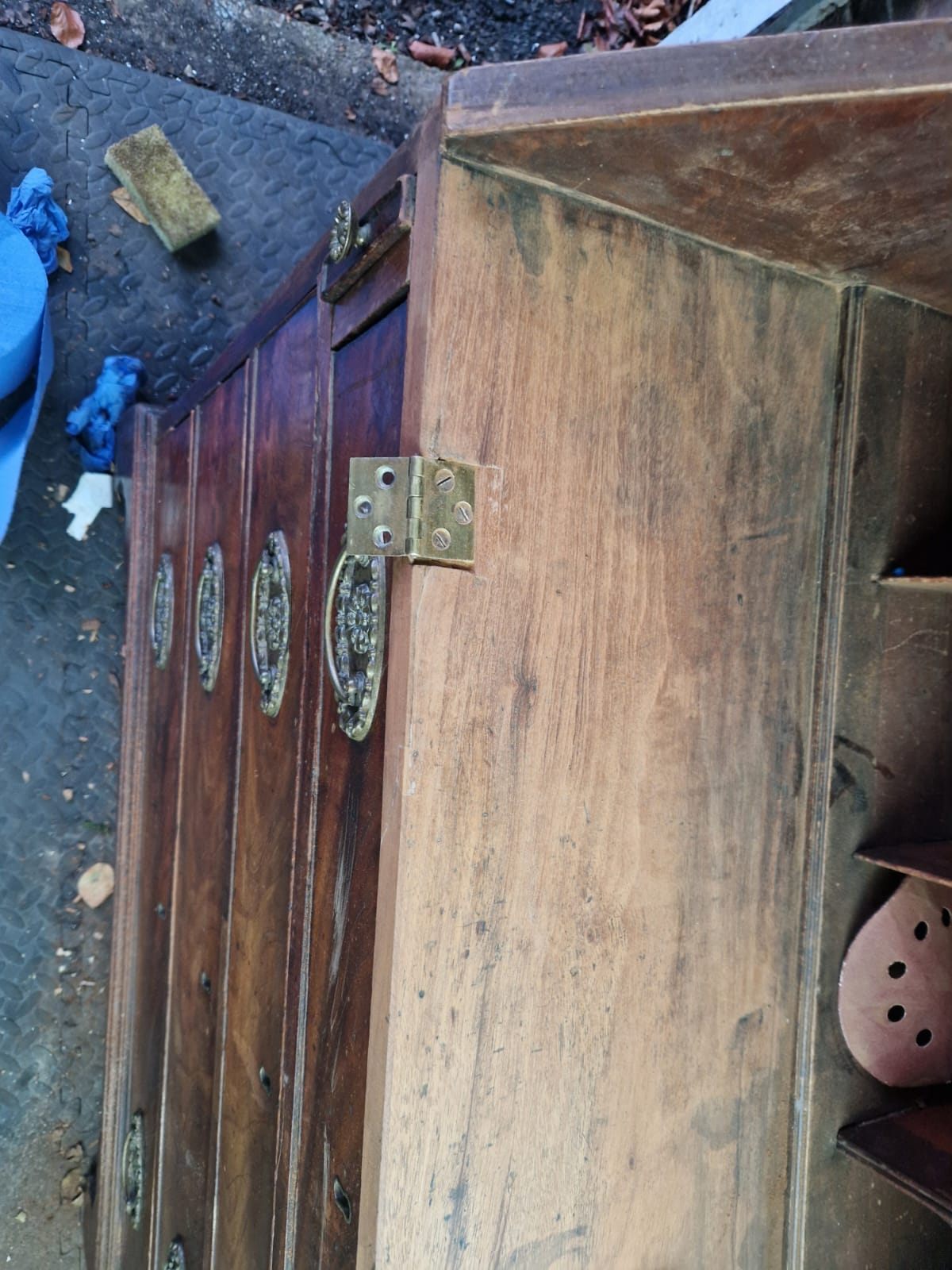
The brass
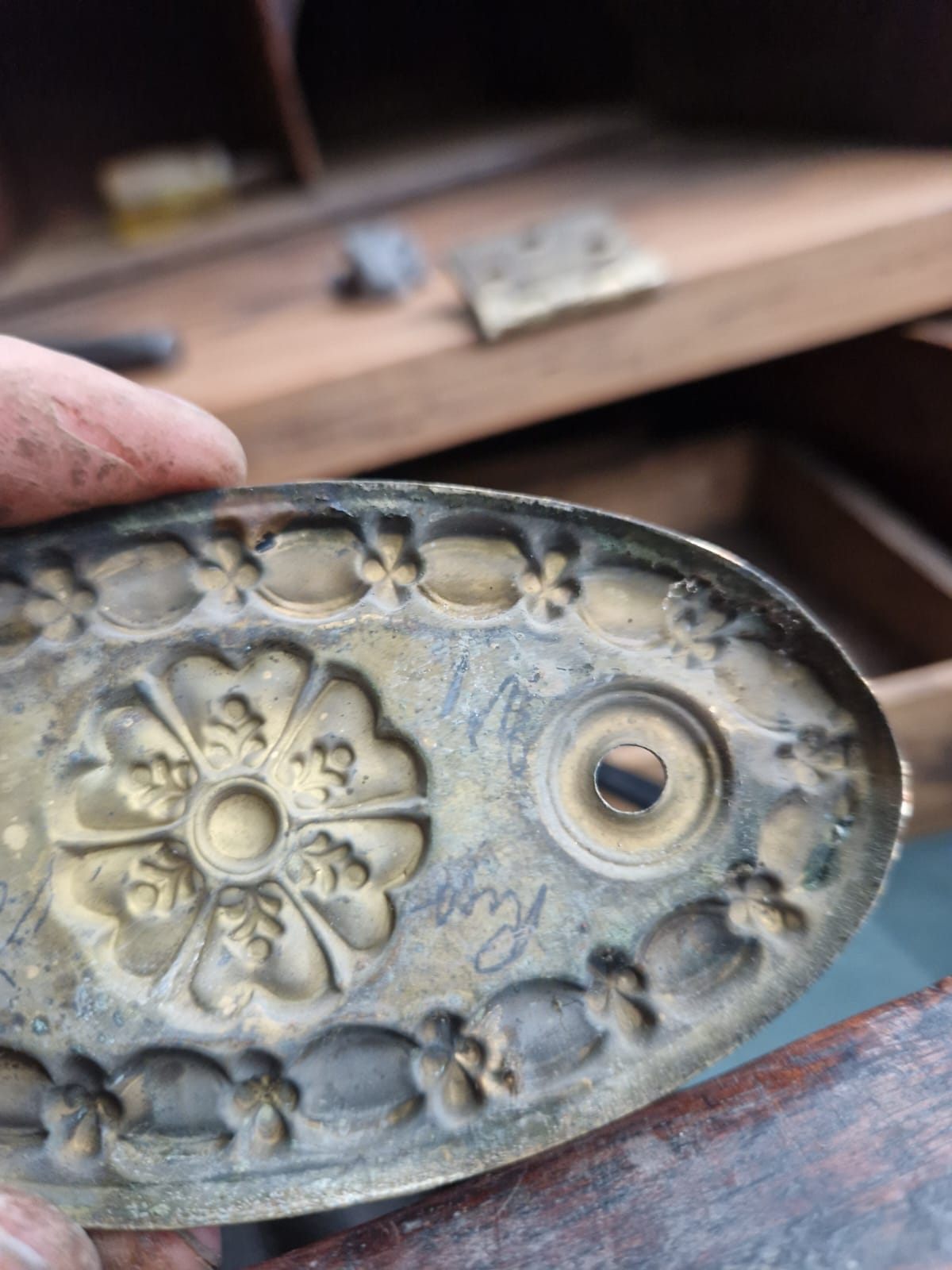
The brass handles and escutcheons are stamped, and were fixed with square Whitworth nuts. Even these weren't original, a sign of earlier work on the bureau. On the back of one handle we found faint signatures, sadly too worn to read.
Faint signatures on the back of a handle
05
Drawers and cubbies
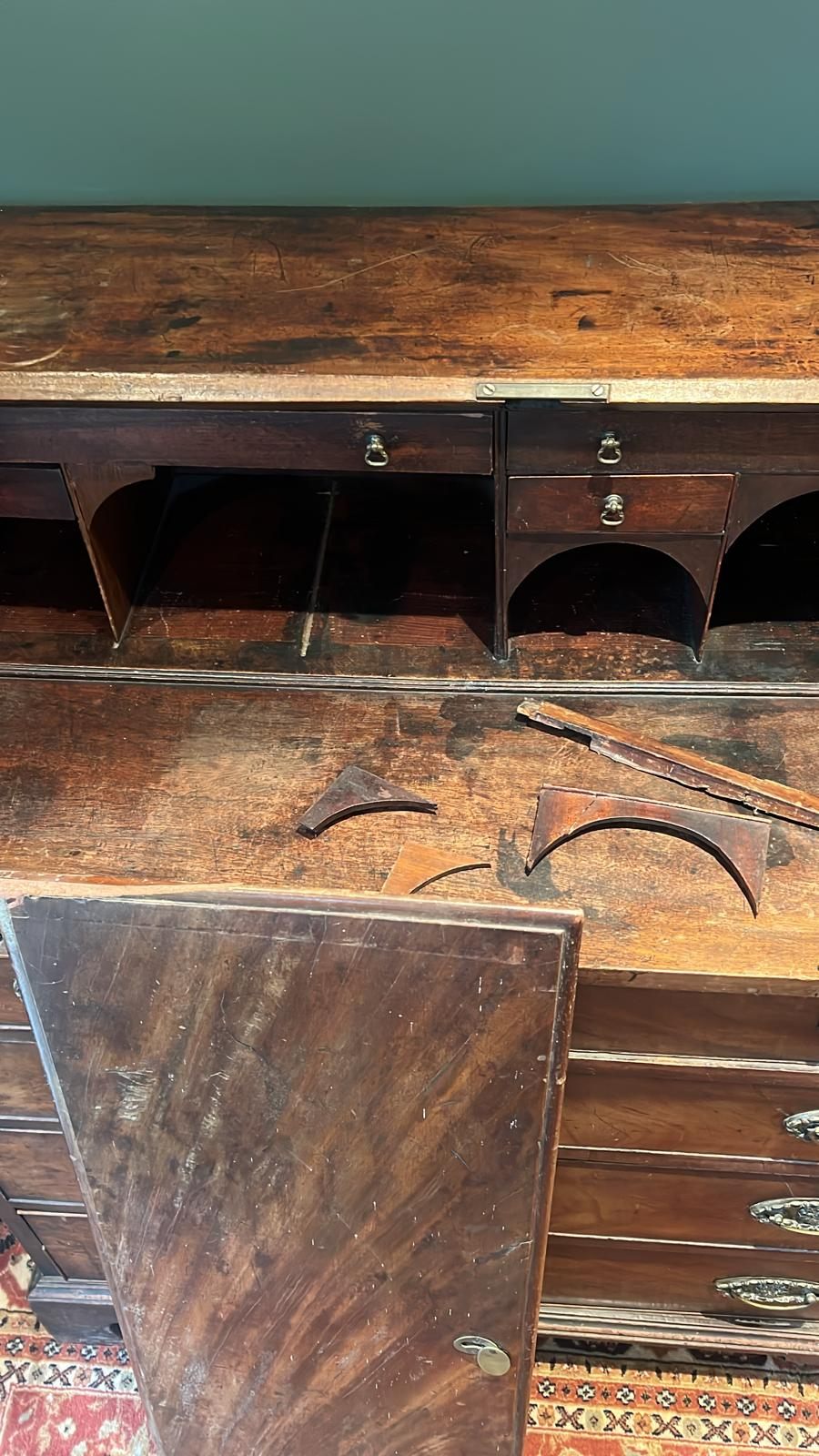
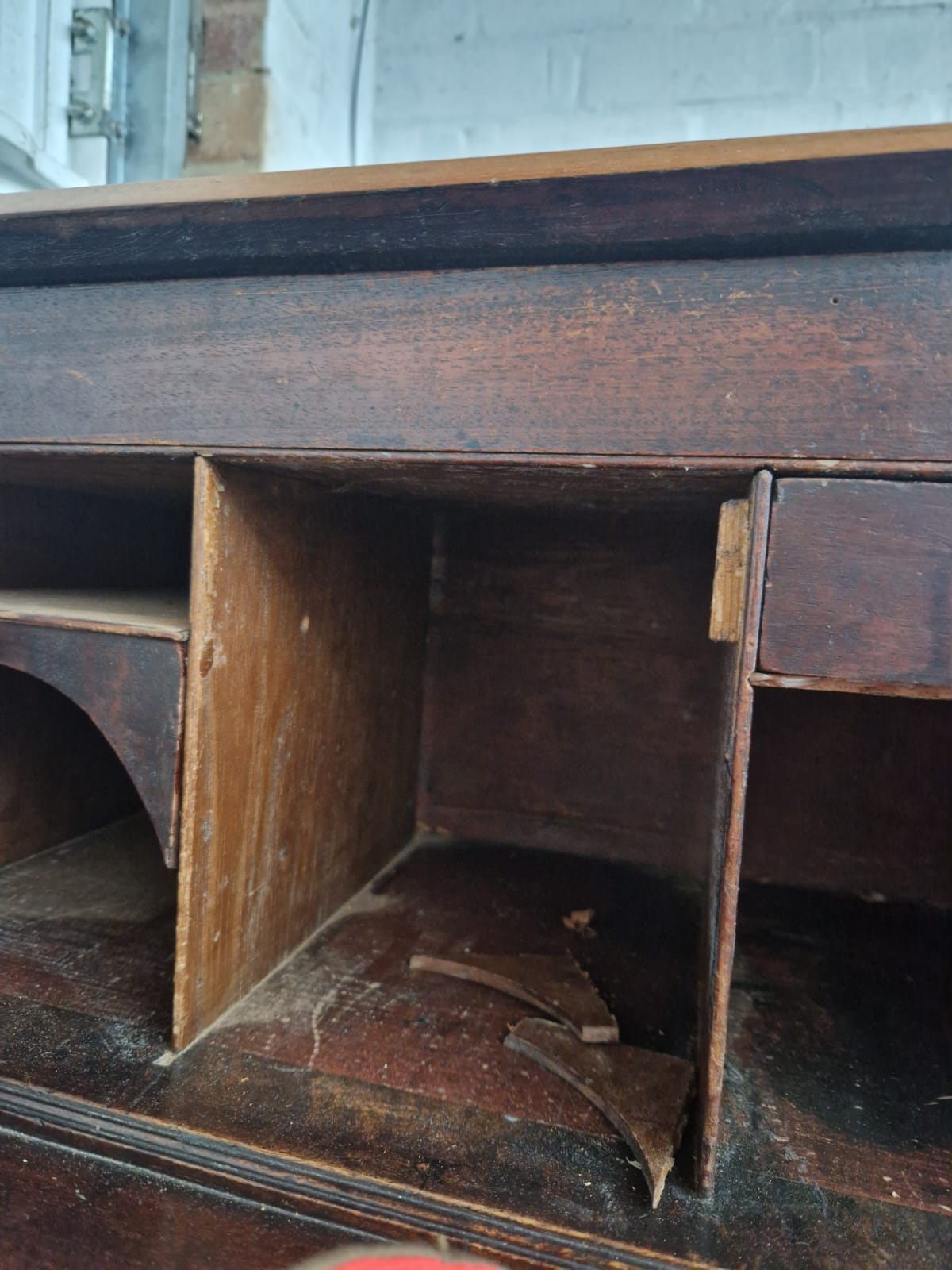
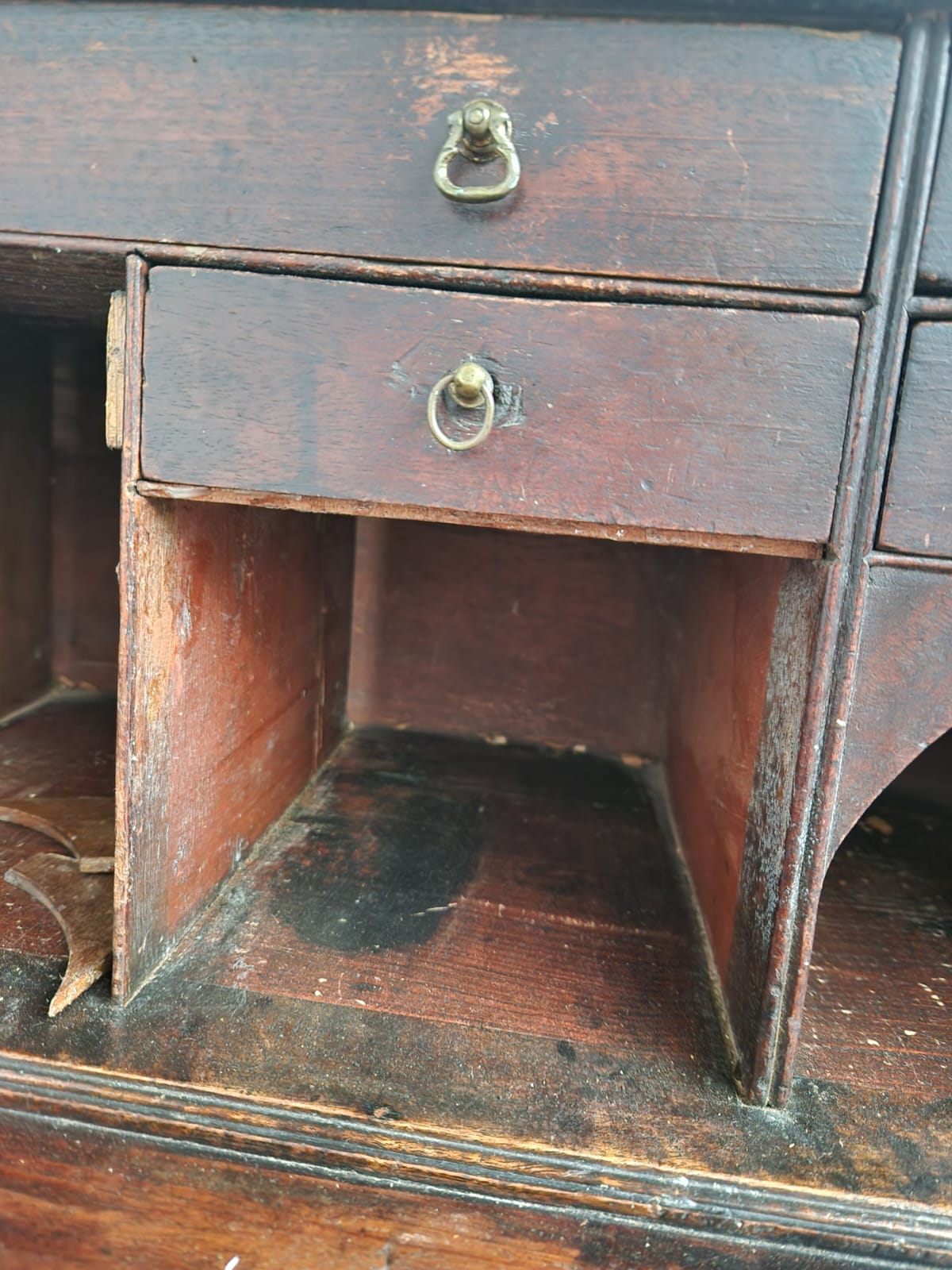
The drawer surrounds and the cubbyholes of the interior needed new wood, and two of the arches were missing altogether. Matching flame mahogany would have been out of proportion to the budget, so we used a combination of grafts taken from other pieces of furniture and pitch pine, stained and colour-matched to sit with the original. It makes for a strong, sympathetic repair.
As the work neared its end, we let the client know that the last few fine details would take the job over budget and weren't essential, and invited them to see the bureau before deciding. In the end the missing arches were made new, and a couple of the drawers were rebuilt to run properly again.
A missing archDamage to the cubbyholesMore of the interior needing new wood
06
Refinishing
Stripping back years of grime and old finish meant the bureau needed a complete recoat. Stains and colourings were used to bring the new work and the original back together into one antique finish, then the whole piece was hard waxed for a soft sheen.
The writing surface was treated differently. It carries a number of ink stains from the bureau's original use with quill and ink, so together with the client we agreed to strip it only lightly and keep that piece of its history.
Much of the veneer is cut to imperial thicknesses, far thicker than modern veneer, one of the clearest signs of the bureau's age.
Refinishing under wayThe interiorThe lid
07
Finished
Strong enough to be used again, with the repairs blended into the original and the character of an old, well-travelled piece kept.
New arches, and the ink stains kept on the writing surfaceFinished
08
Reading the bureau
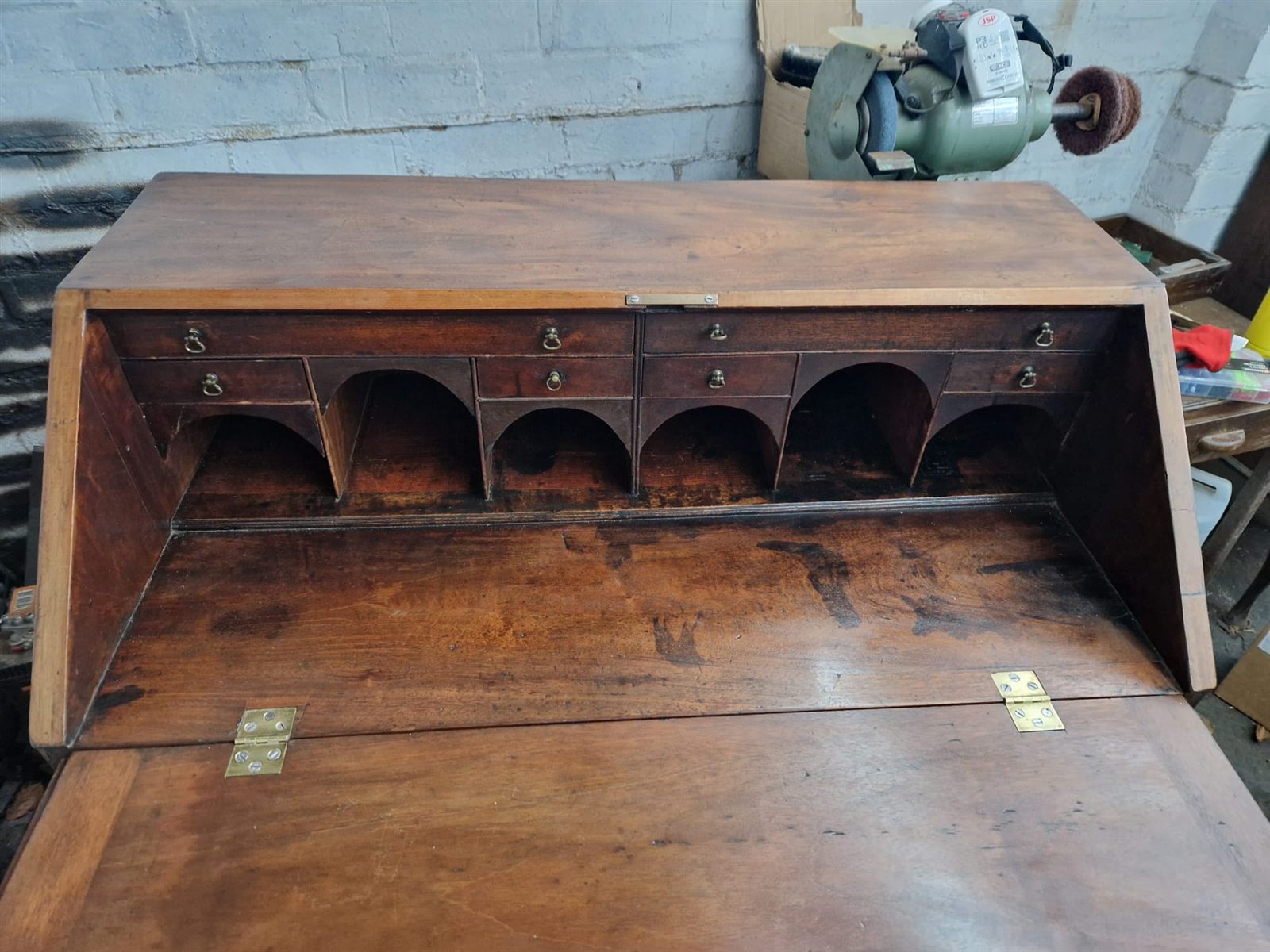
There's no maker's mark, but the bureau's form says a good deal. It is a classic Georgian slope-front writing bureau: a fall front that rests on two lopers, the sliding supports either side of the top drawer; an interior fitted with small drawers and arched pigeonholes; and four long graduated drawers on a moulded base with bracket feet. Mahogany bureaux of this pattern were made through the second half of the 18th century and into the early 19th.
With its replaced brass, the imperial-thickness veneer and a writing surface worn and ink-stained from use, everything points to a bureau with a long working life behind it, though without a mark or label, a firm date isn't possible.
Lopers, fitted interior, graduated drawers and bracket feet
Sources: Museum of the Home collections (English mahogany bureau, c.1790); auction and dealer records for comparable Georgian mahogany bureaux.
09
The painted feathers
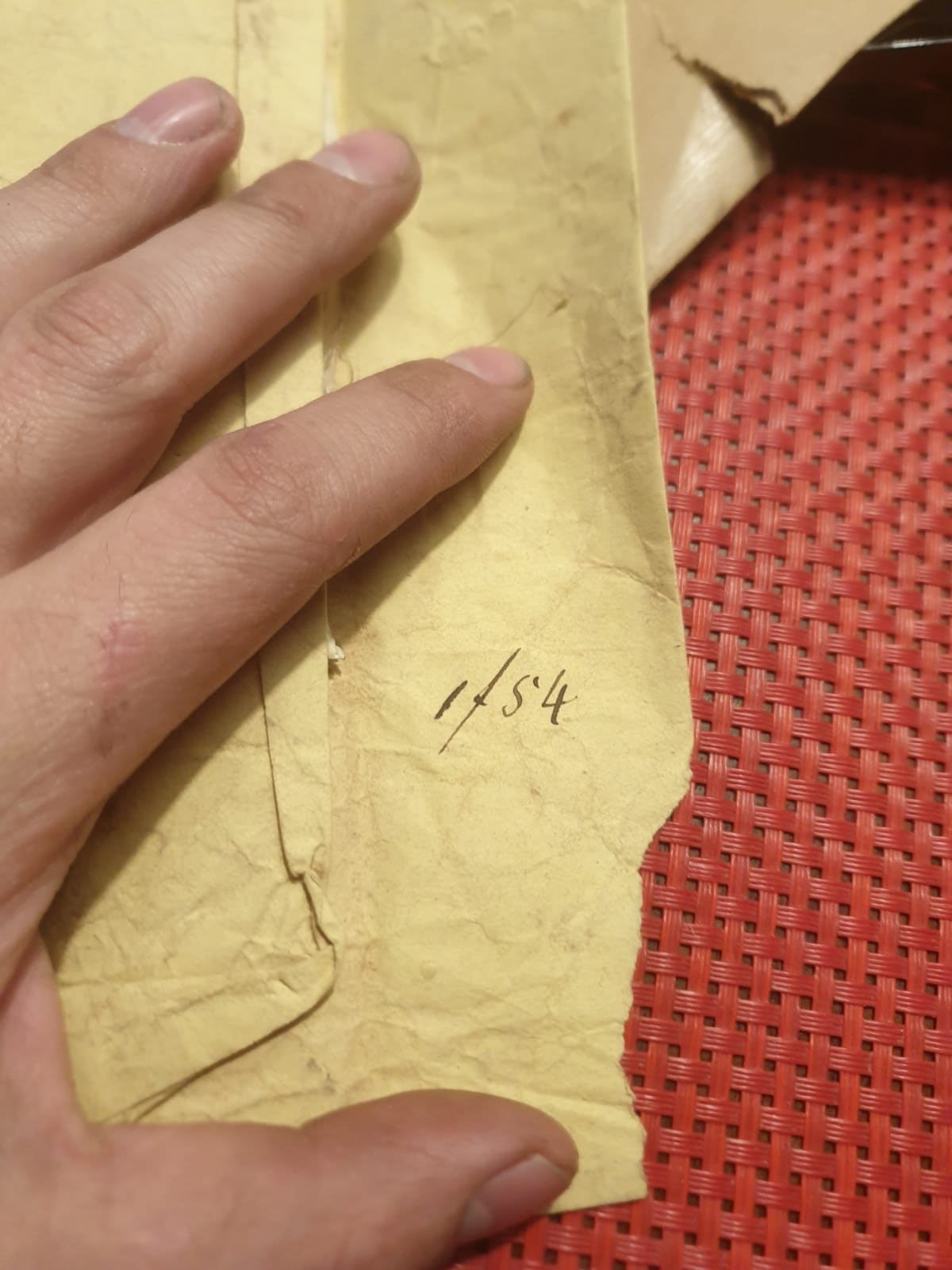
Each feather carries a figure in Alpine dress of the kind associated with the Tyrol: broad hats trimmed with feathers, short jackets, knee breeches and white stockings. One man leans on a long gun beside a round shooting target, a nod to the target-shooting tradition of the Alpine marksmen's clubs; another carries a horn and a staff; the third sits on a rock. The paper they were wrapped in is marked "1854". If that is the date they were painted or packed away, the feathers are over 170 years old.
That would sit comfortably with the craft itself: painting in miniature on feathers was a recognised keepsake in the 19th century. It is often linked with sailors, who painted feathers on long voyages to bring home: Swansea Museum holds one painted around 1898 by a sea captain for his wife, showing the Swansea church where they may have married. Given the Alpine subjects, these three are perhaps more likely to be a souvenir of travel in the Alps. Who painted them, and how they came to be hidden in the bureau, remains a mystery.
1854, written on the wrapping paper
Sources: Swansea Museum, painted feather by Capt. Will Nelson, c.1898 (SMMI 7646.3), via People's Collection Wales.