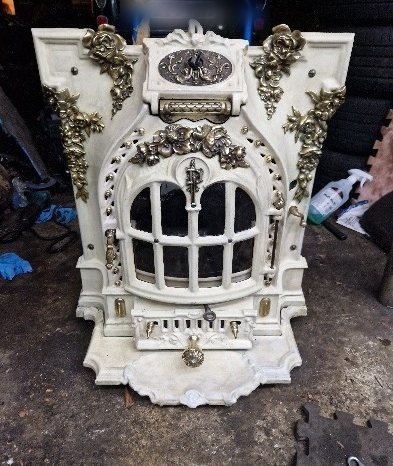
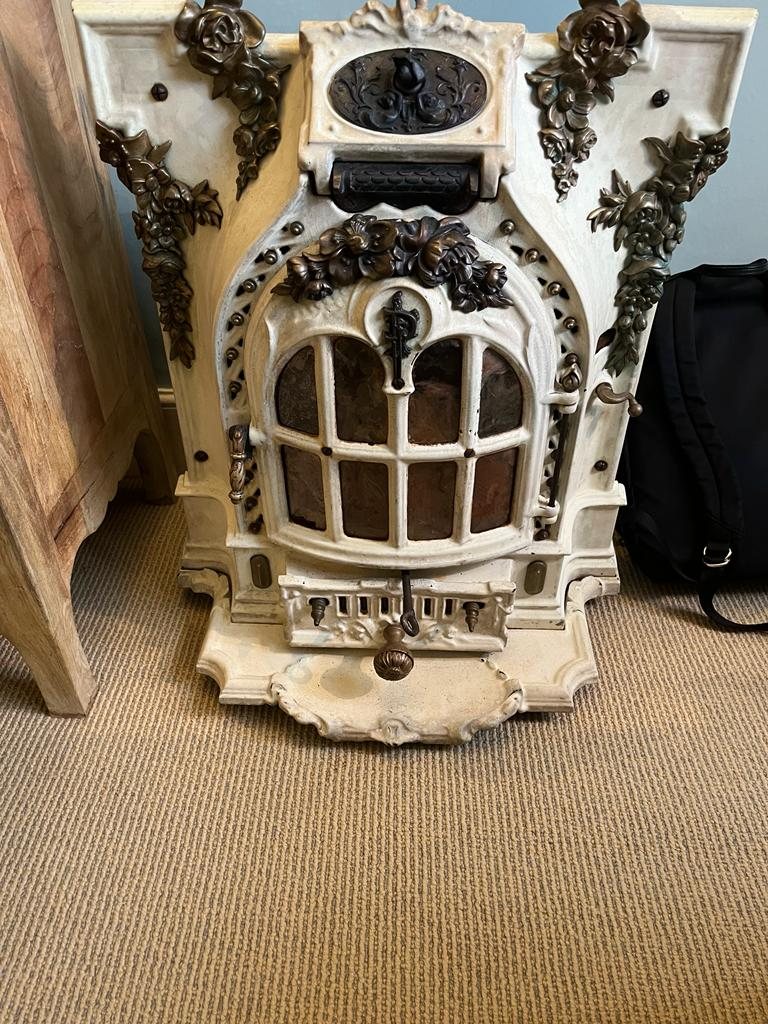
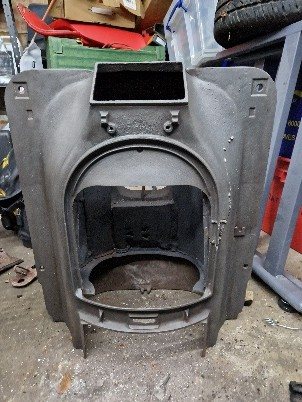
French cast iron fireplace, made between 1923 and 1925
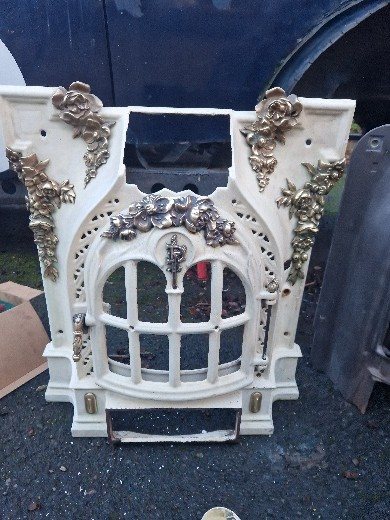
A Deville DPF 600 from the 1920s, ordered from France in raw cast iron and enamelled white in the UK. It came in for a day of cleaning and touch-ups; once it was apart, it needed a full restoration.
Maker
Deville & Cie, Charleville
Date
1923–1925
Finish
Baked white enamel, applied in the UK
Labour
Four days hands-on, plus treatment time
01
The assessment
The fireplace came in needing rust removal, disassembly, cleaning, polishing and touch-ups, estimated at a single day's work.
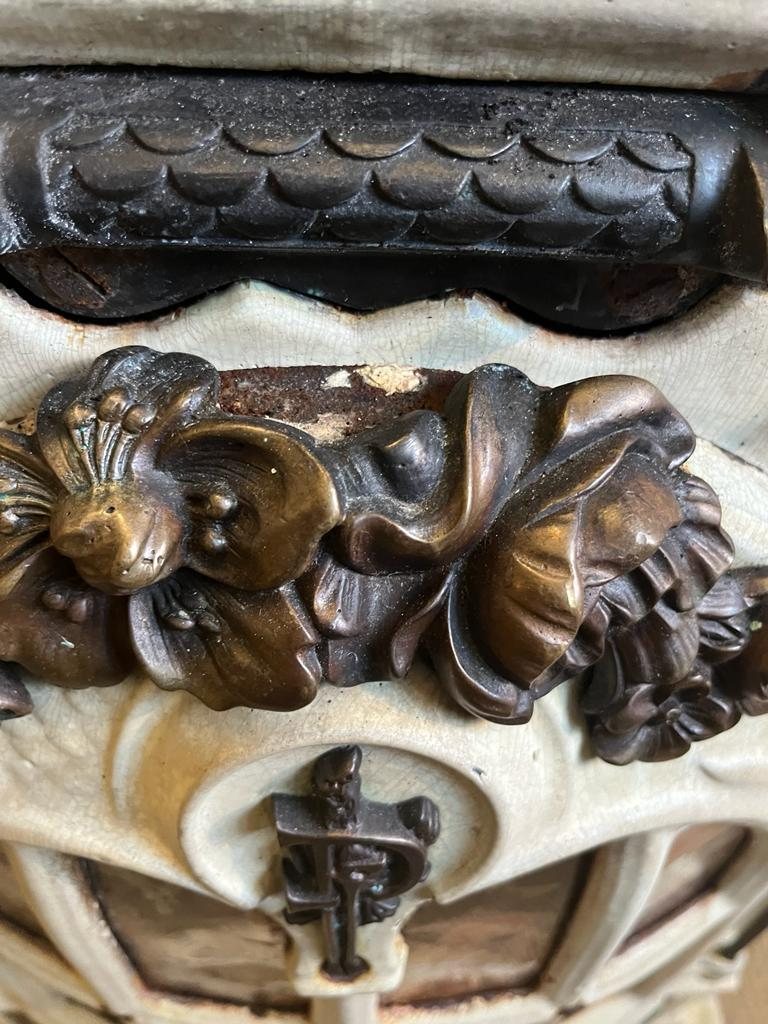
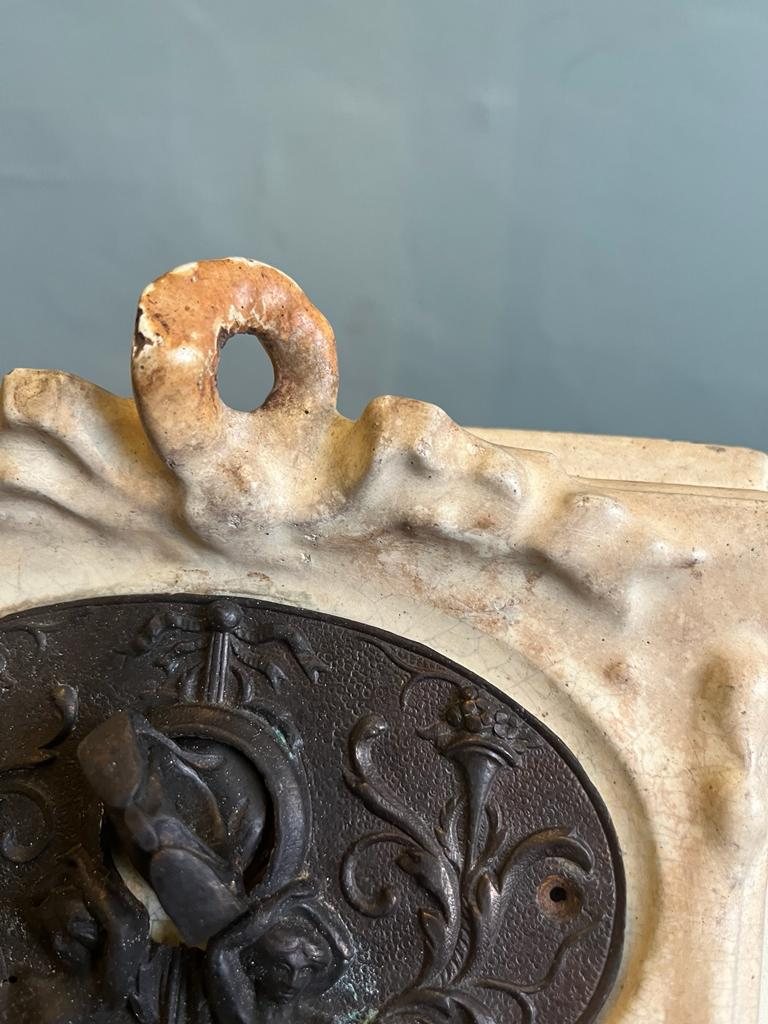
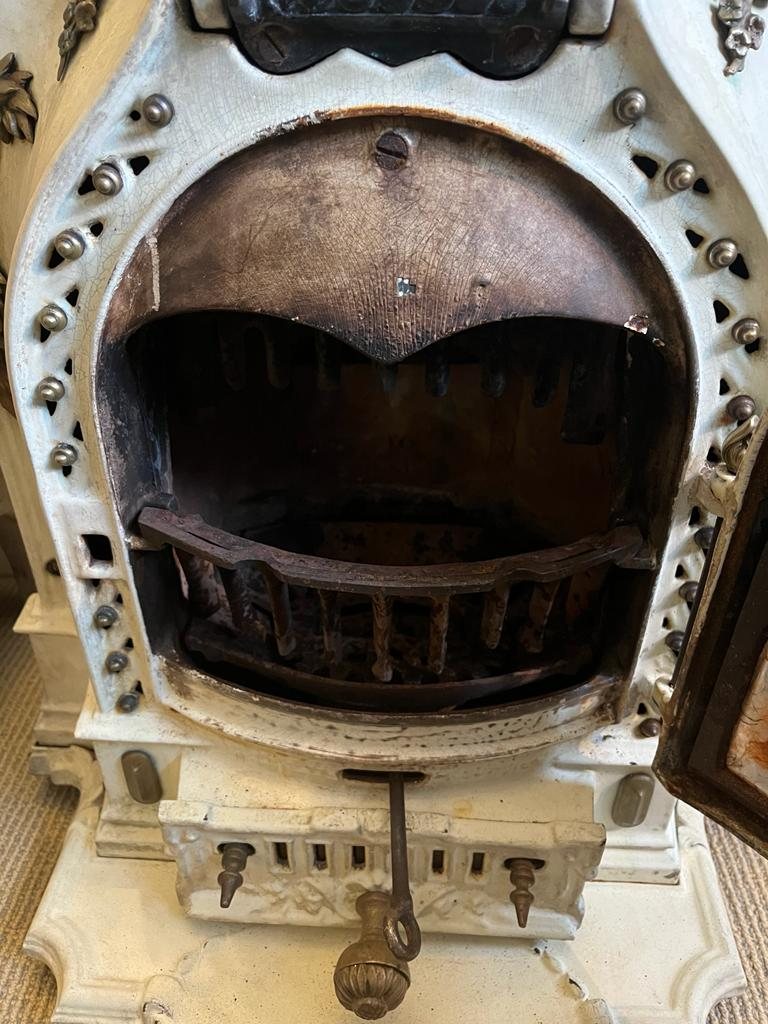
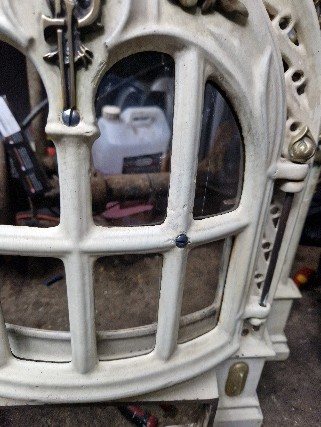
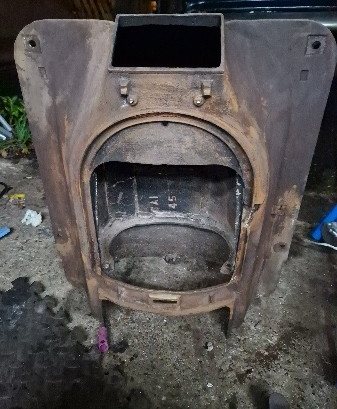
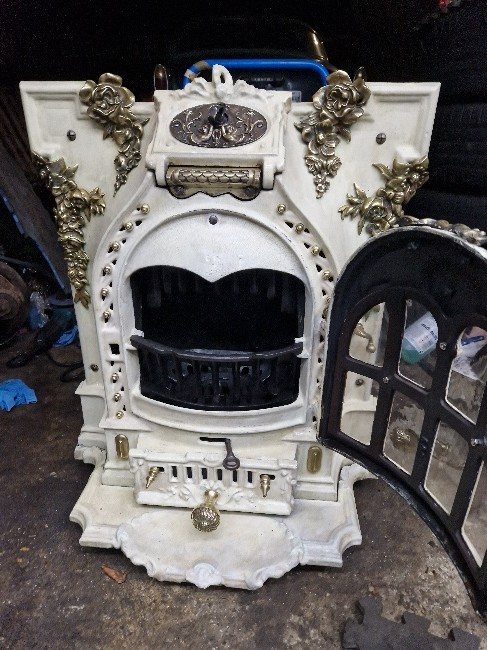
As it arrived, the enamel was crazed and chipped in places, the brass had darkened, and rust was coming through around the edges.
As it arrived
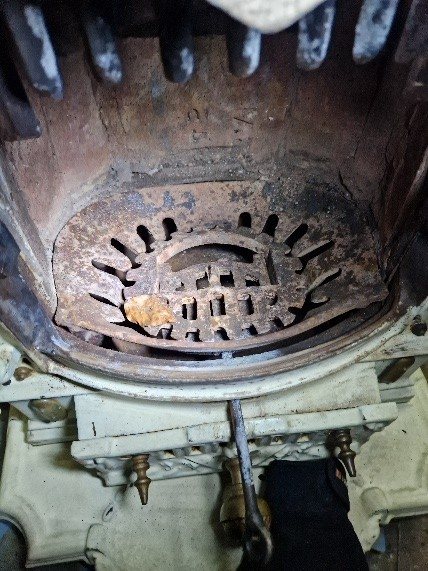
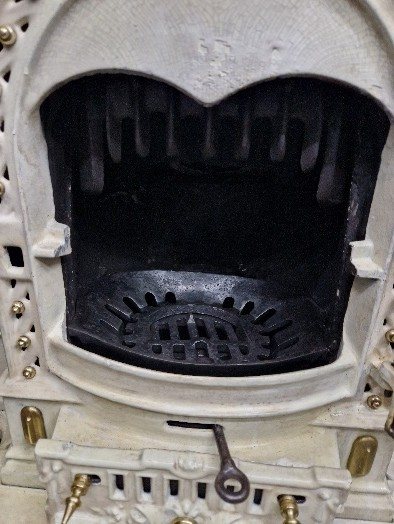
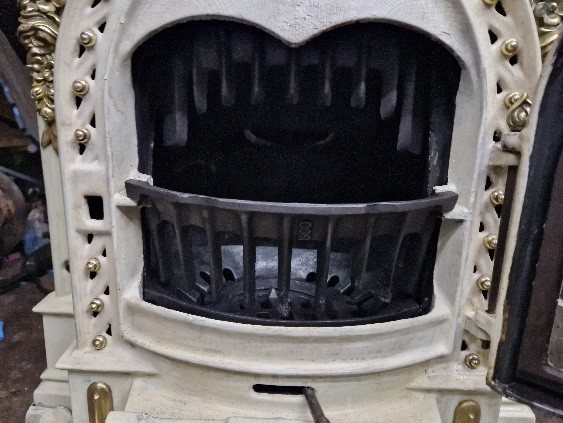
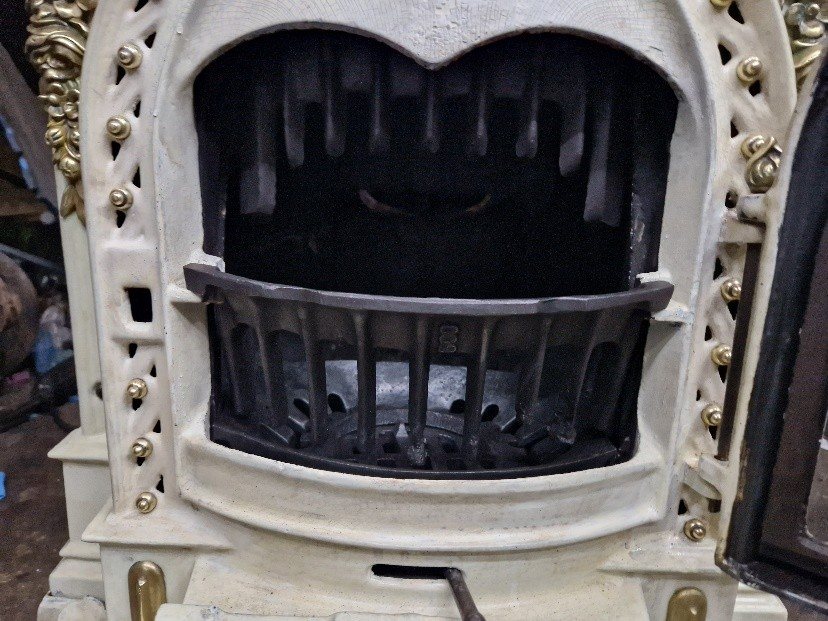
Darkened brass and crazed enamelRust staining on the topThe firebox and grate
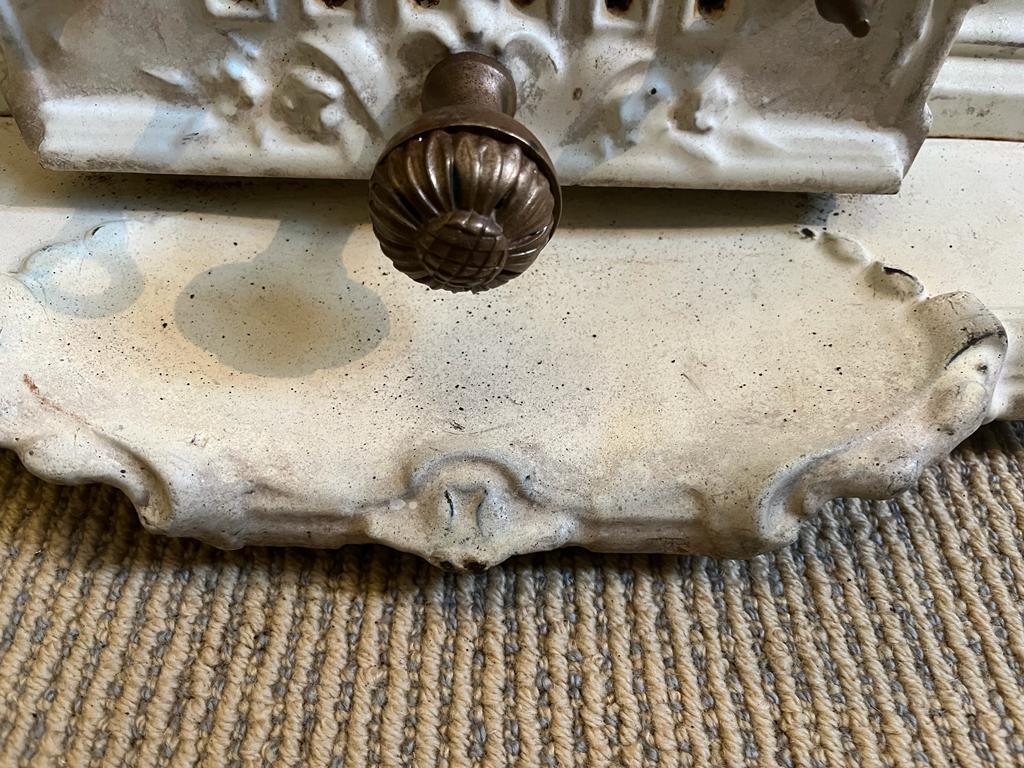
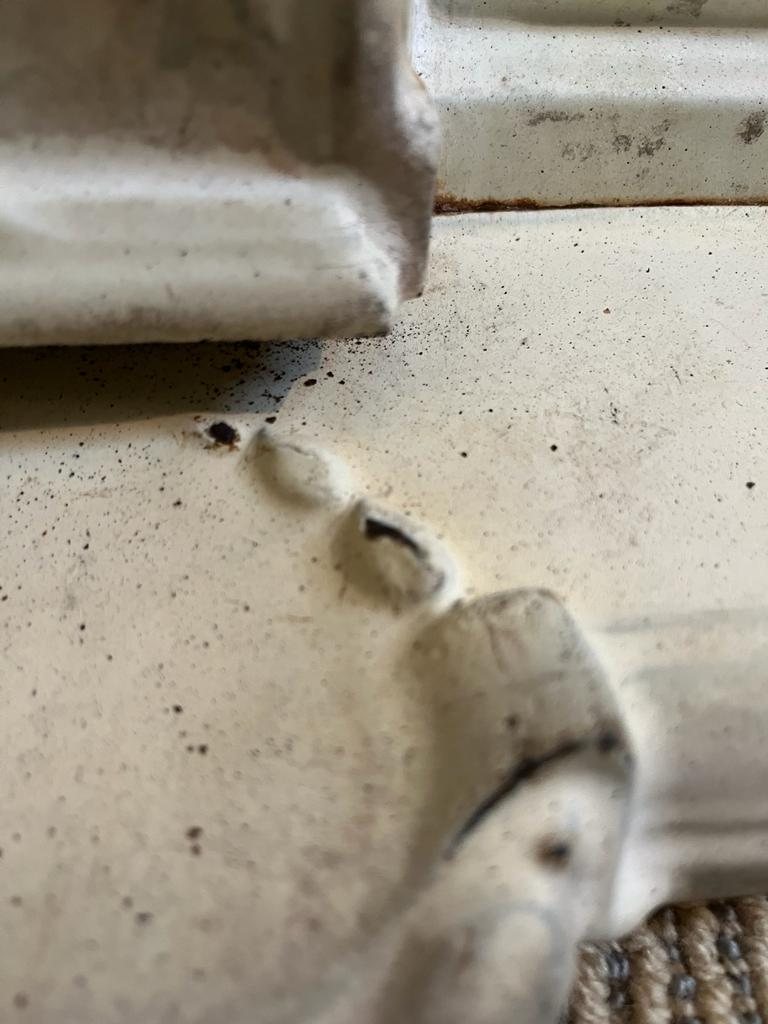
Chipped enamel on the hearth plateChips and wear to the base
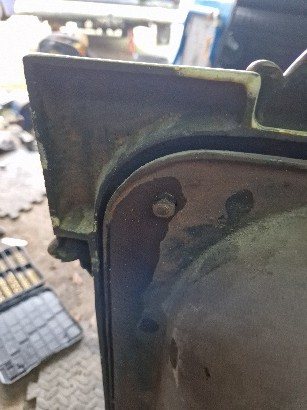
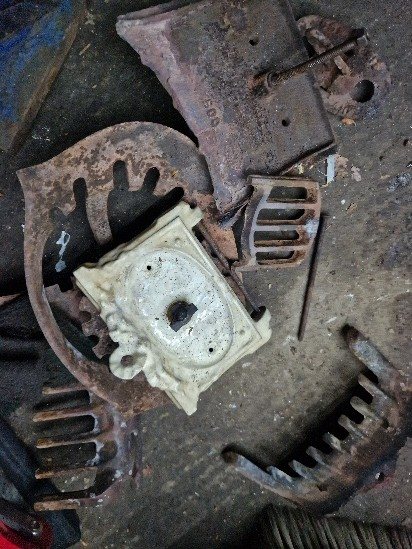
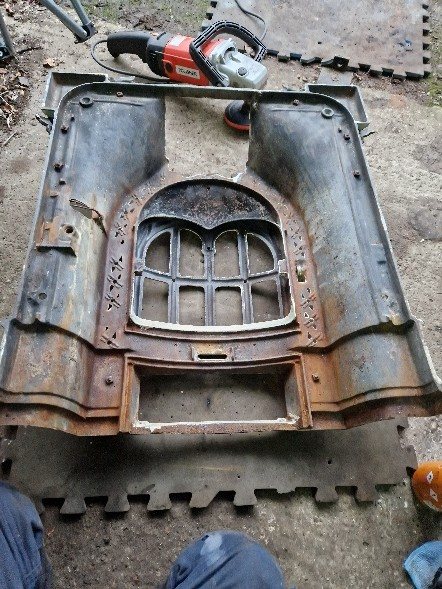
Once work began, it was quickly clear the rust was far more extensive than it looked and had compromised the integrity of most of the hardware. Every bolt was soaked in penetrating fluid for 24 hours to give it the best possible chance of coming out.
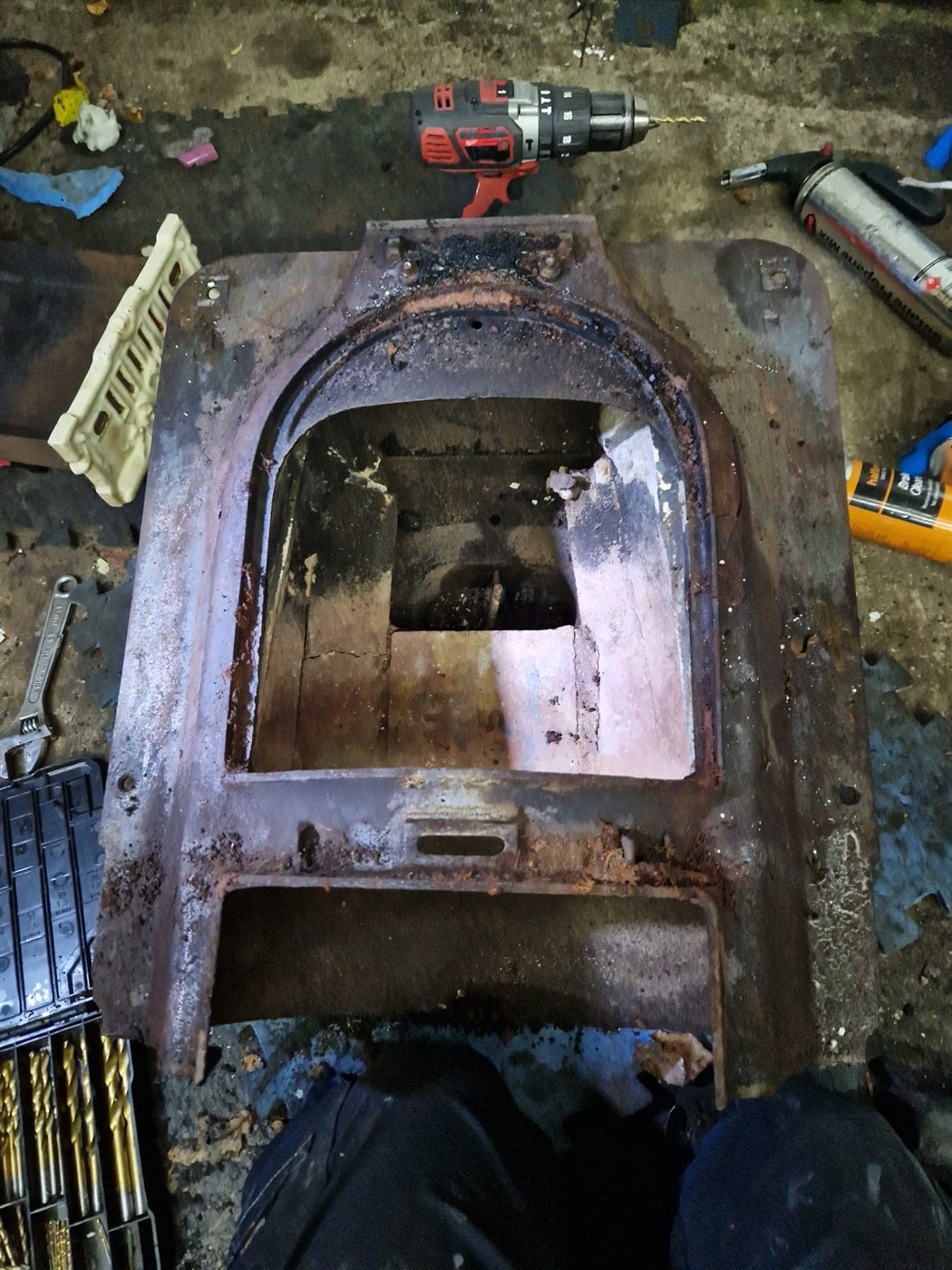
The body once stripped downRust on the original fixings
02
Dismantling
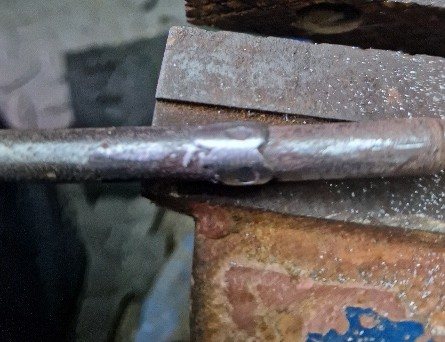
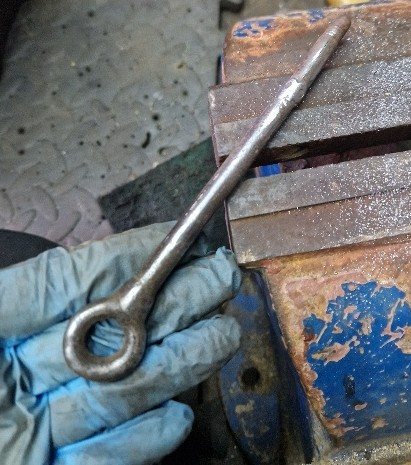
Despite a careful approach, every bolt sheared on removal, along with the fire basket handle. The handle was welded and repaired, and period-correct fasteners were made to order to replace the originals.
The snapped fire basket handle, weldedThe handle back in one piece
03
The enamel
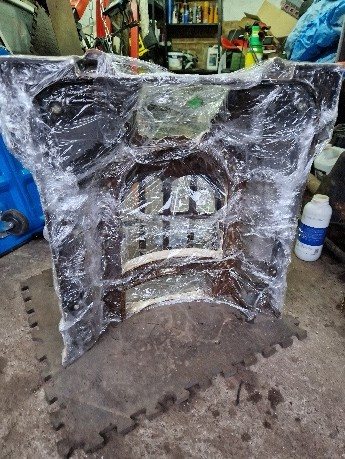
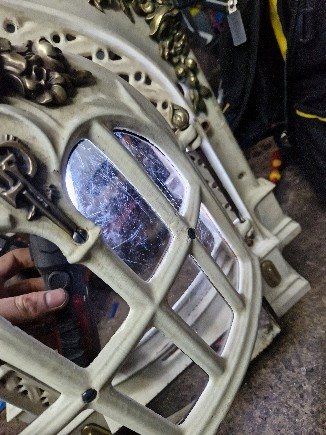
The enamel was in good overall condition, but it was not vitreous enamel. Baked enamel has open pores that hold staining, so the faceplate went into a 72-hour acid treatment to lift the stains without harming the finish.
The faceplate wrapped for its 72-hour acid treatment
04
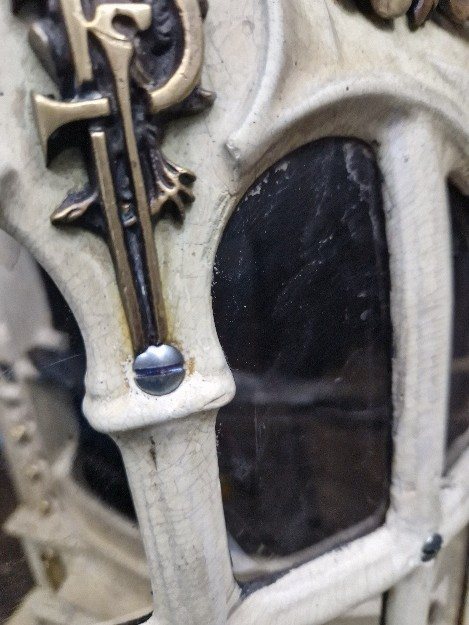
The mica
The original mica fell apart as it was removed and could not be saved. We cut templates from the original pieces and imported replacement mica sheets from the United States to match them.
The original mica, cracked and cloudedReplacement mica, cut from templates of the originals
05
The main body
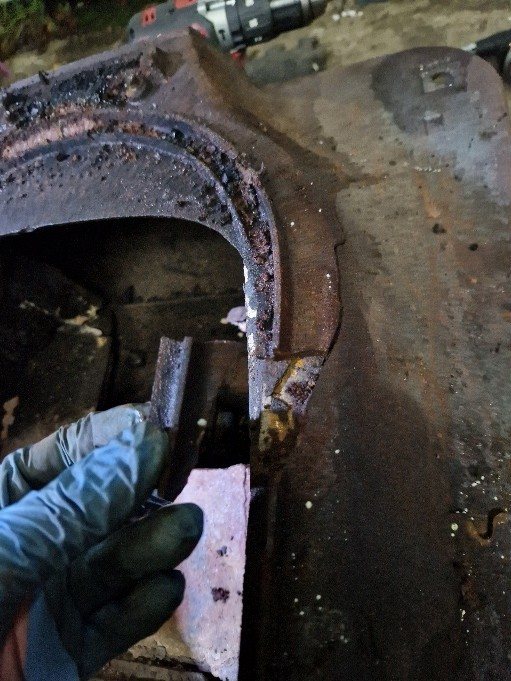
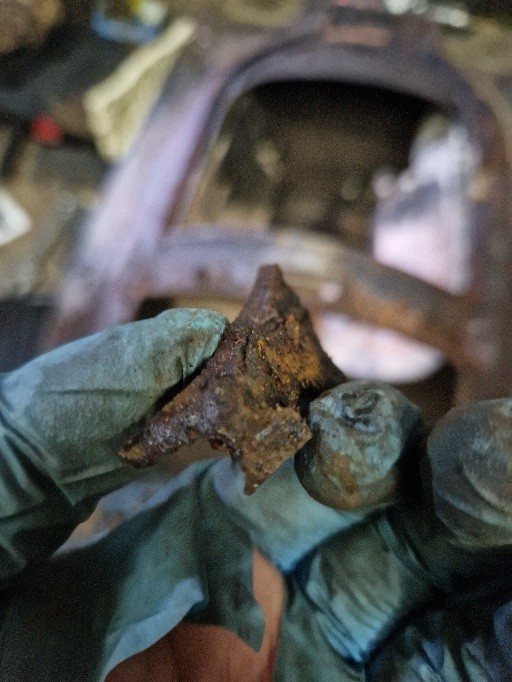
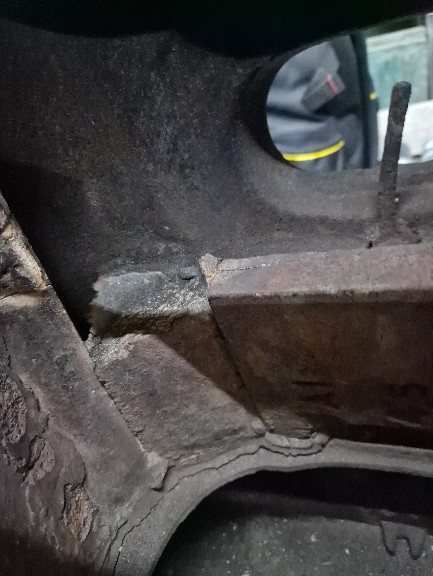
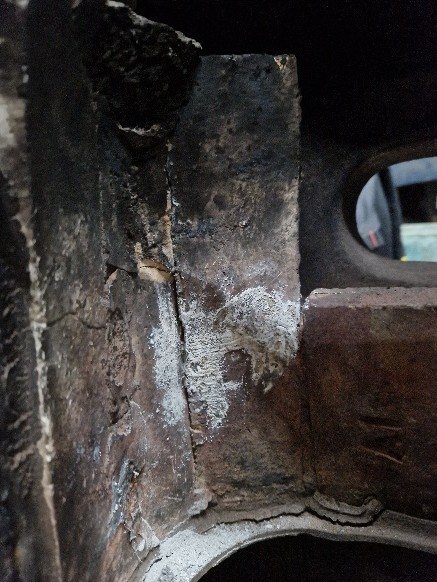
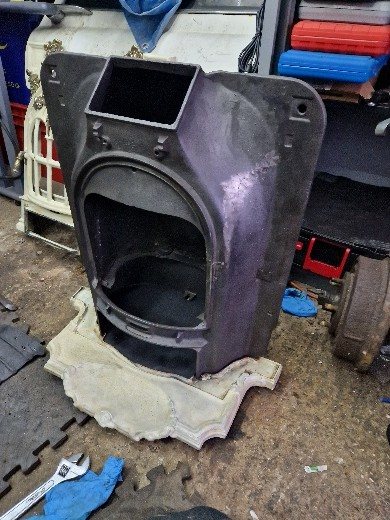
With the enamel faceplate removed, the main body revealed a large crack and a damaged section that appeared to be quite old. Every part was wrapped and chemically treated for rust before any repair began.
The crack and old damage to the bodyThe section that had broken away
06
Brass
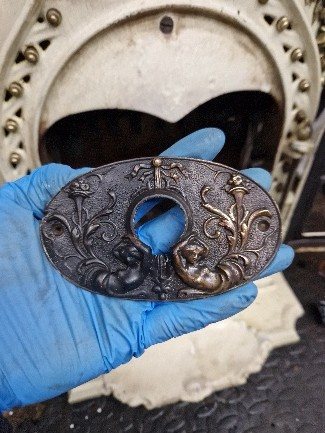
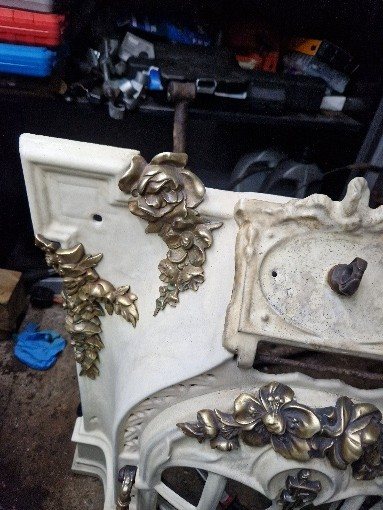
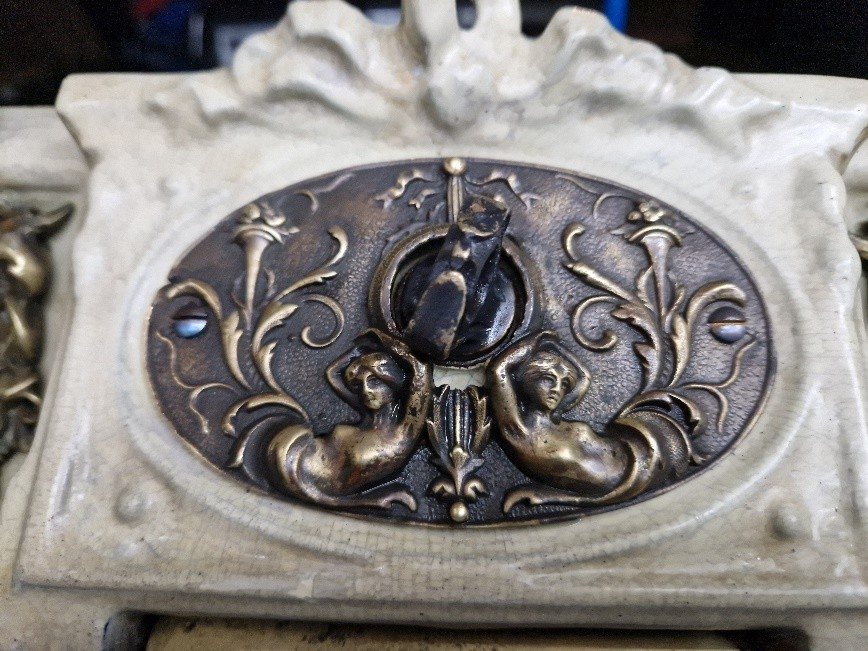
Every brass part that could be safely removed was taken off and polished to a vintage finish. Some patina was deliberately left, so the parts show their age rather than looking modern or replaced.
That concluded the first day. Much of it had gone into extracting broken bolts and dealing with the problems uncovered during disassembly.
The escutcheon, polished with its patina kept
07
Rust treatment
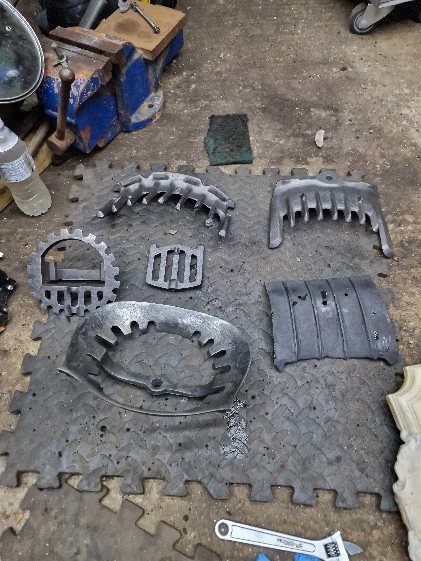
The internal parts spent 72 hours in rust treatment before being graphite-coated. Graphite is the right finish for cast iron: it is completely heat-proof and allows the iron to breathe, which keeps rust from returning.
Internal parts before treatmentThe grate and firebox as foundAfter treatment and graphite coating
08
Welding the crack
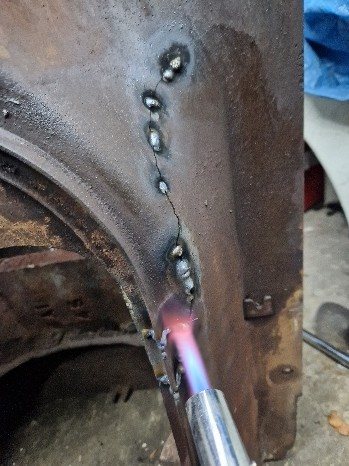
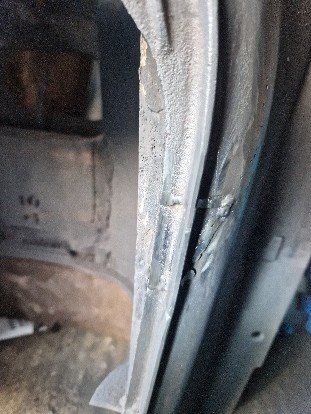
Given the nature of the damage and how close it sits to a high-heat area, bronze brazing, the traditional repair for cast iron, was out of the question. Instead the body was heat-treated so it could be welded in steel, closing the crack and re-attaching the damaged section.
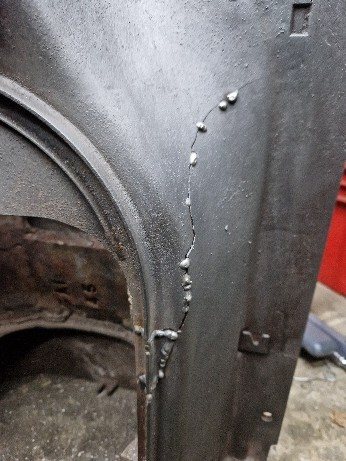
The crack itself was welded from the inside. The stitch welds on the outside are there to hold it while that internal welding was carried out, stopping the heat from spreading the crack any further.
The body after chemical treatmentHeat-treating before weldingOutside stitch welds, holding the crack during internal welding
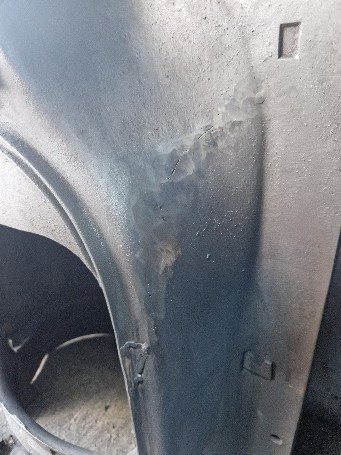
Once repaired, the body received the same graphite treatment and stove polish as the internal parts.
The repair dressed backThe damaged section re-attachedGraphite coating and stove polish
09
The top access panel
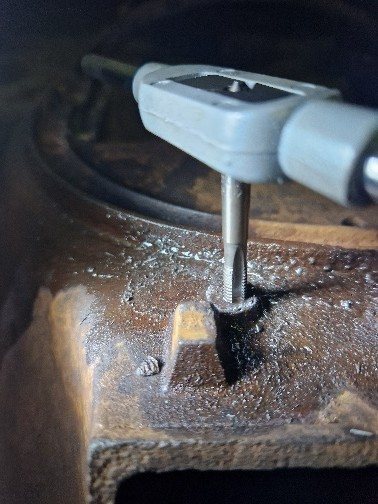
The bolts holding the top access panel had seized through galvanic corrosion and snapped on removal. They were filed down, drilled out and re-tapped with a modern thread, and we ordered custom screws that are period-correct in appearance but cut to the new thread.
Re-tapping the drilled-out holes
10
The firebrick
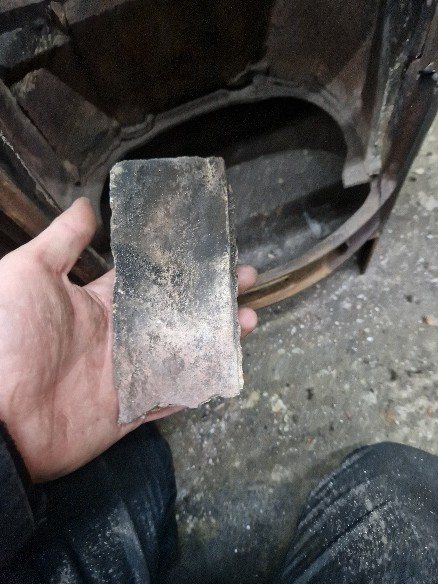
A thorough clean of the interior revealed damage to one of the firebricks. It did at least give access to the left side for a deep clean of the ash that had built up behind it.
The brick was repaired with high-temperature exhaust paste, which bonds it back together and continues to resist high heat.
The damaged firebrickAsh cleared from behind itBonded with high-temperature paste
11
Touching up the enamel
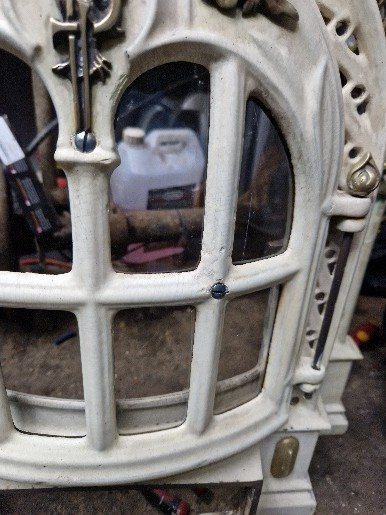
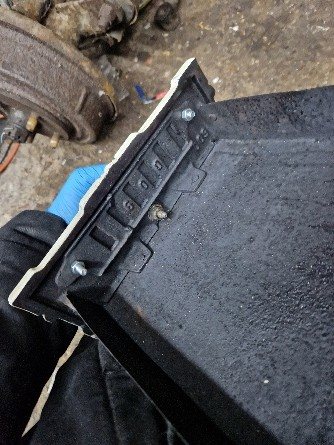
After 72 hours in the acid, the enamel front was thoroughly cleaned and touched up with high-heat paint. The faded enamel had too many varying shades for a straight colour match to be accurate.
Instead, we took filings from parts of the enamel that are not visible and mixed them with a combination of high-heat paints to produce a close match, then used it to blend the most damaged areas into the rest of the faceplate. Some areas are more noticeable than others, but the overall vintage look and patina have been kept.
Blending the damaged areasThe door surround, blendedThe faceplate complete
12
The back of the faceplate
The back of the faceplate could not be treated in the same way without risking the enamel and the brass that could not be removed. Instead we used a rust converter, which chemically turns rust into magnetite: a strong, heat-resistant coating that stabilises the rust and stops it spreading.
The reverse of the faceplate
13
Interior and reassembly
With the body fully cured, the inside was painted in matt black high-heat paint. It gives a clean, uniform finish that contrasts with the white exterior and keeps the look of soot even with soot-free fuels such as bio-ethanol.
The treated internal parts were then refitted, along with the fire basket handle, welded in the same way as the main body.
The interior in matt blackInternal parts refittedGrate and fire basket in place
14
The ash tray
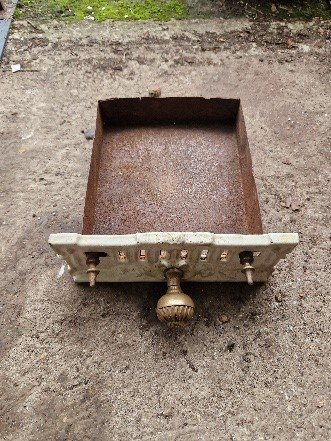
The ash tray's ventilation grate needed welding and repair, and its corroded sliders had to be drilled out. Its hardware was replaced with modern equivalents, as none of it is visible from the outside.
The ash trayThe repaired ventilation grate
15
Final assembly
With every part treated, repaired and touched up, the fireplace was reassembled. In total the work took four days of hands-on labour, not counting the time for chemical treatments, paint drying and parts arriving from abroad.
Complete, door openThe fireboxDoor latch and new mica
Finished, from the same angle as it arrivedThe escutcheon in place
16
The history
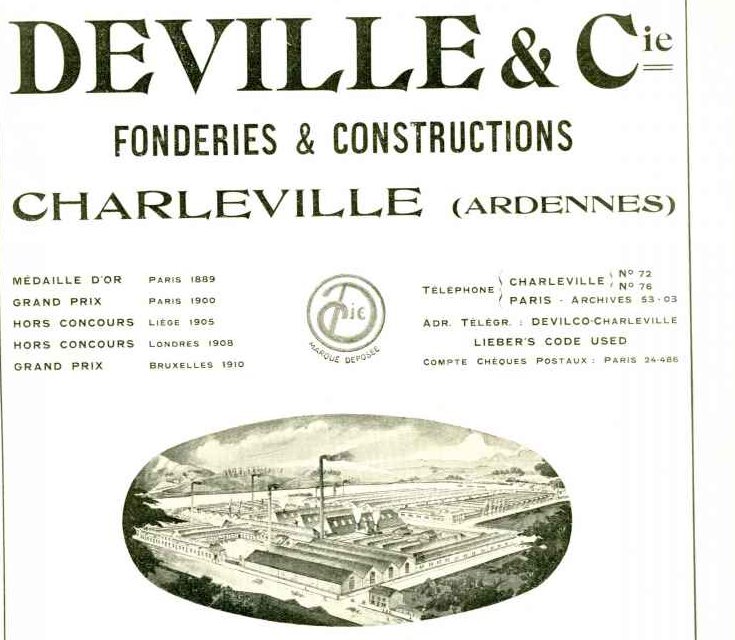
This is a DPF No. 600, made by Deville & Cie at its foundry in Charleville, in the French Ardennes. By 1923 Deville's catalogue listed gold medals and grand prix from exhibitions in Paris, Liège, London and Brussels.
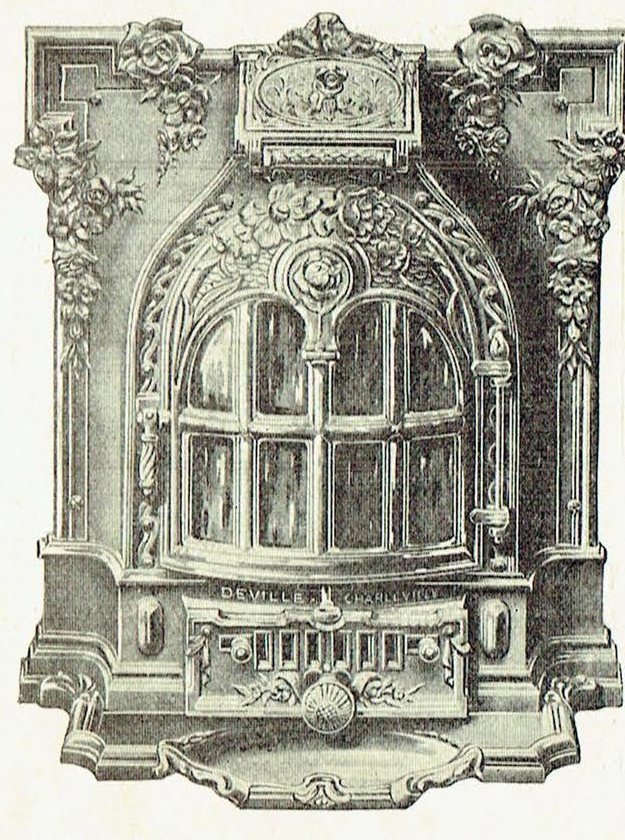
Deville's Tarif-Album No. 59, 1923, with the Charleville foundry
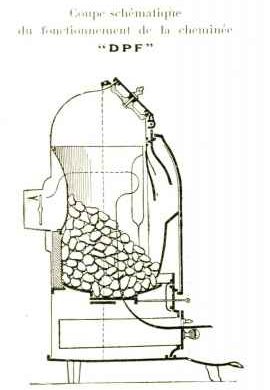
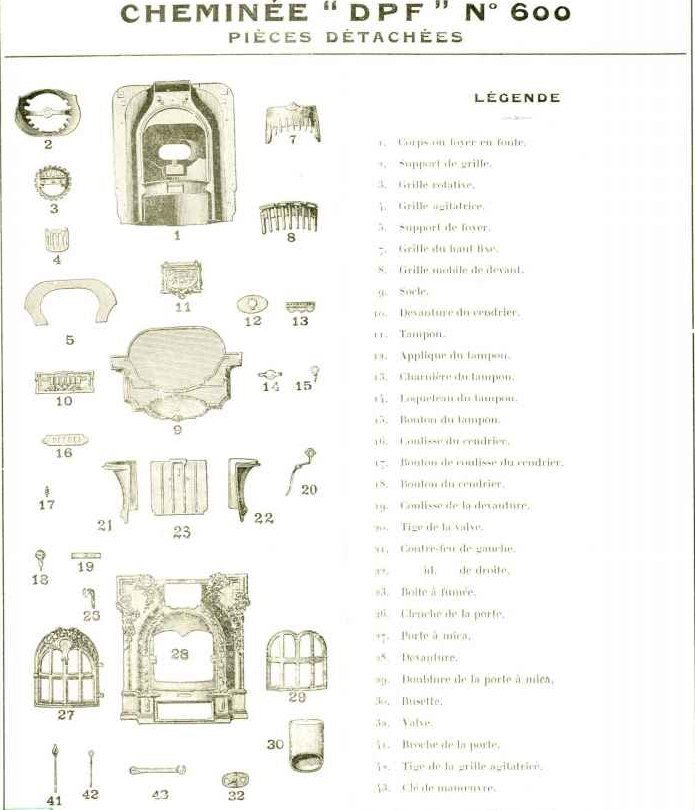
The DPF was one of Deville's "cheminées à feu continu", continuous-burning fireplaces with a visible fire, precision draught control and a refractory firebox. The 1923 catalogue lists it at around 88 kg and 68 cm tall, heating 120 to 150 cubic metres, with a full parts page covering the mica door, firebacks, grates and ash pan that this restoration worked through.
Deville's cut-away of the DPF, showing the fuel chamber and fireboxThe DPF No. 600 parts page, 1923
This fireplace was ordered as a raw cast iron model, known as "brut", and imported to the UK, where it underwent an enamelling process to make it white. Deville offered the DPF in raw iron, black enamel or ceramic enamel, and kept only black and green, brown or grey in stock. White was not a standard option, and a French finish would normally have been vitreous rather than baked enamel. That is what explained the open pores and staining on the faceplate.
We can confidently date it to between 1923 and 1925: it has the later style of door, but the earlier style of body and brass accents. The 1923 version is much the nicer piece. By 1926 Deville had removed many of the separate brass features and included them in the main casting instead, most likely to save money and simplify production amid the economic decline of the time. The 1926 catalogue lists the DPF at 80 to 82 kg, against 88 kg in 1923, and adds a plainer "Décor uni" version, No. 610.
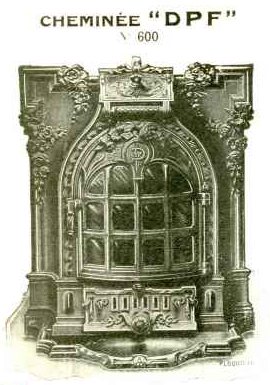
1923: the catalogue image this fireplace would have been ordered fromThis fireplace: the later door with the earlier body and brass1926: brass details absorbed into the casting