As it arrived
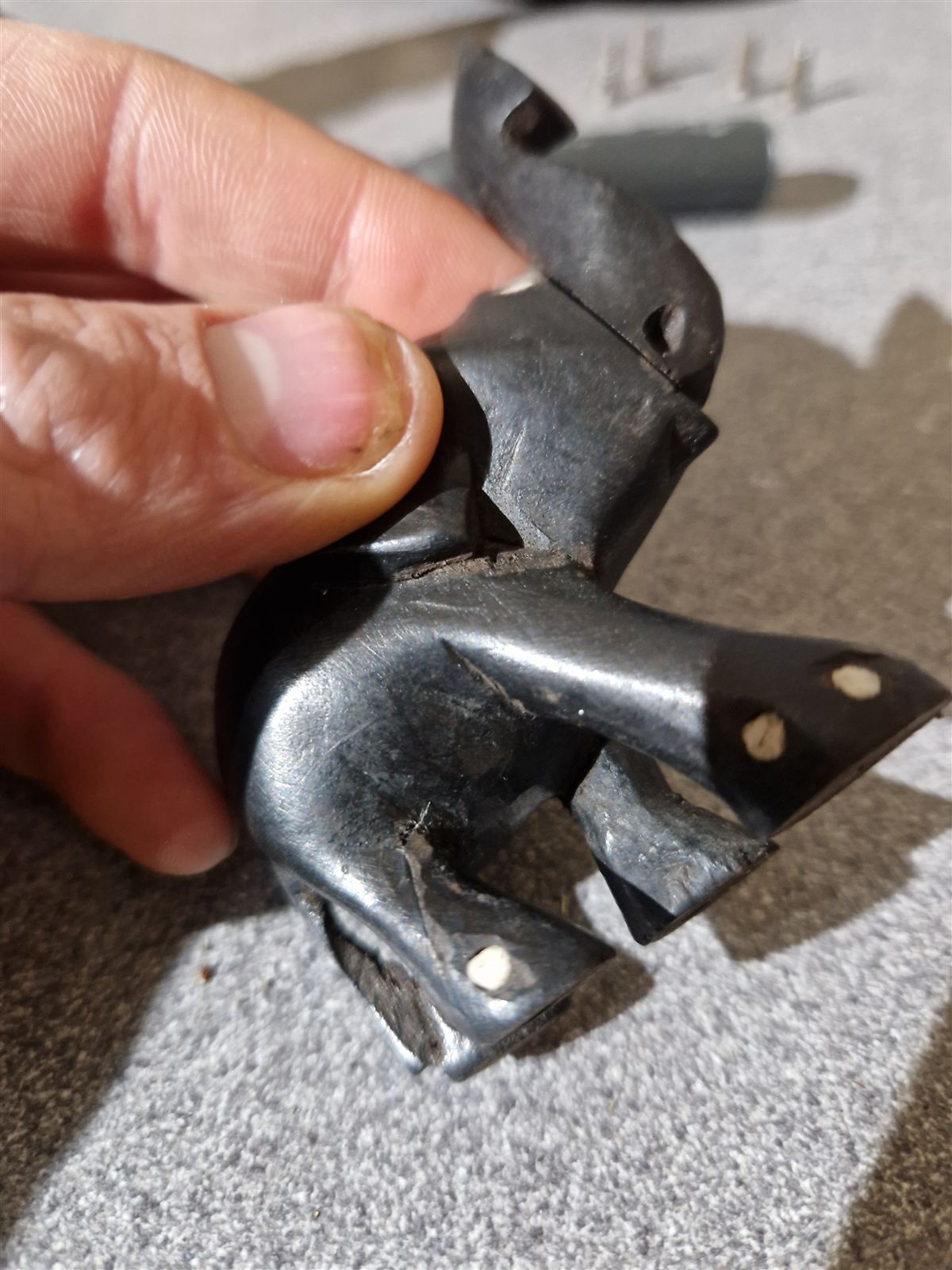
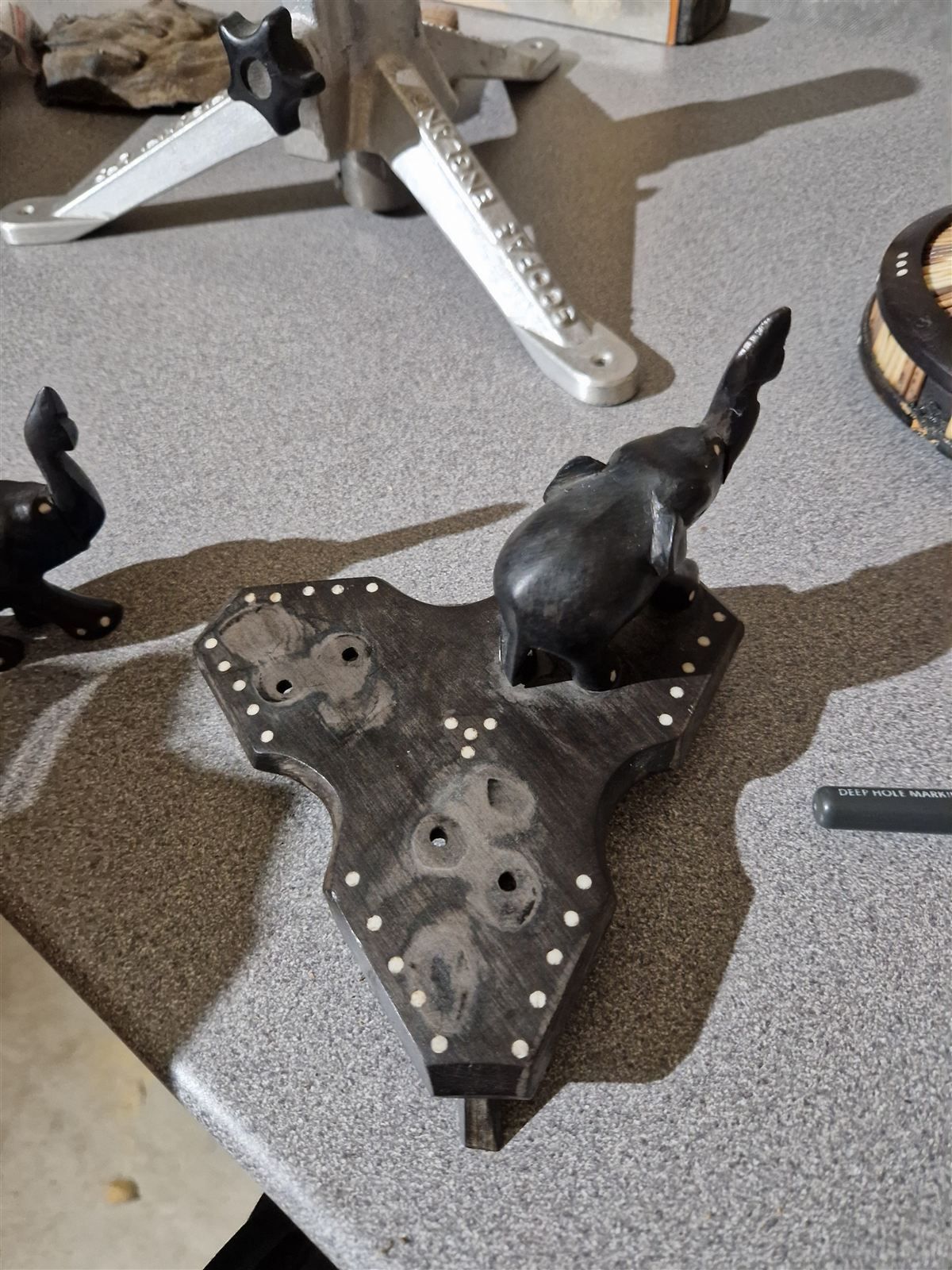
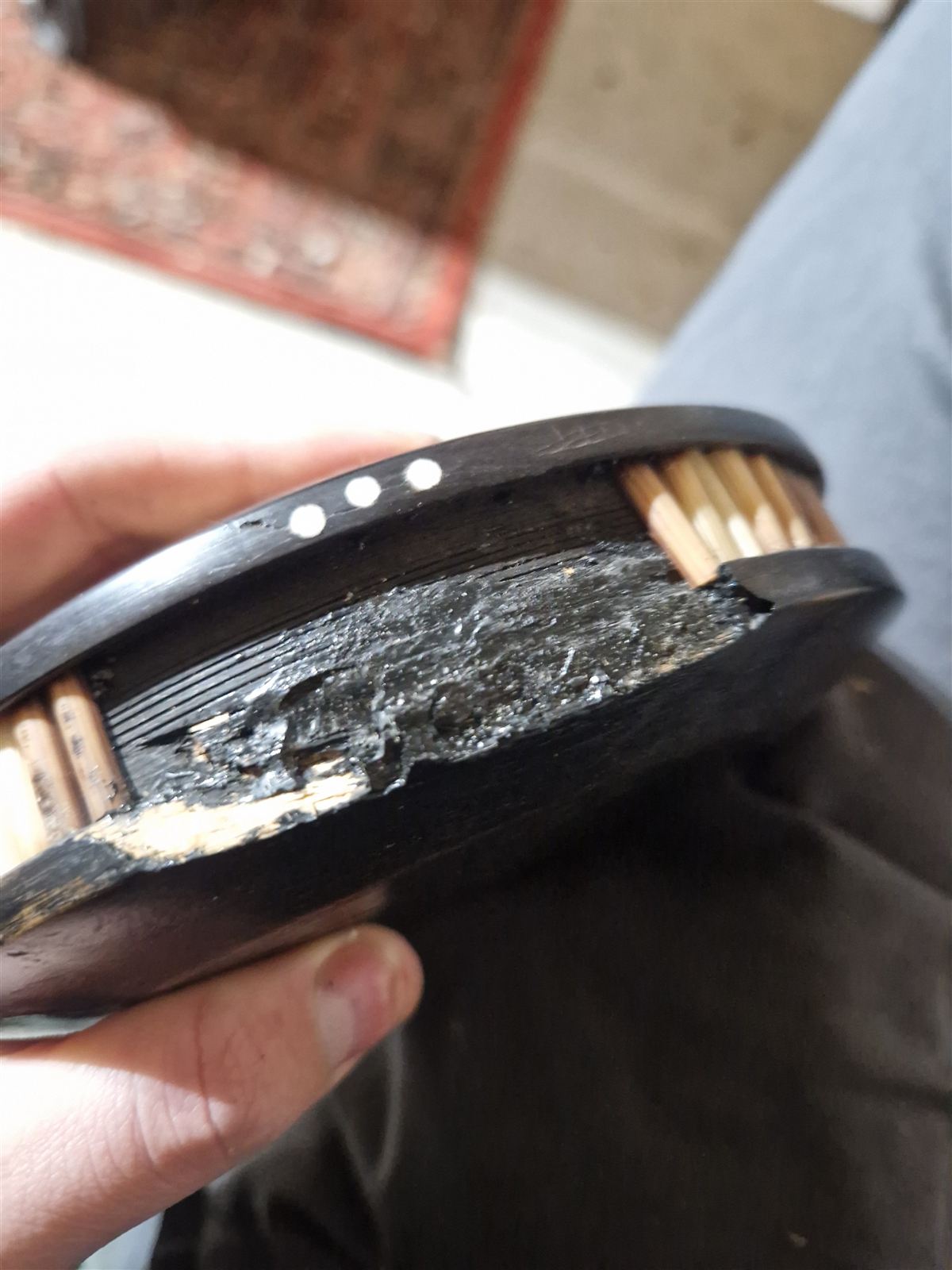
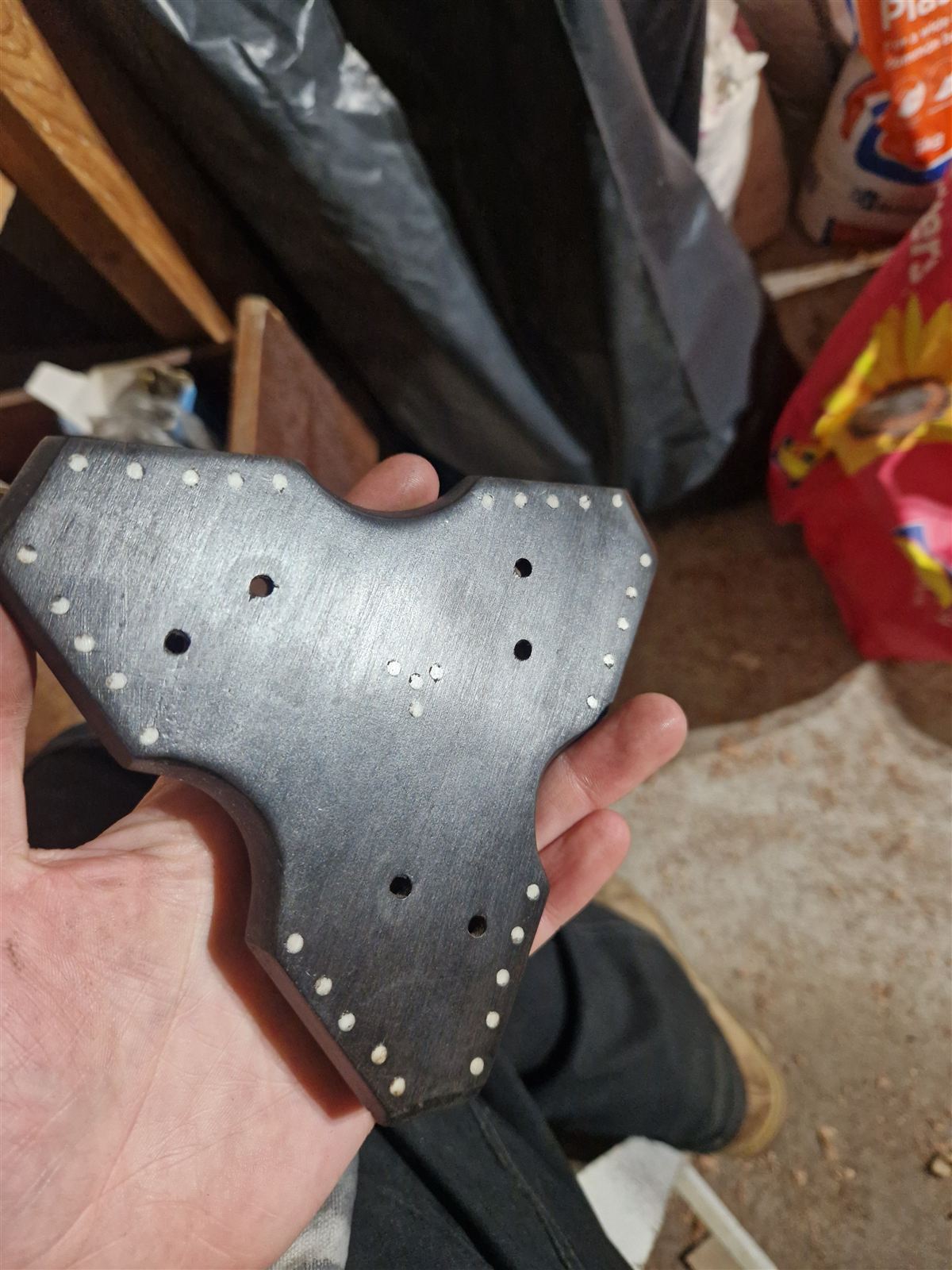
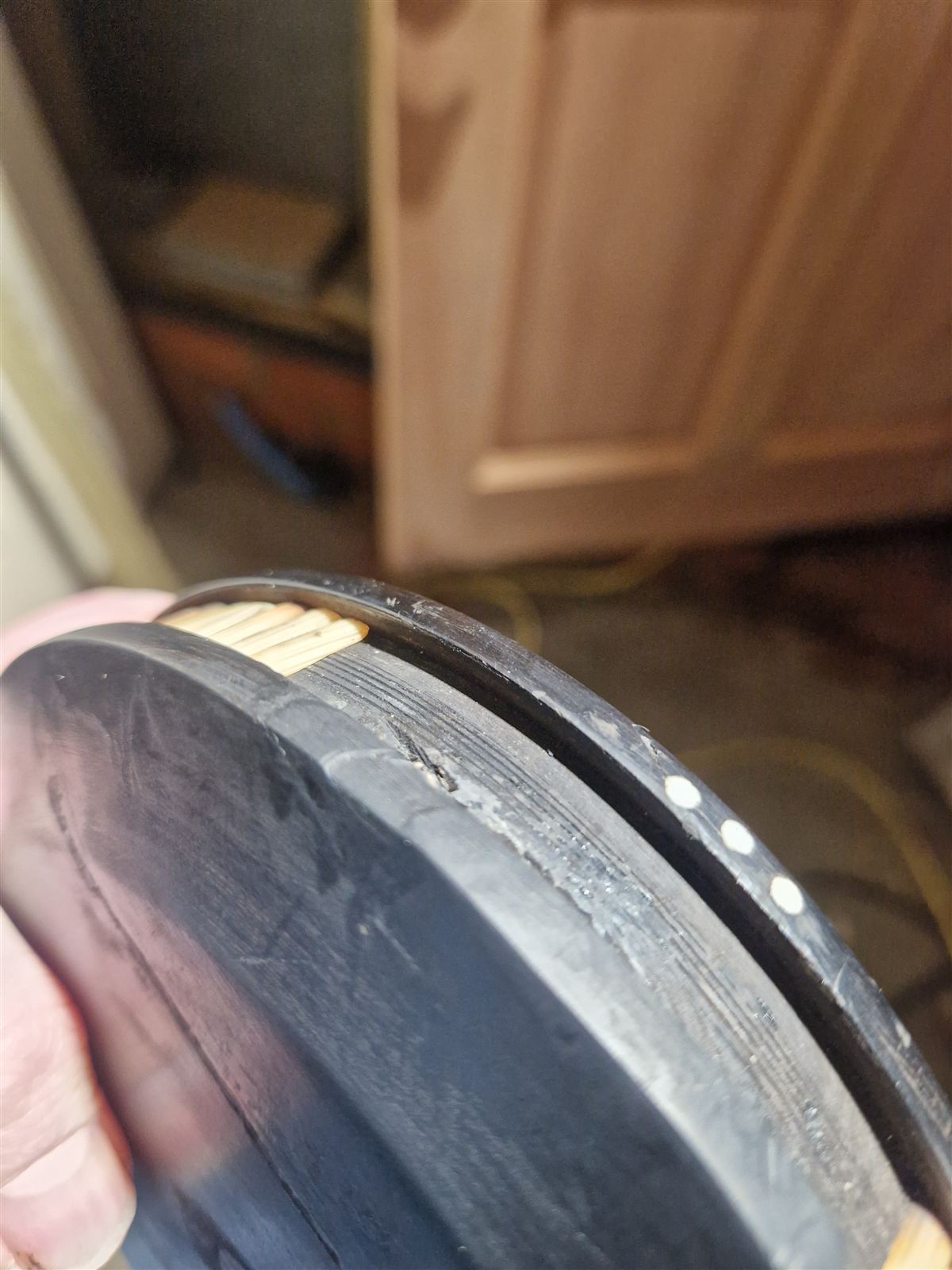
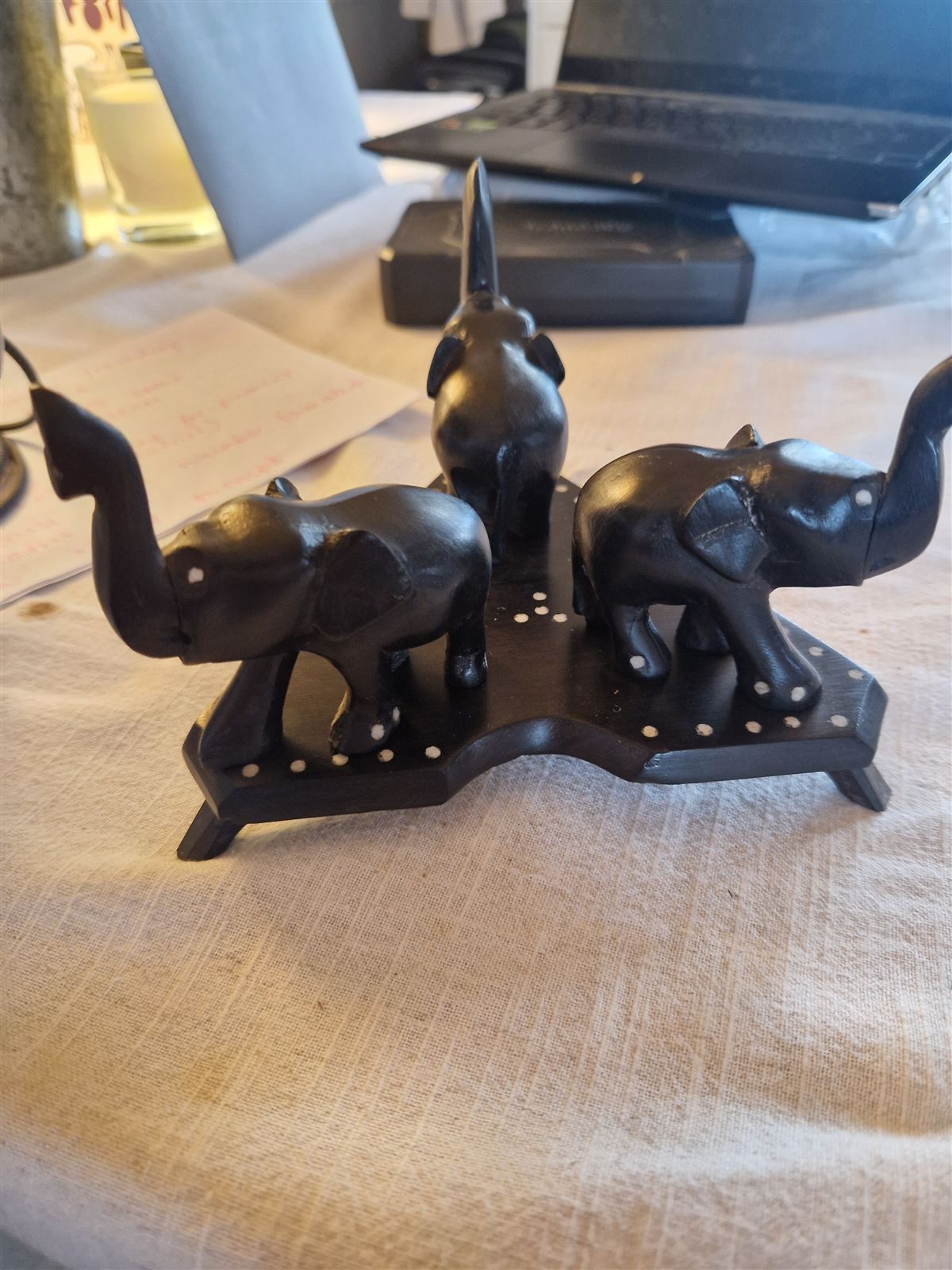
The bowl had been repaired before. Filler from earlier repairs was failing, elephants were missing their tusks, and the bowl's edge was damaged.
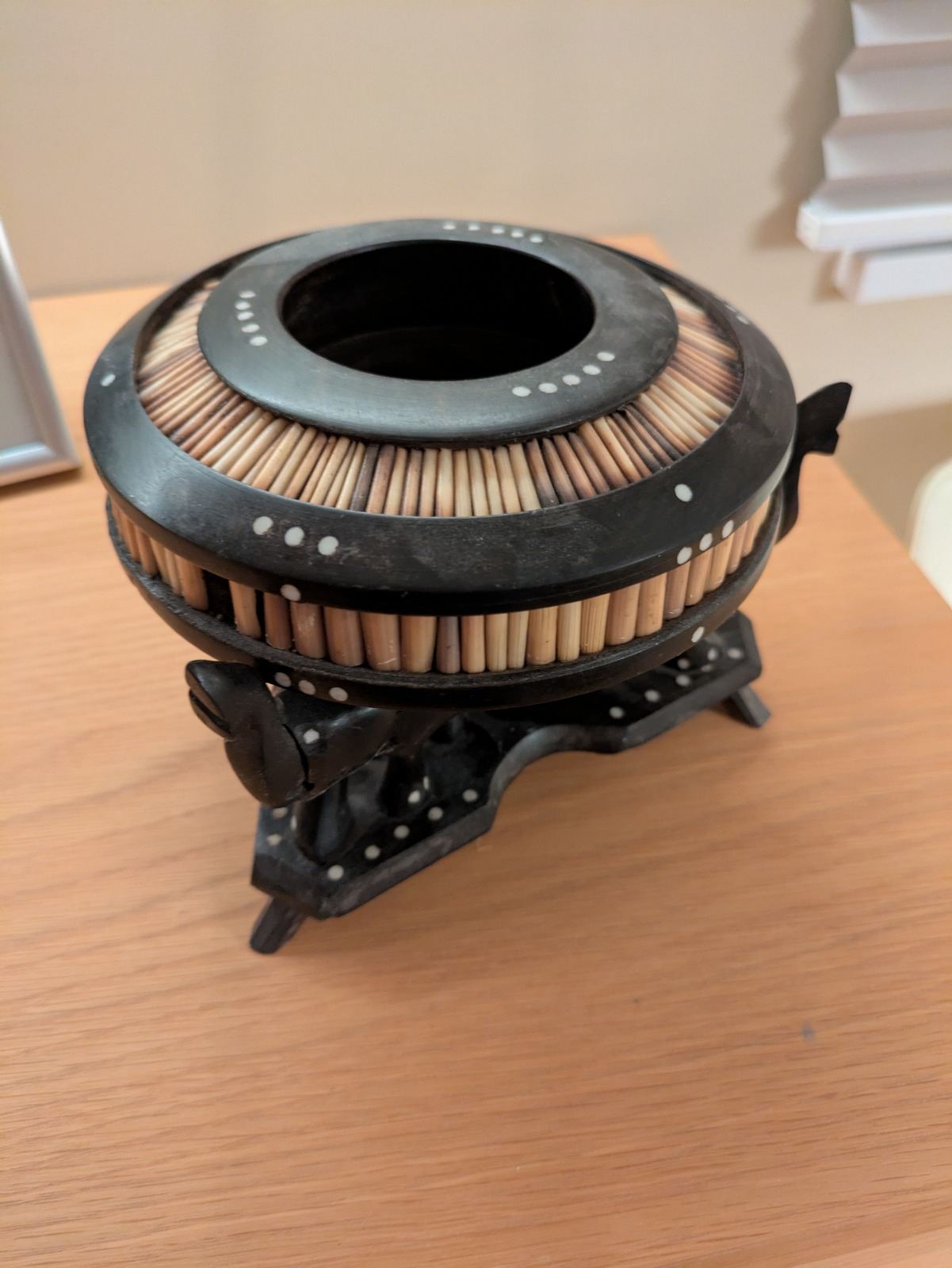
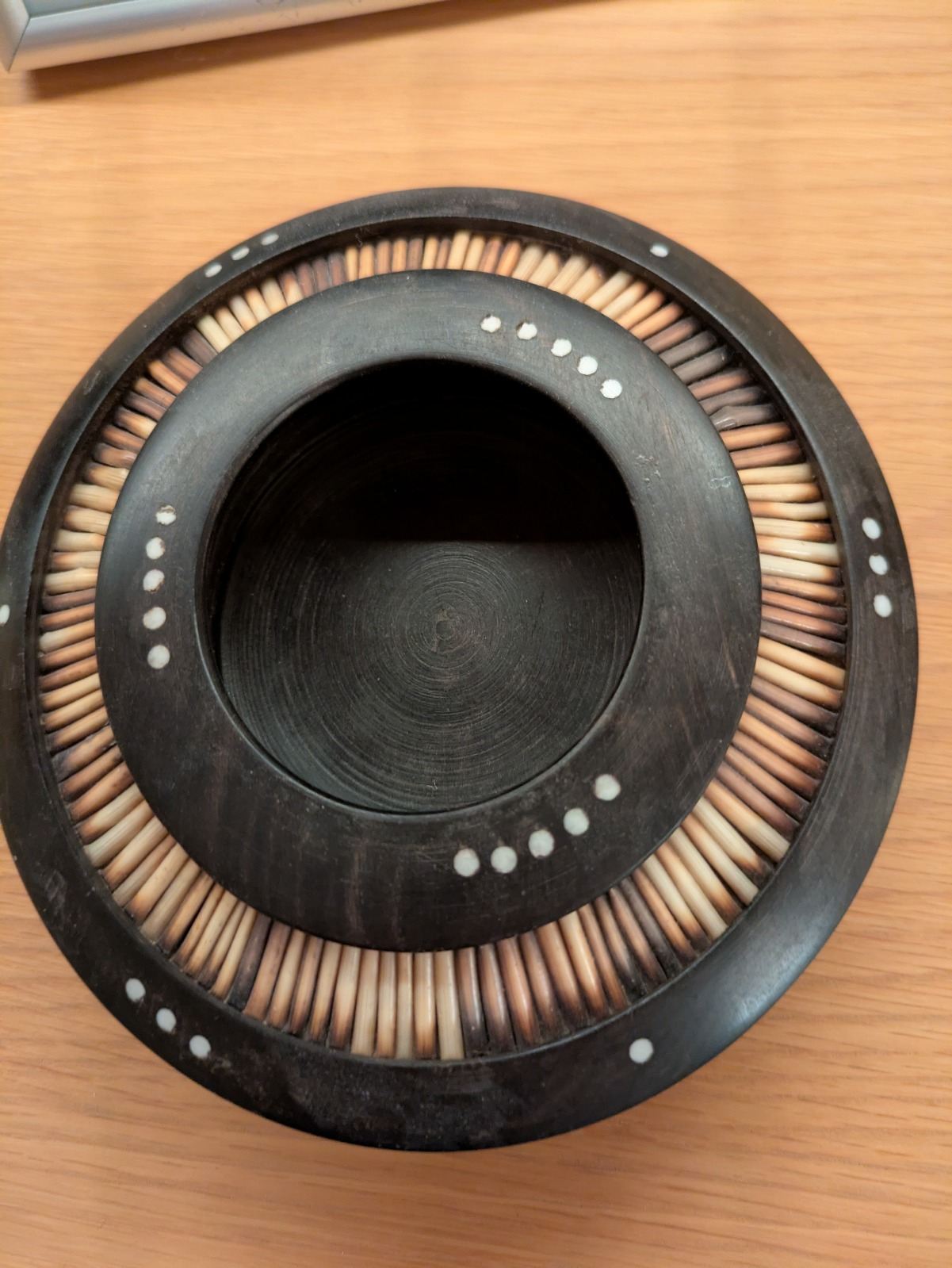

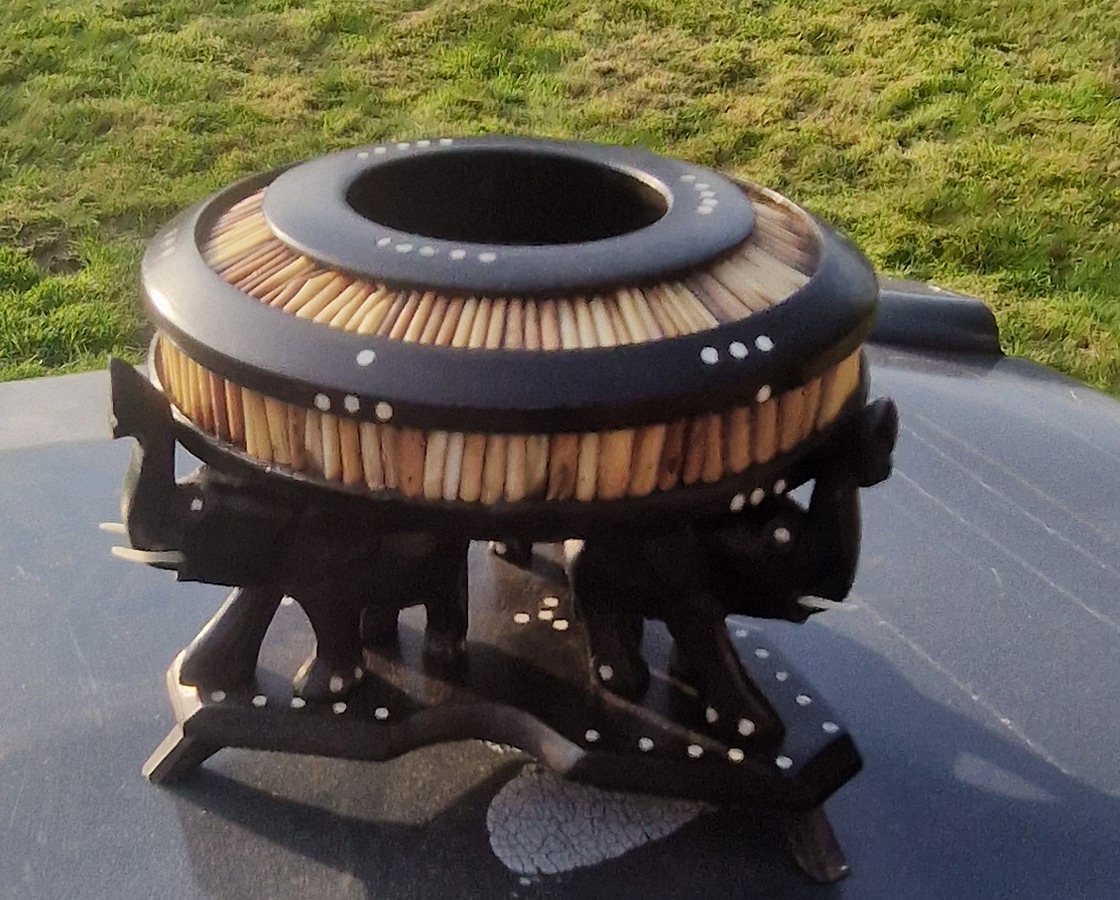
A sentimental ebony bowl with porcupine quill work, carried on carved elephants
An ebony bowl from Sri Lanka, banded with porcupine quills and resting on carved elephants. It was a sentimental piece, so the aim was not perfection. It was to make it sound and presentable while keeping as much of the original as possible, making good wherever we could rather than cutting away and grafting.
The bowl had been repaired before. Filler from earlier repairs was failing, elephants were missing their tusks, and the bowl's edge was damaged.
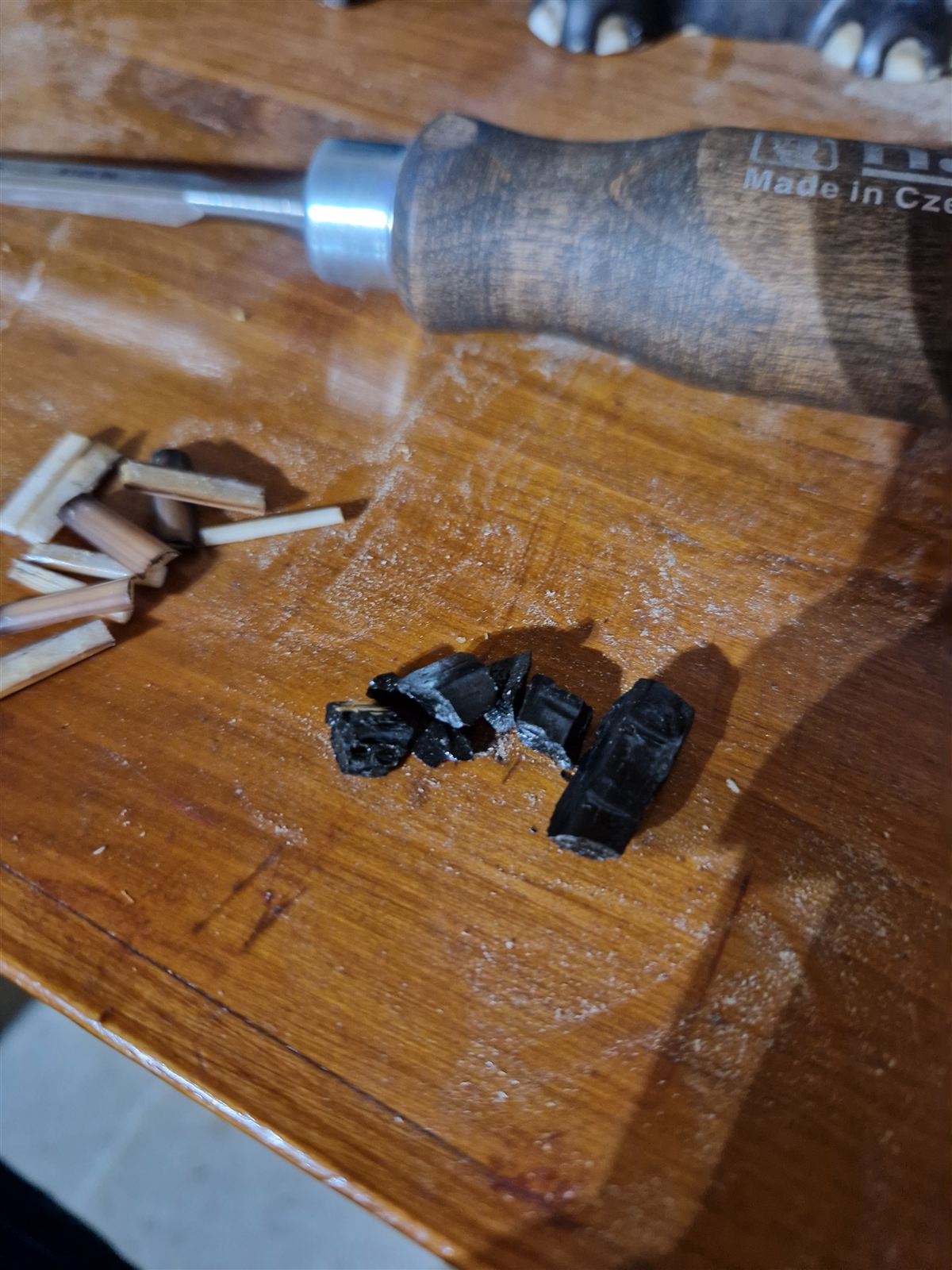
The bowl and its stand were taken apart and the earlier repairs removed so the damage underneath could be properly assessed. Chunks of the old filler simply fell out.
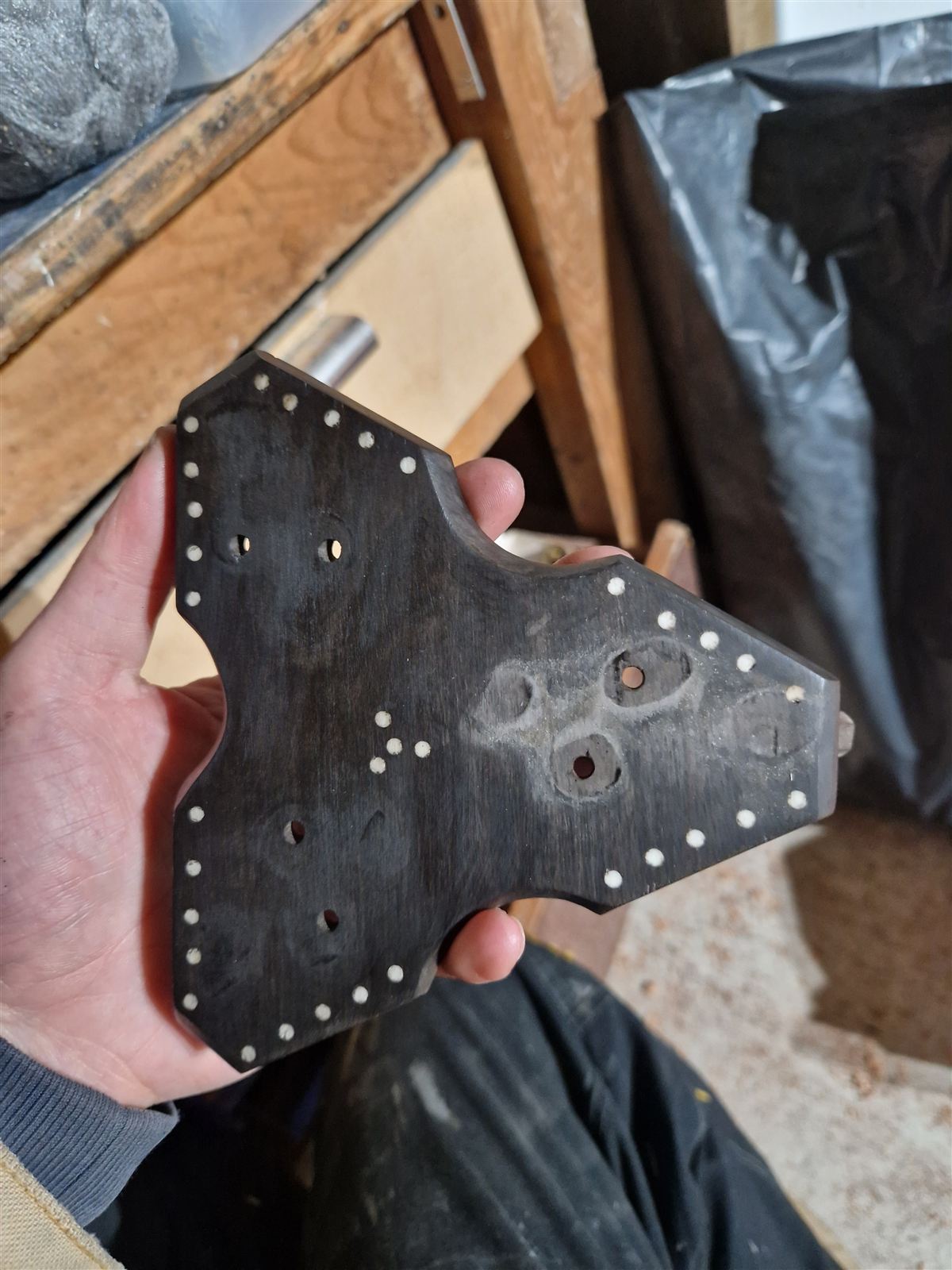
The base was cleaned and polished, bringing back the depth of the ebony around its original inlay.
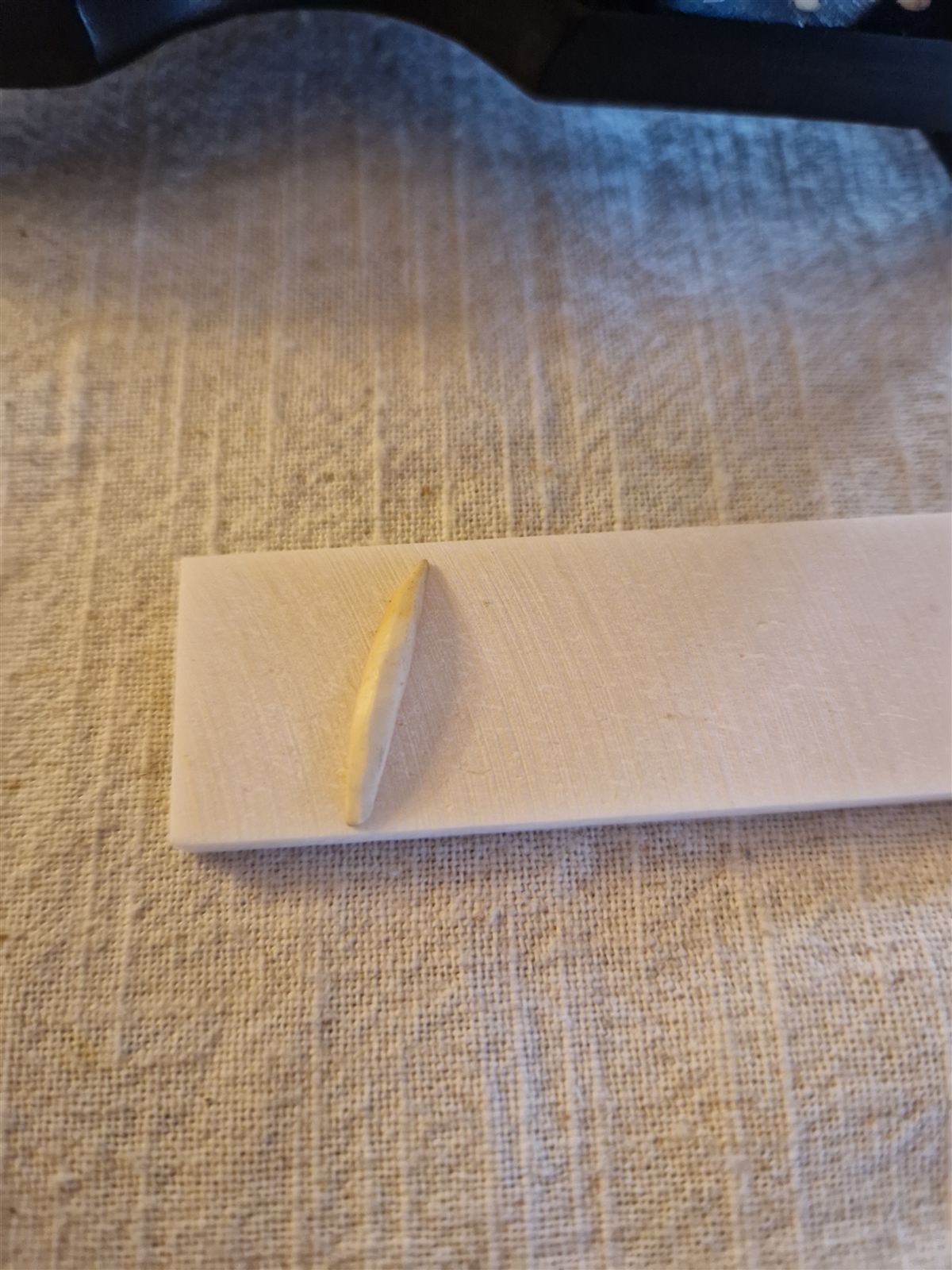
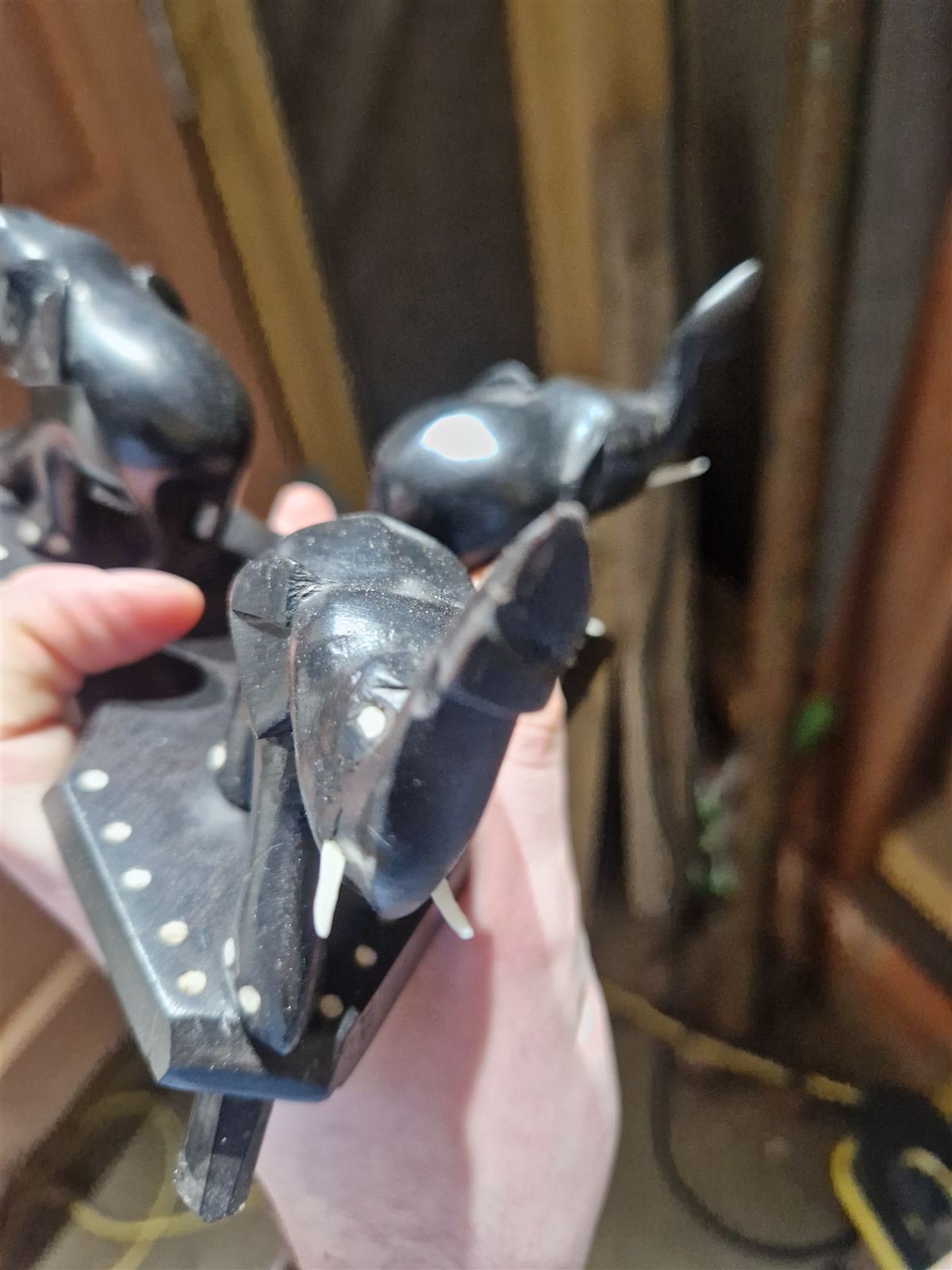
The missing tusks and inlay were remade in bleached buffalo bone, colour-matched against an original tusk. The trunks were realigned and every piece of the base test-fitted before anything was glued.
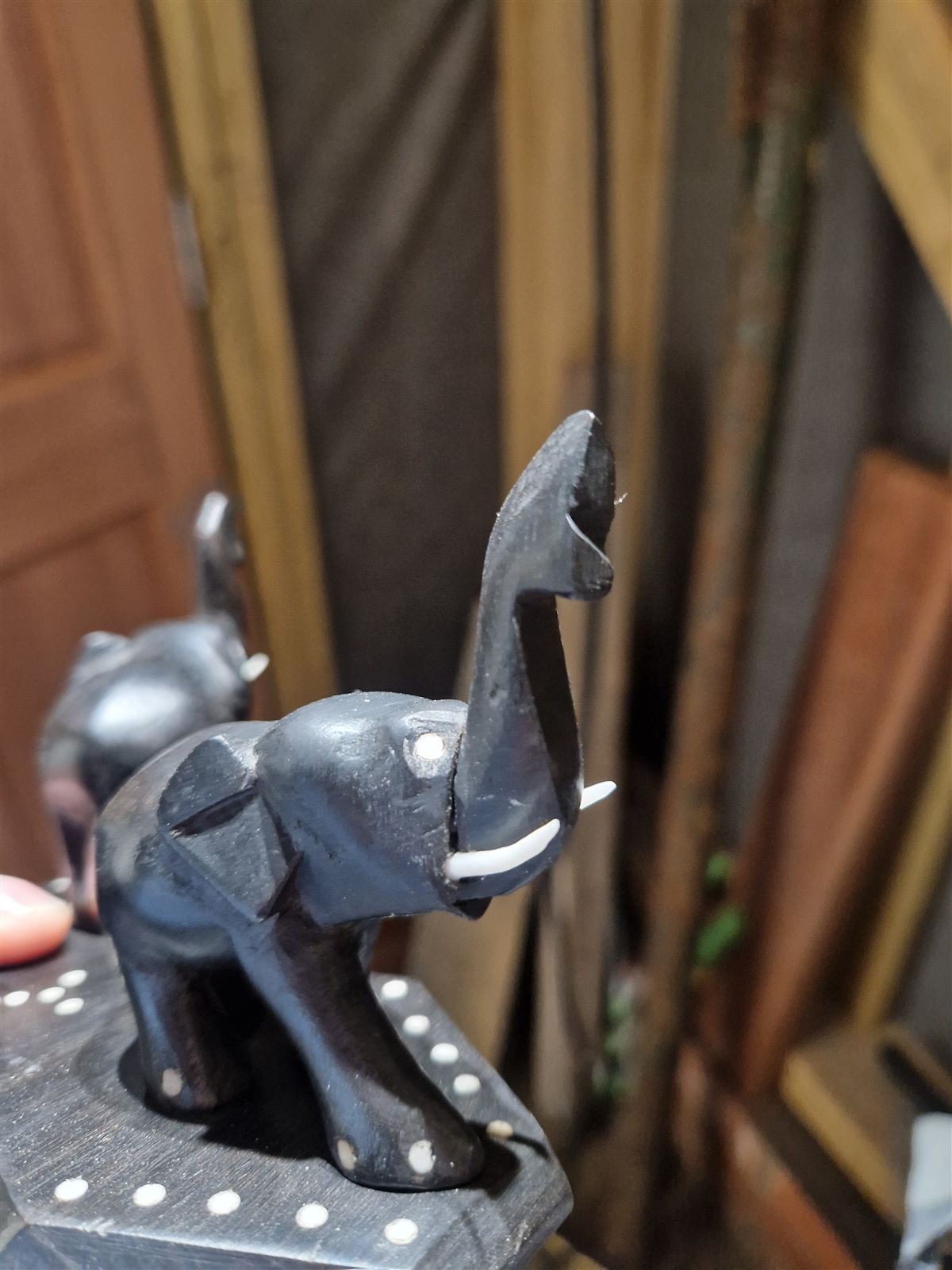
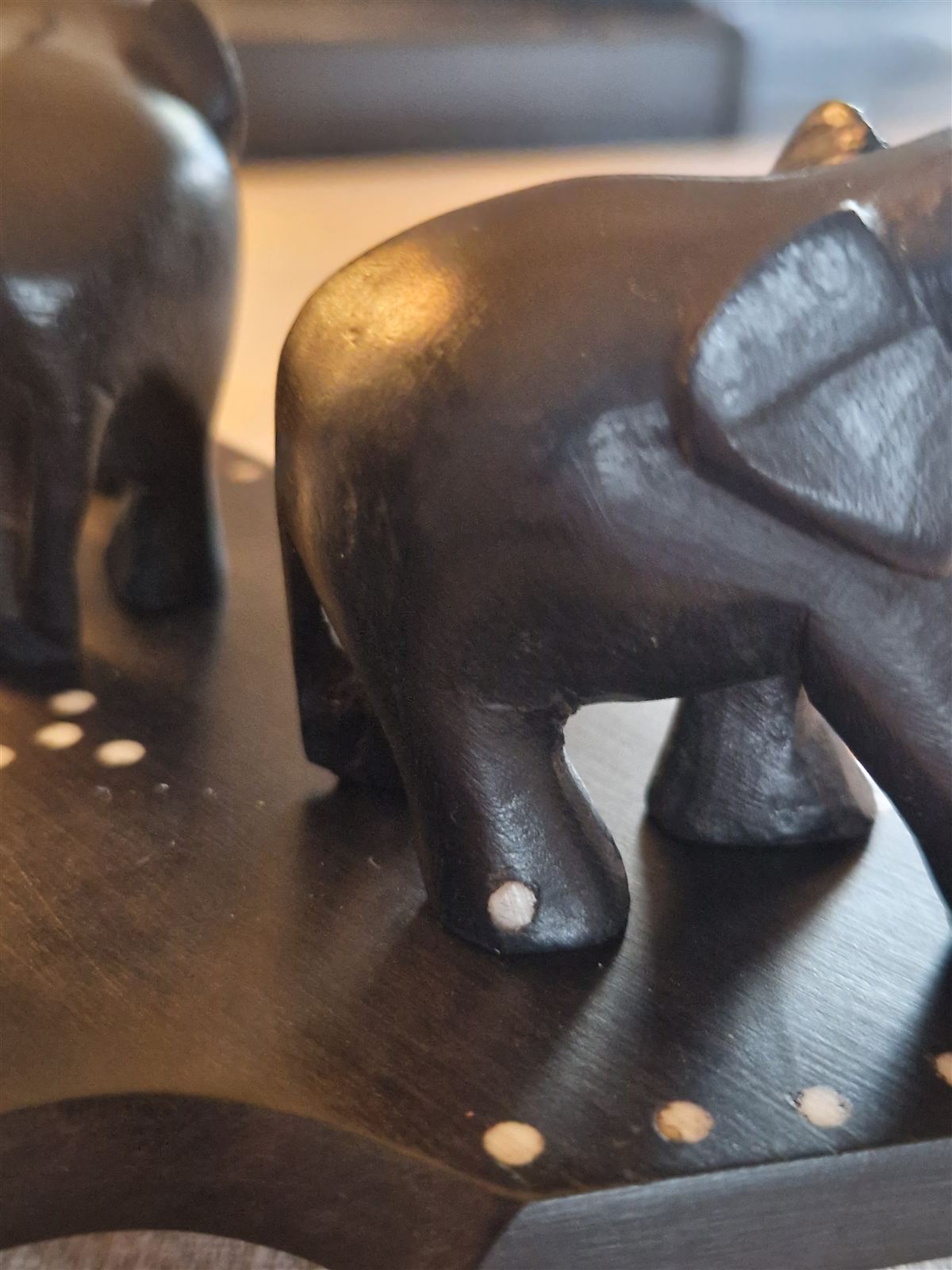
Where the damage to the bowl's edge was too deep to make good, ebony was grafted in and carved back to shape, with a relief slot cut so the quills could be set back in.
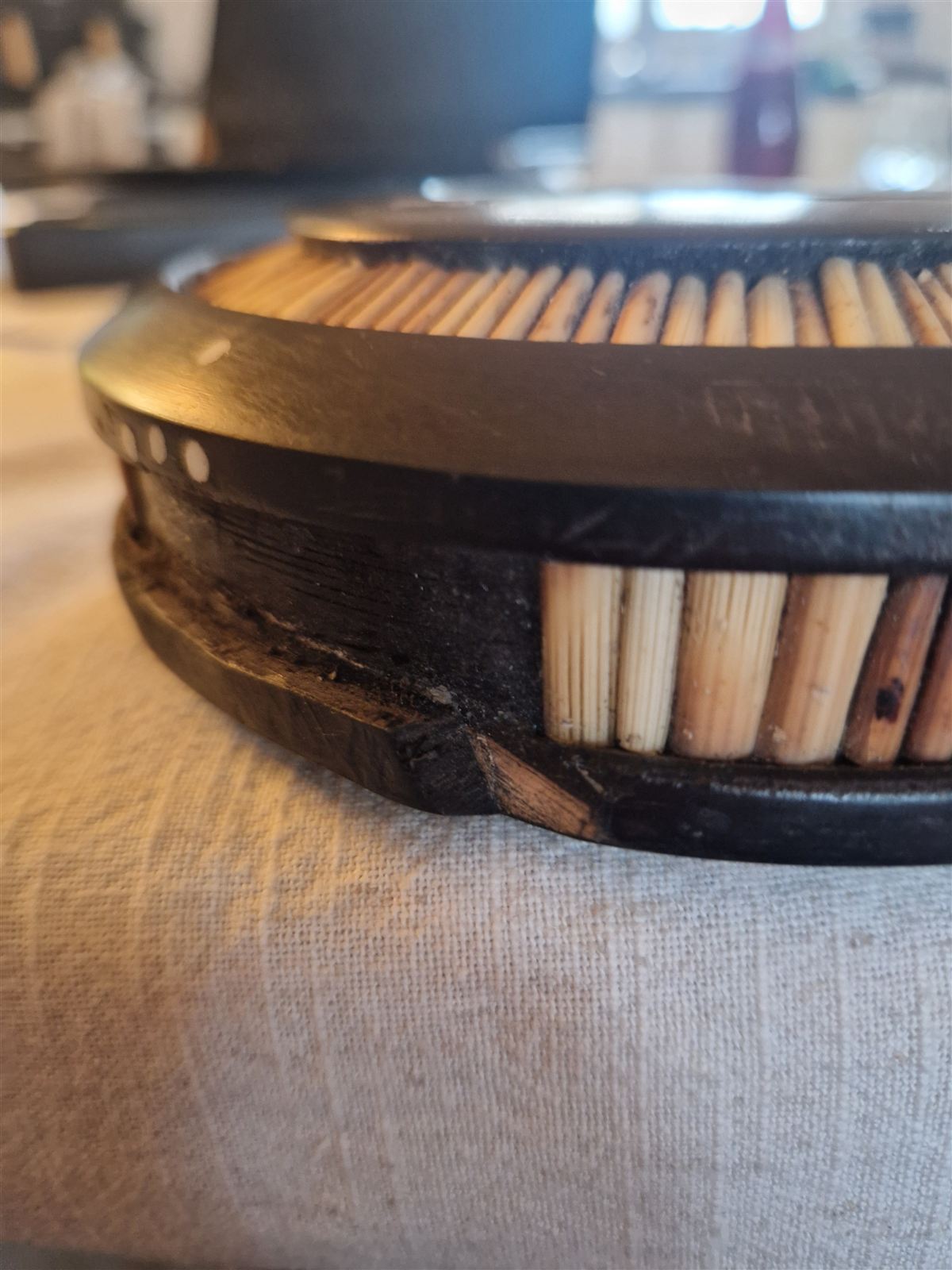
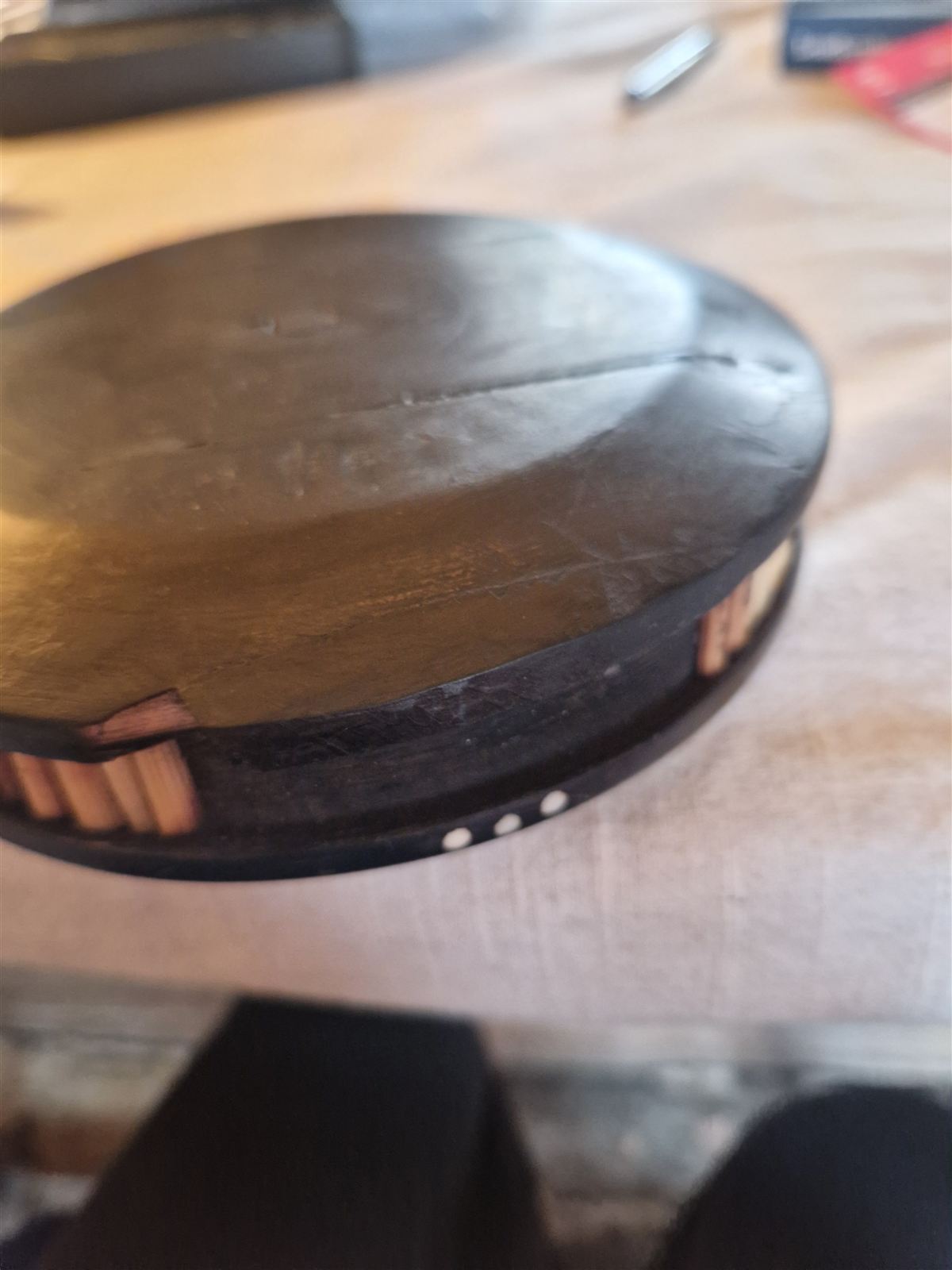
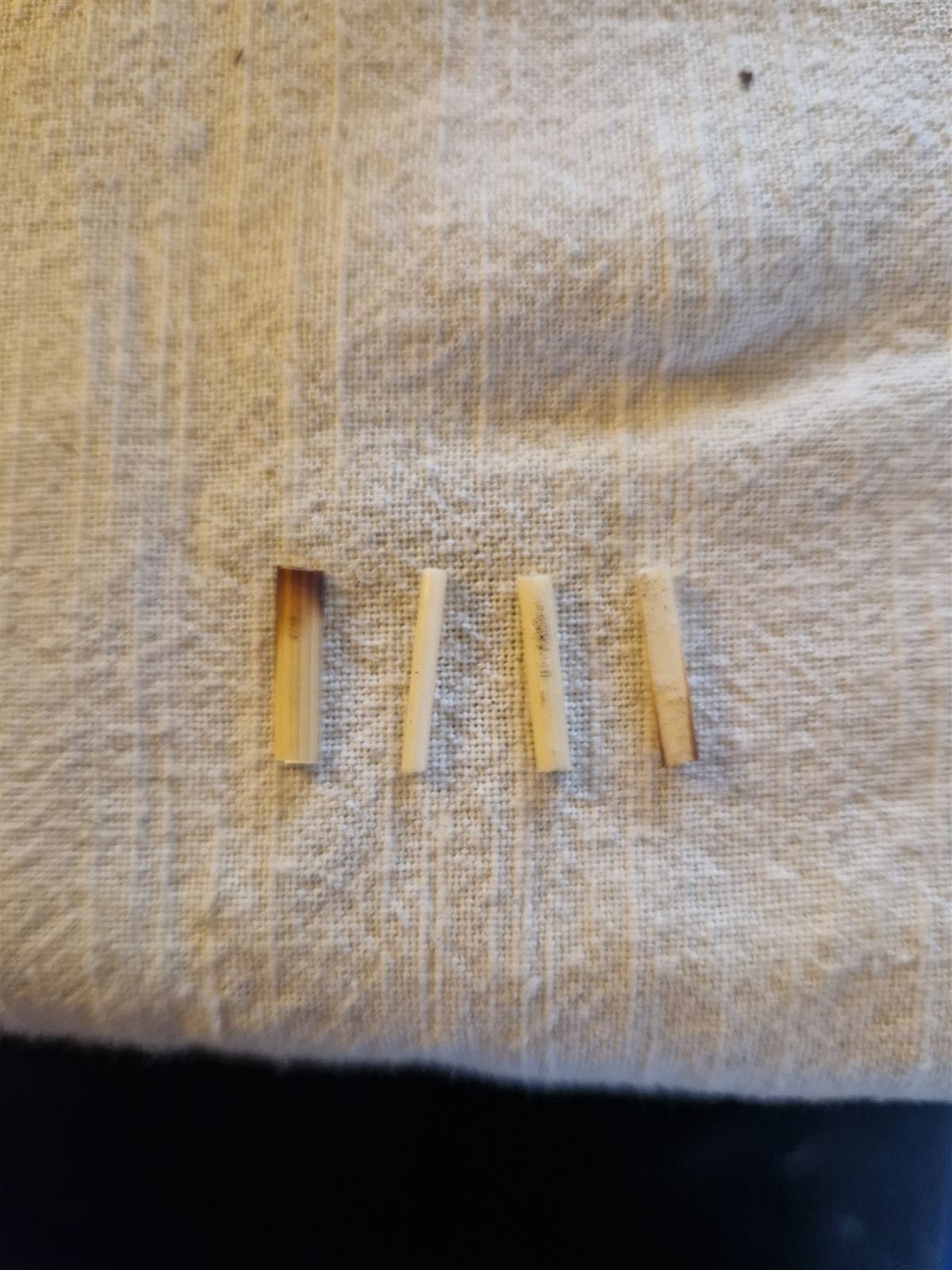
At first it wasn't certain what the quills were, so we worked through a range of possibilities: sea shell, bone, other animal quills and feather tips. They proved to be porcupine quill.
New porcupine quills are bright white, so matching them took time. We combined different stains and even exposed the quills to smoke to give them the yellowed tinge of the originals. Slightly smaller replacements were then set in among the originals so they blend in.
The repairs were ebonised to match. The first attempt showed marking, so it was taken back and done again. The piece was finished with Renaissance Wax, a micro-crystalline wax developed in the British Museum's research laboratory for protecting original surfaces.
Source: Picreator Enterprises, makers of Renaissance Wax.
Sound and presentable again, with the repairs blended into the original rather than replacing it.
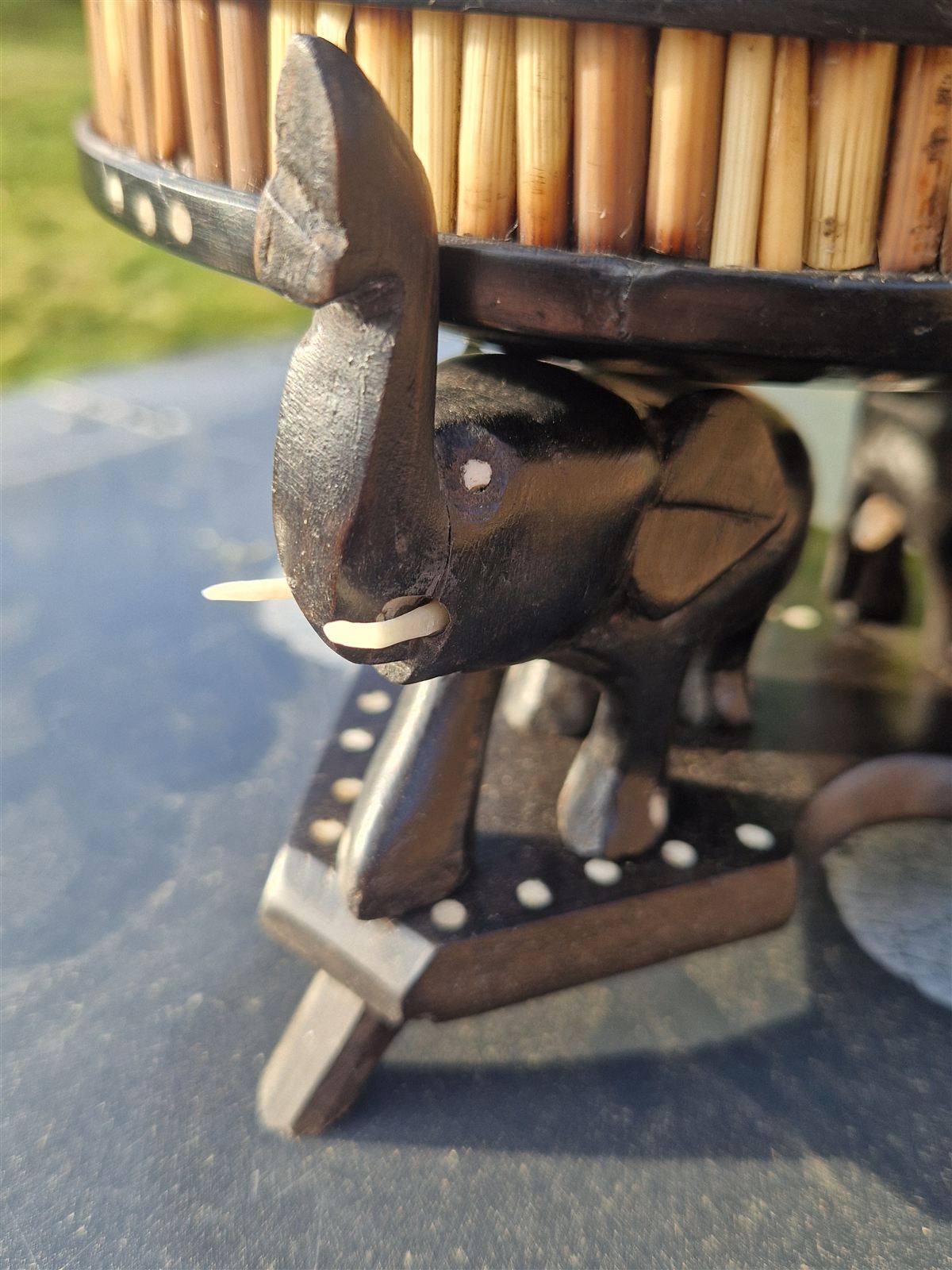
Ebony and porcupine quill work began in the Galle district of southern Sri Lanka in the 19th century, on boxes in European forms made for English residents: bands of ebony dotted with small inlaid discs, with porcupine quills set between them. The Victoria and Albert Museum holds a Galle workbox of about 1840 to 1860 in this style.
The craft carried on well into the 20th century, when quill and ebony pieces were made in growing numbers for visitors and for export, often combined with carved ebony elephants. This piece is very likely one of those later works: inspired by the earlier style rather than part of it. Quill-banded bowls on carved elephant stands like this one are generally dated by dealers to around the middle of the 20th century, and whether they were made as ashtrays or as trinket and desk bowls isn't certain, as they are sold as both.
Sources: V&A collections (workbox, Galle, c.1840–60, IM.3-1933); Wikipedia, Sinhalese porcupine quill boxes; auction, dealer and appraisal records for comparable pieces.
We would be glad to hear about it.