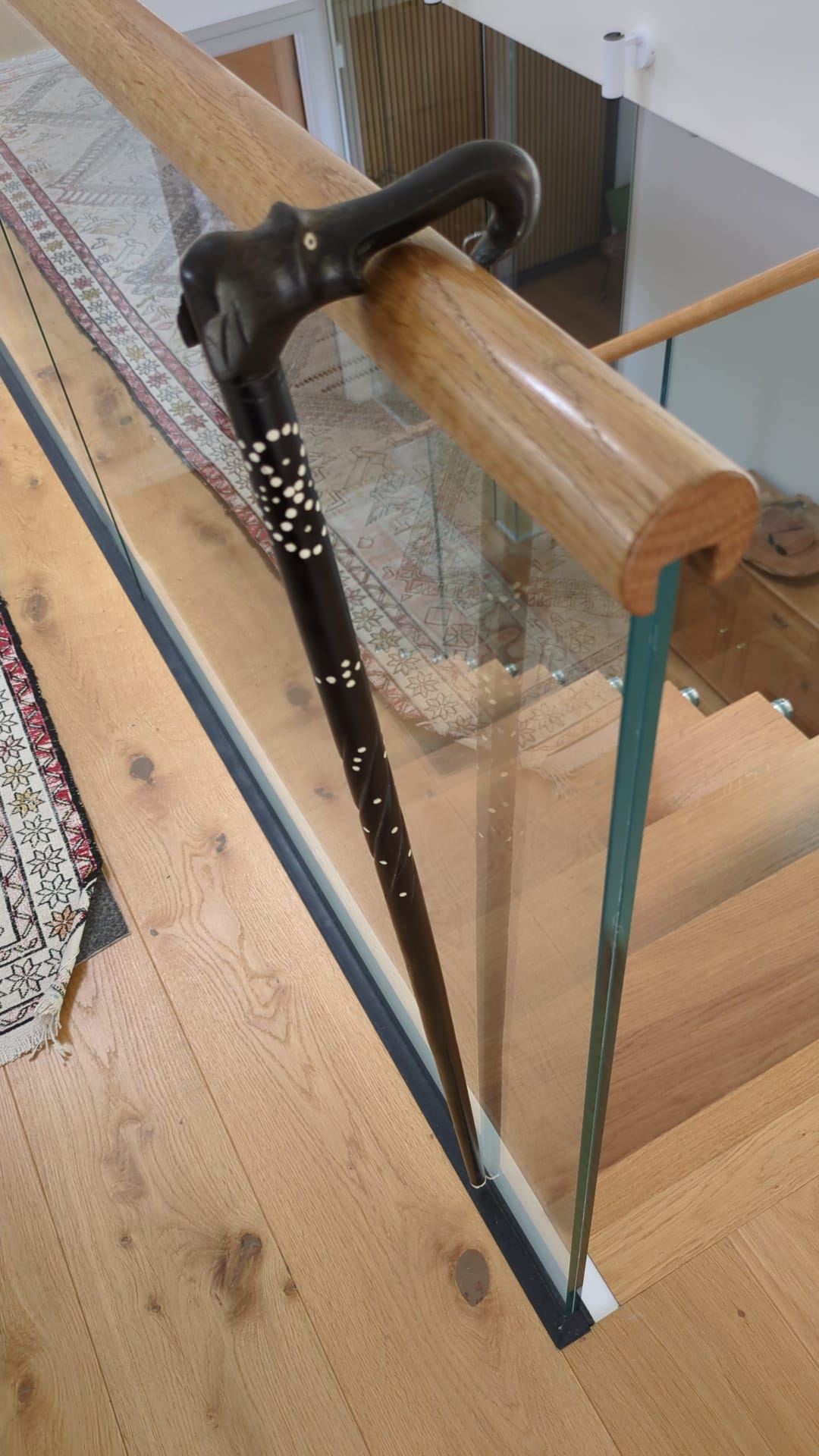
An inherited ebony cane with inlay and a carved elephant head
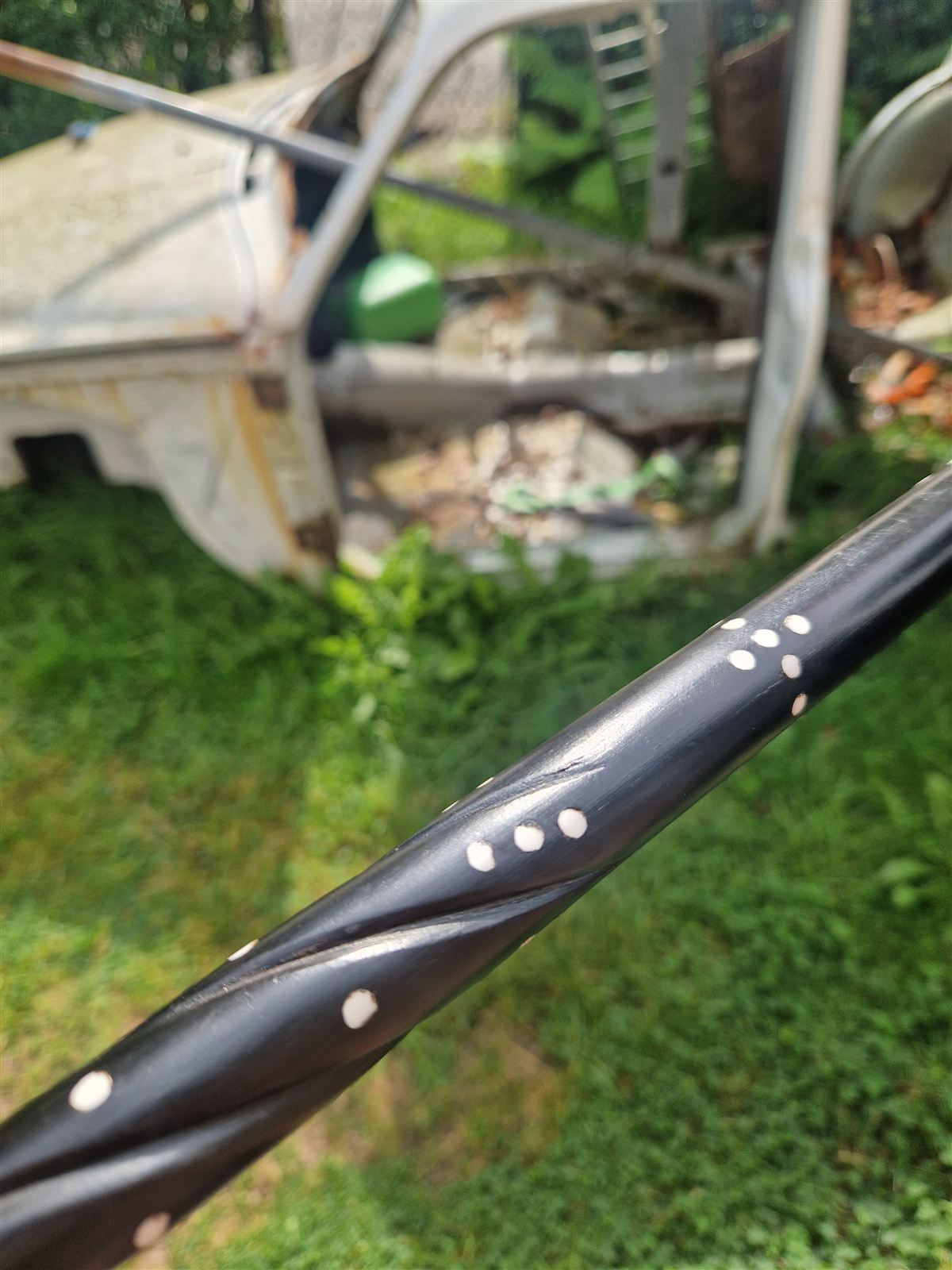
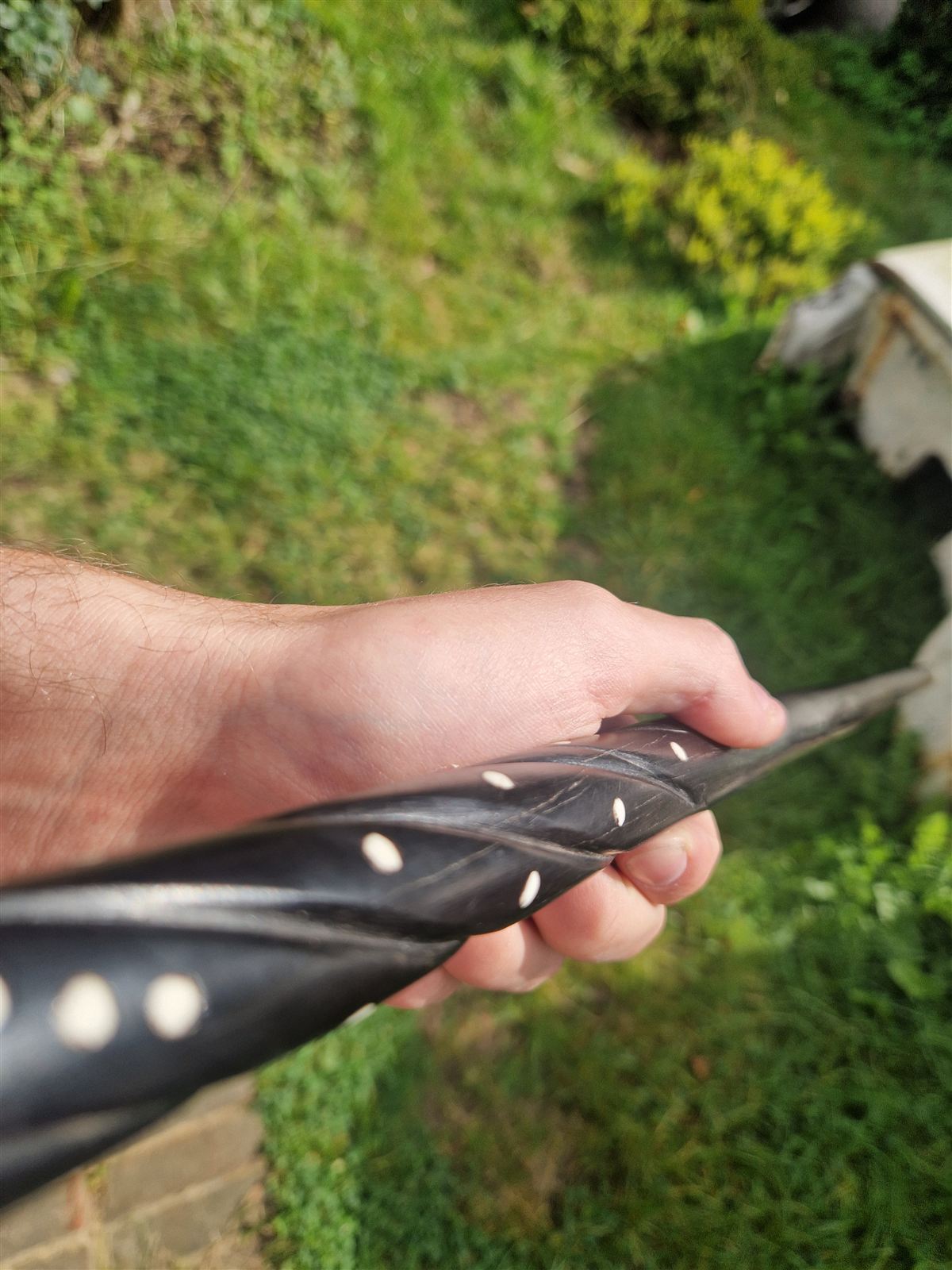
An ebony walking cane, inherited by our client from their late father, who was given it in Sri Lanka while working there. Earlier repairs had left chunks missing and filler in the wrong colour, and several pieces of the ivory inlay were gone, along with the tusks. Every material we used can be reversed, which brings the work close to a conservation repair.
Piece
Ebony walking cane, Sri Lanka
Materials
Ebony, bleached buffalo bone, shellac, hide glue
Approach
Reversible throughout
Completed
September 2025
01
As it arrived
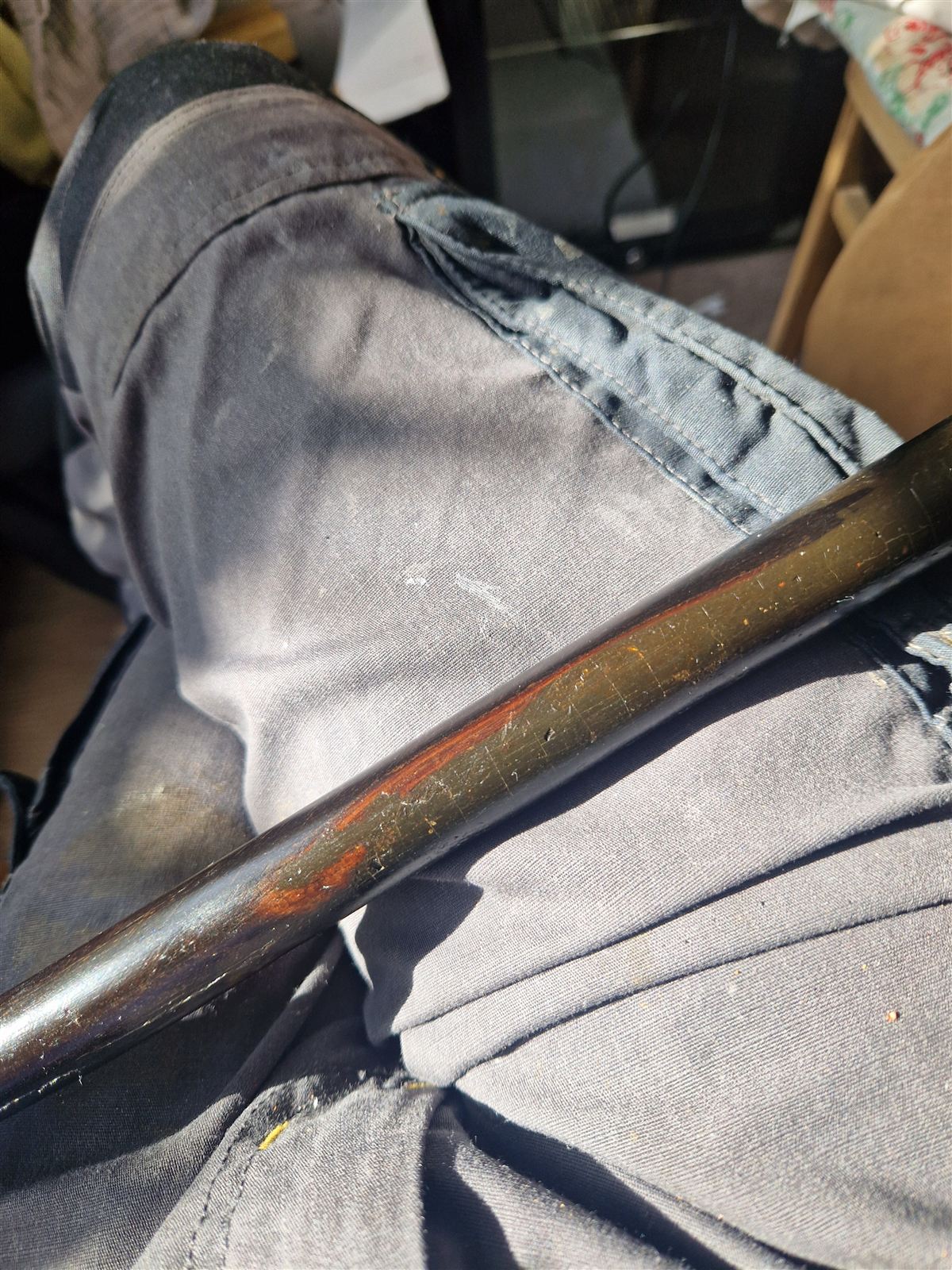
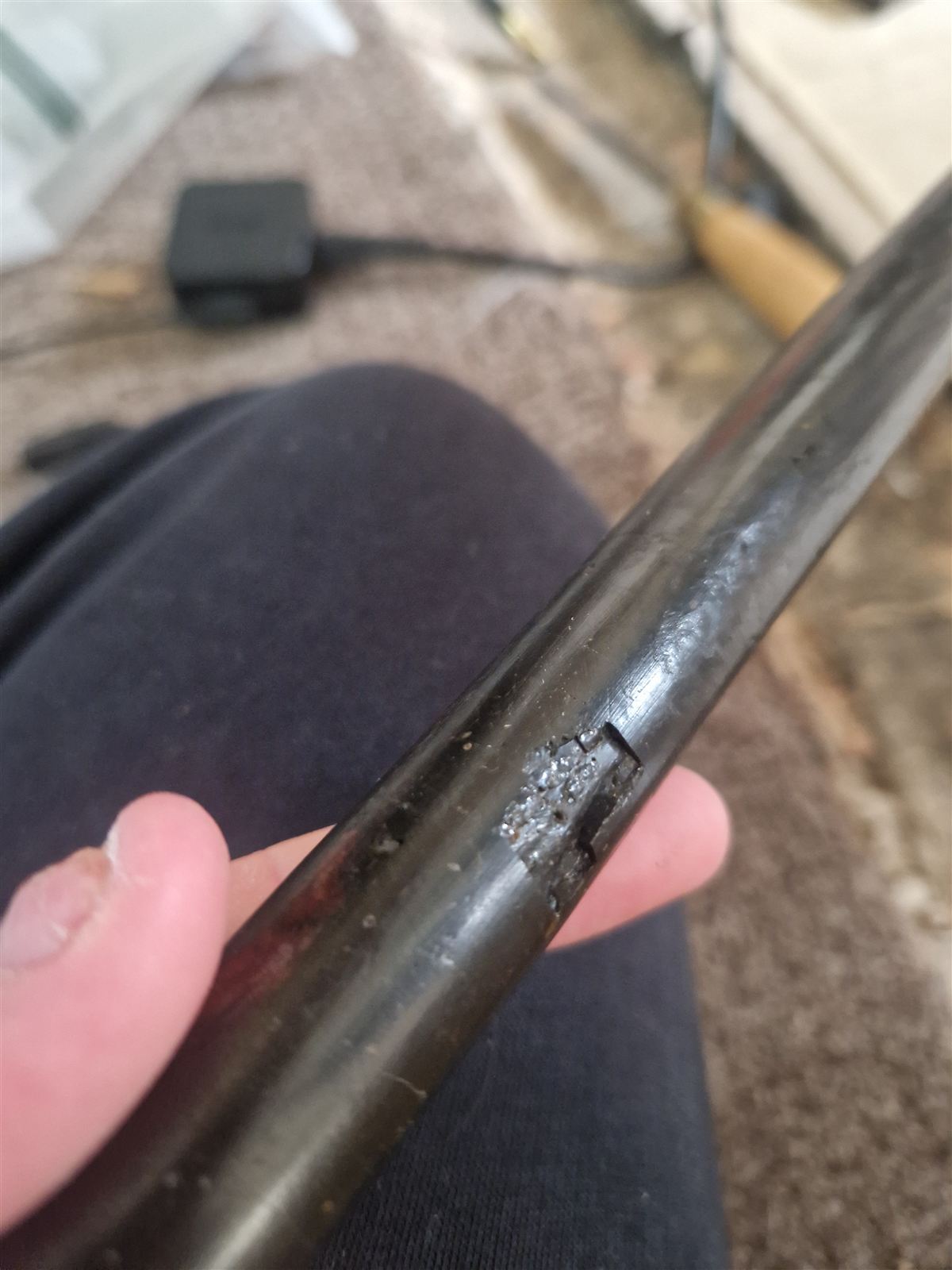
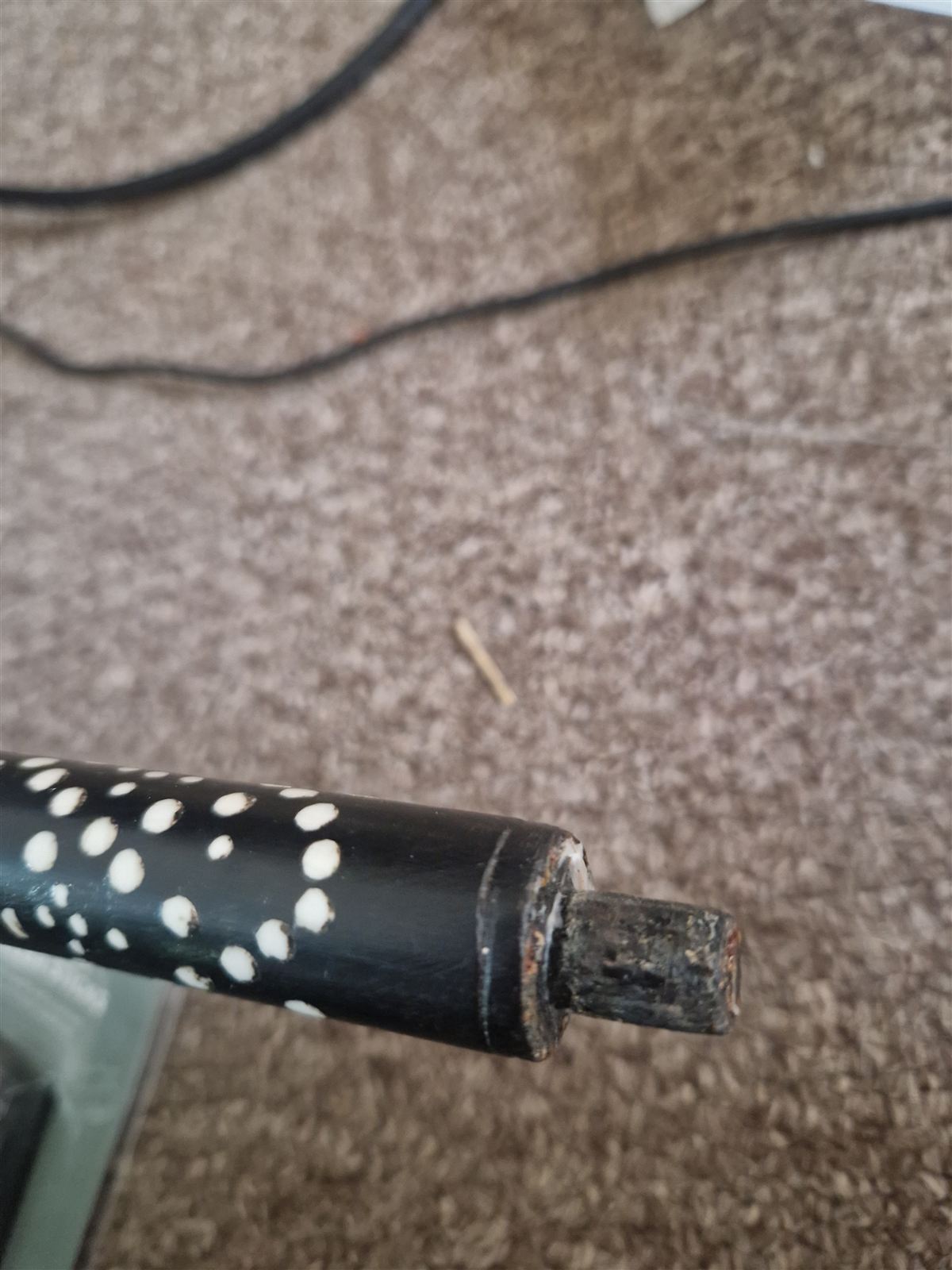
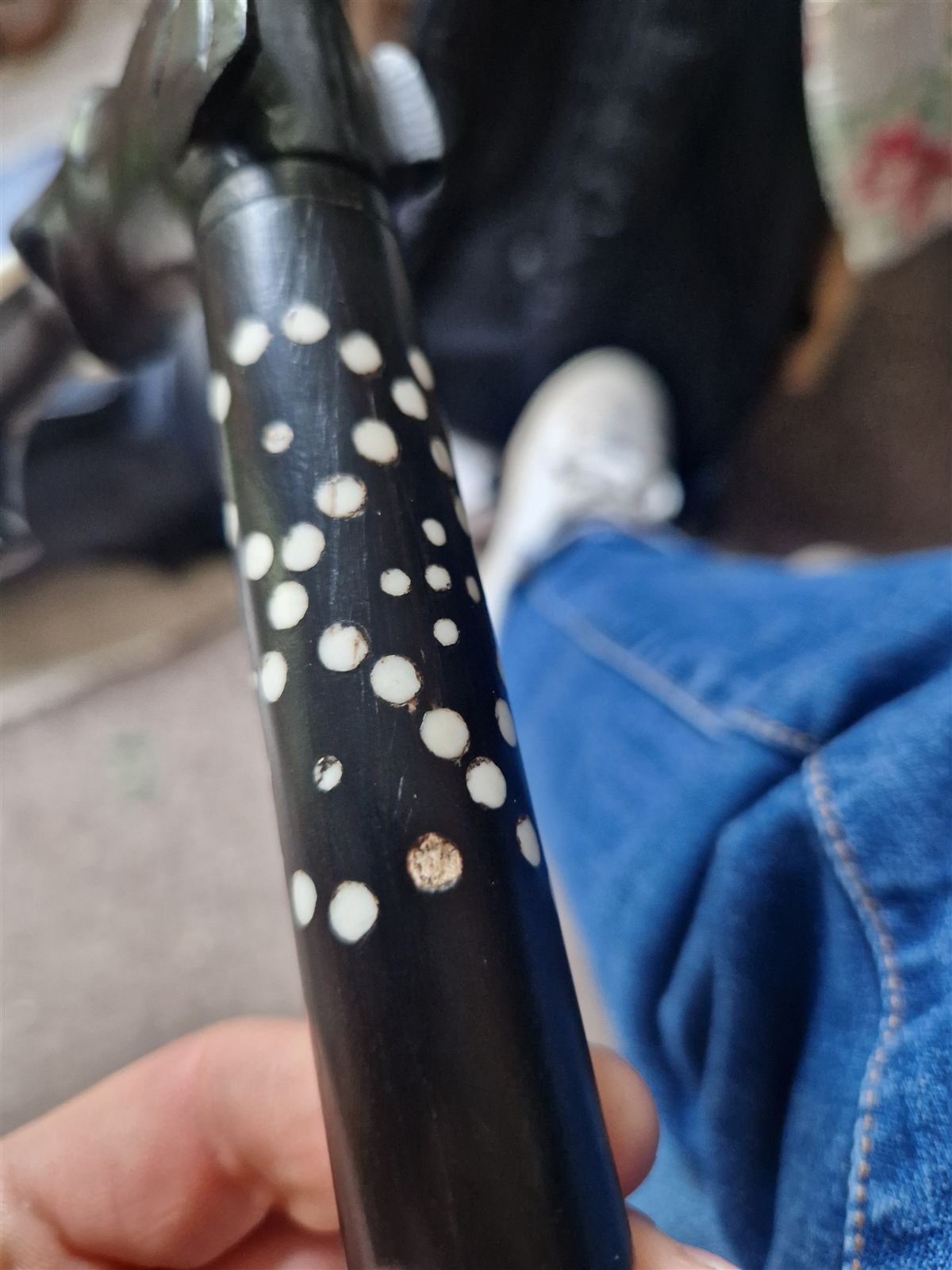
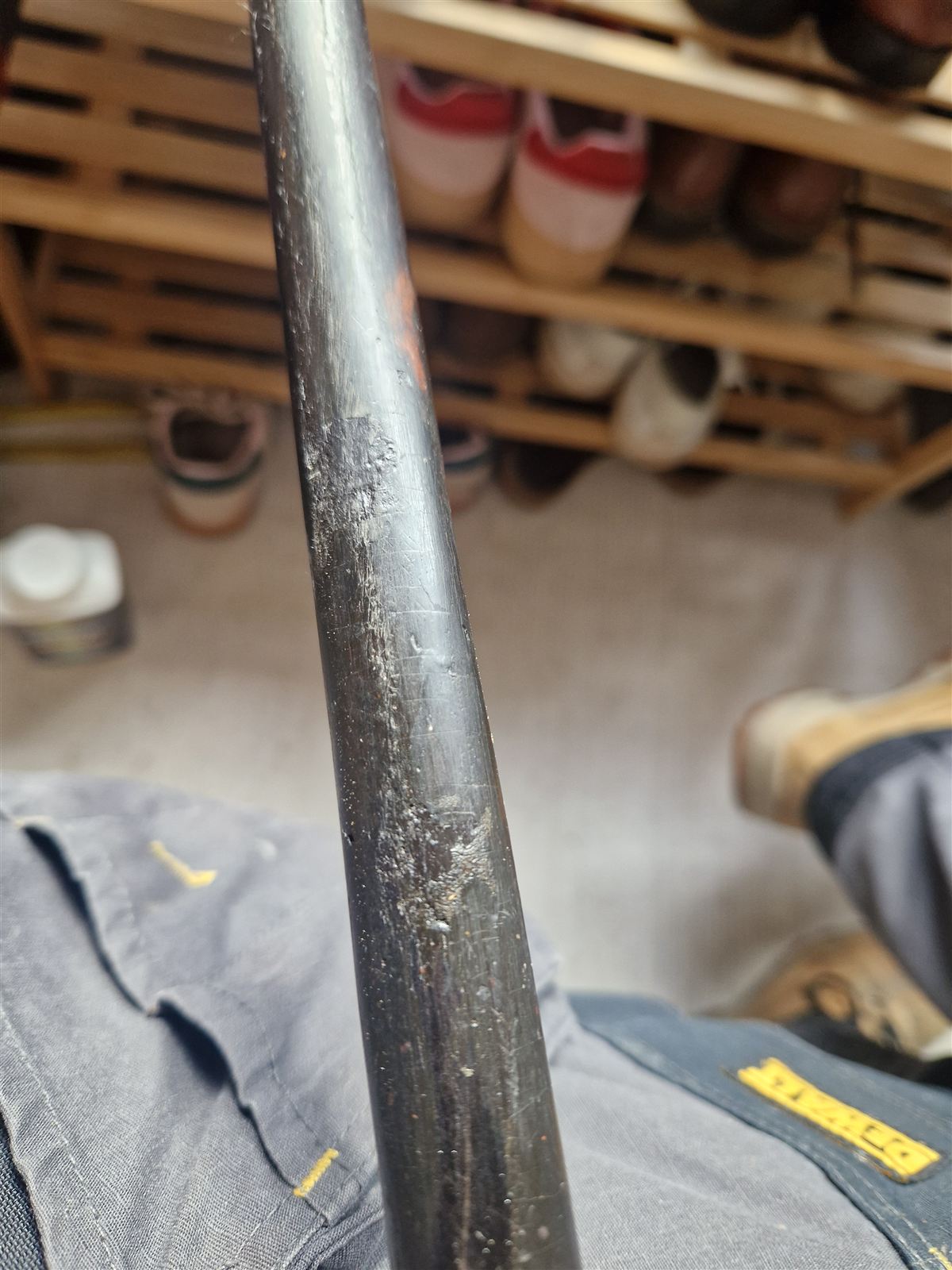
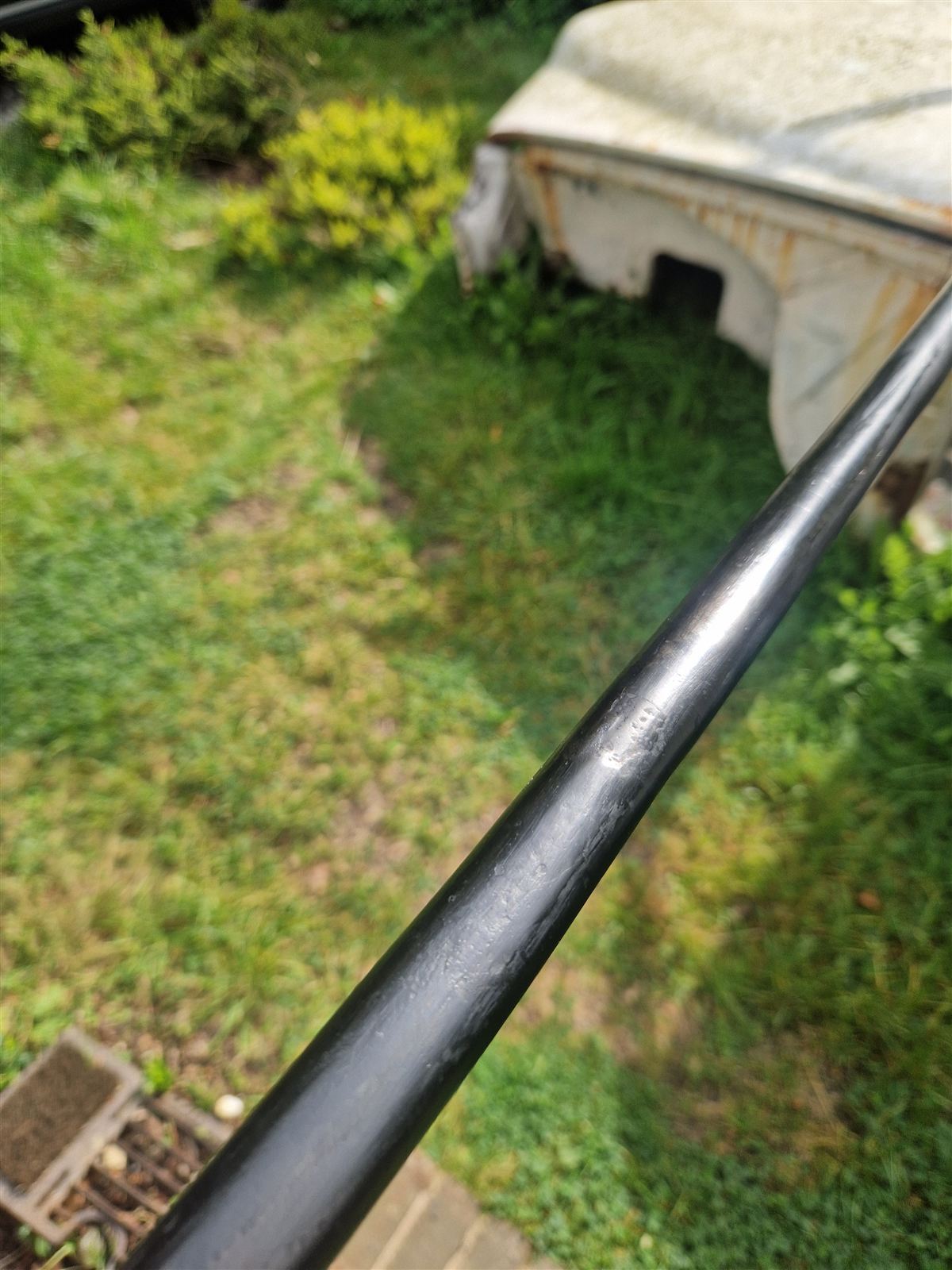
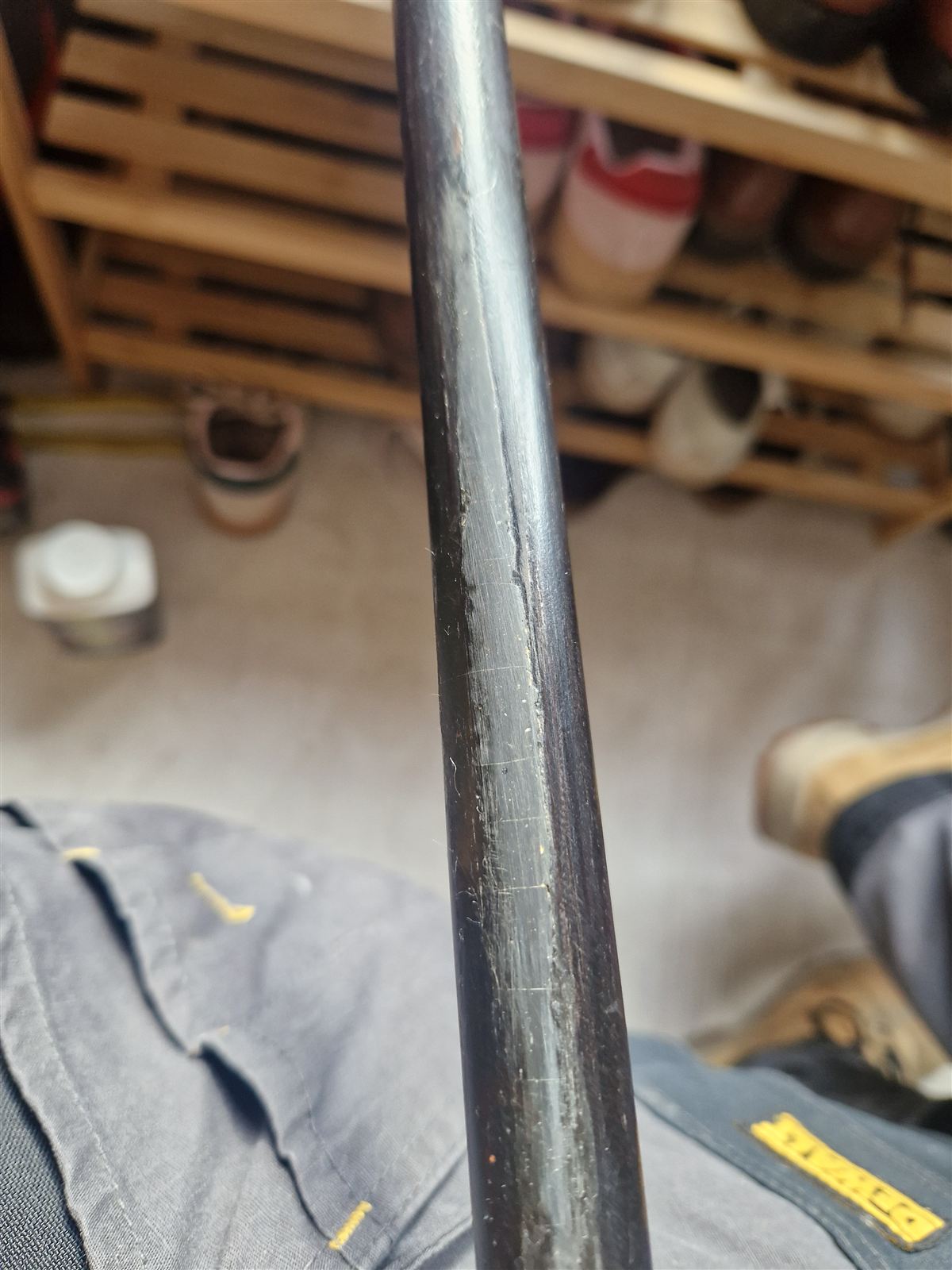
The cane had been repaired before, and not well. Chunks were missing where earlier repairs had failed, and the filler that had been used didn't match the ebony around it. Several pieces of the ivory inlay were missing, and so were the tusks.
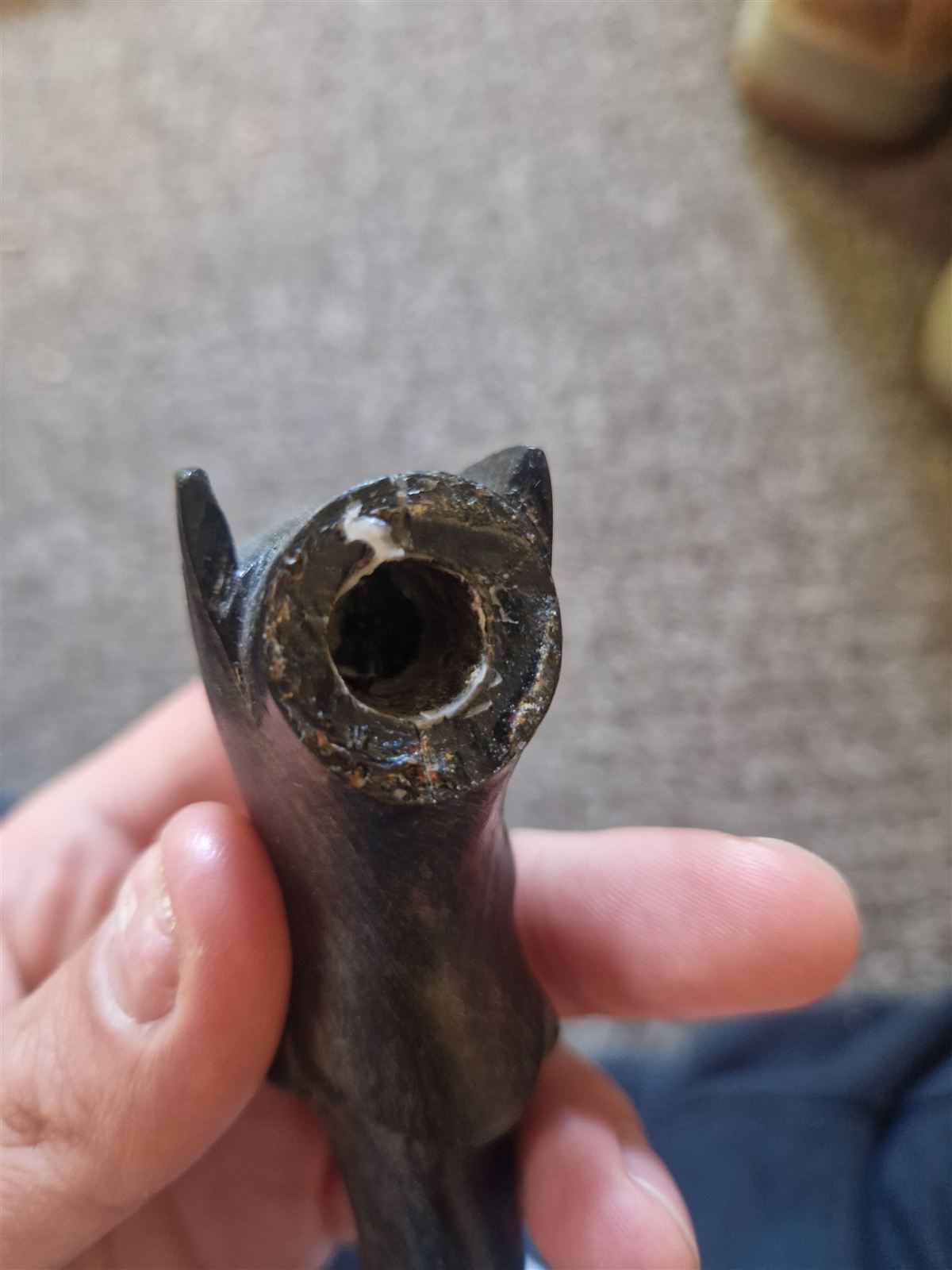
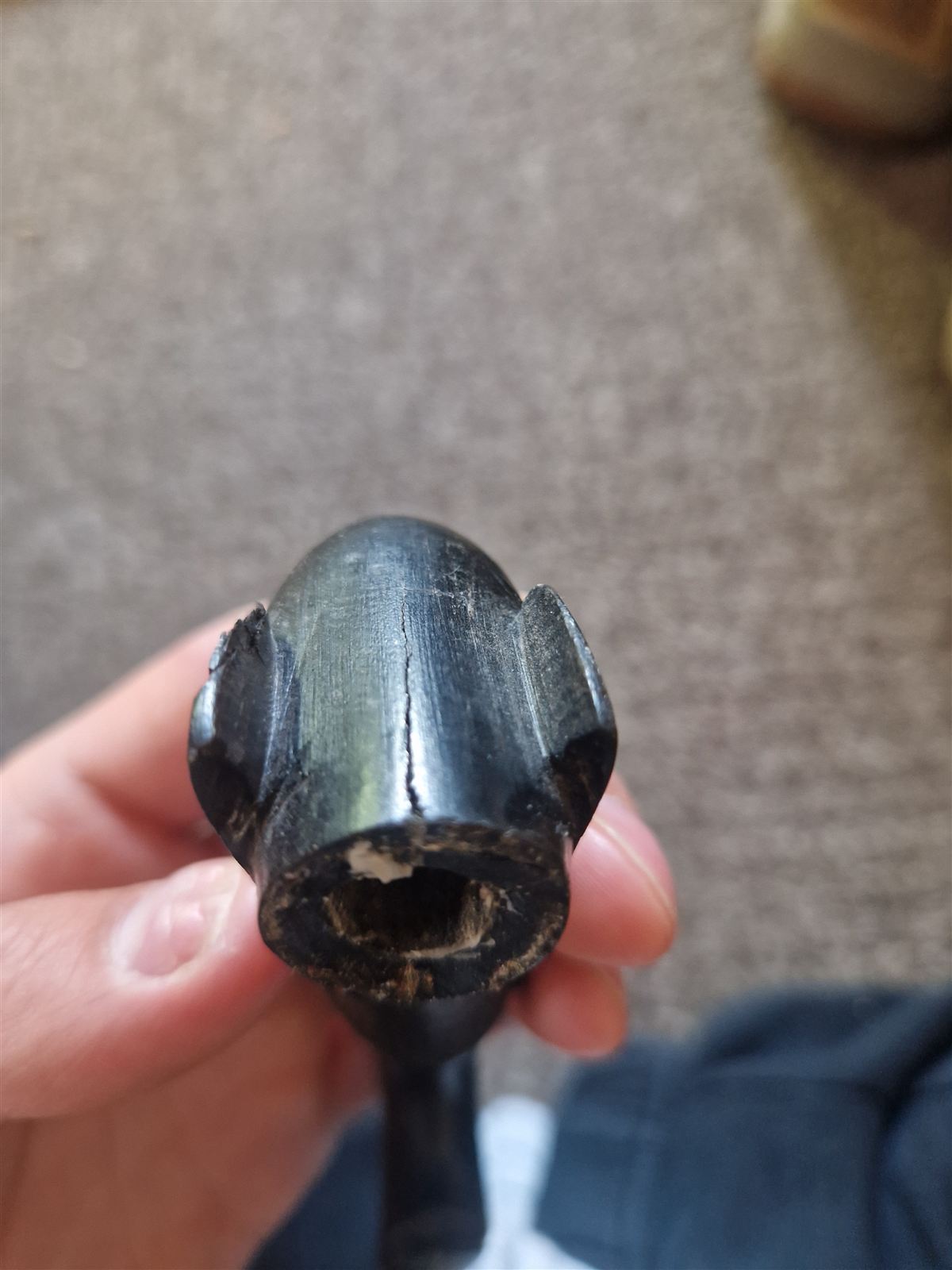
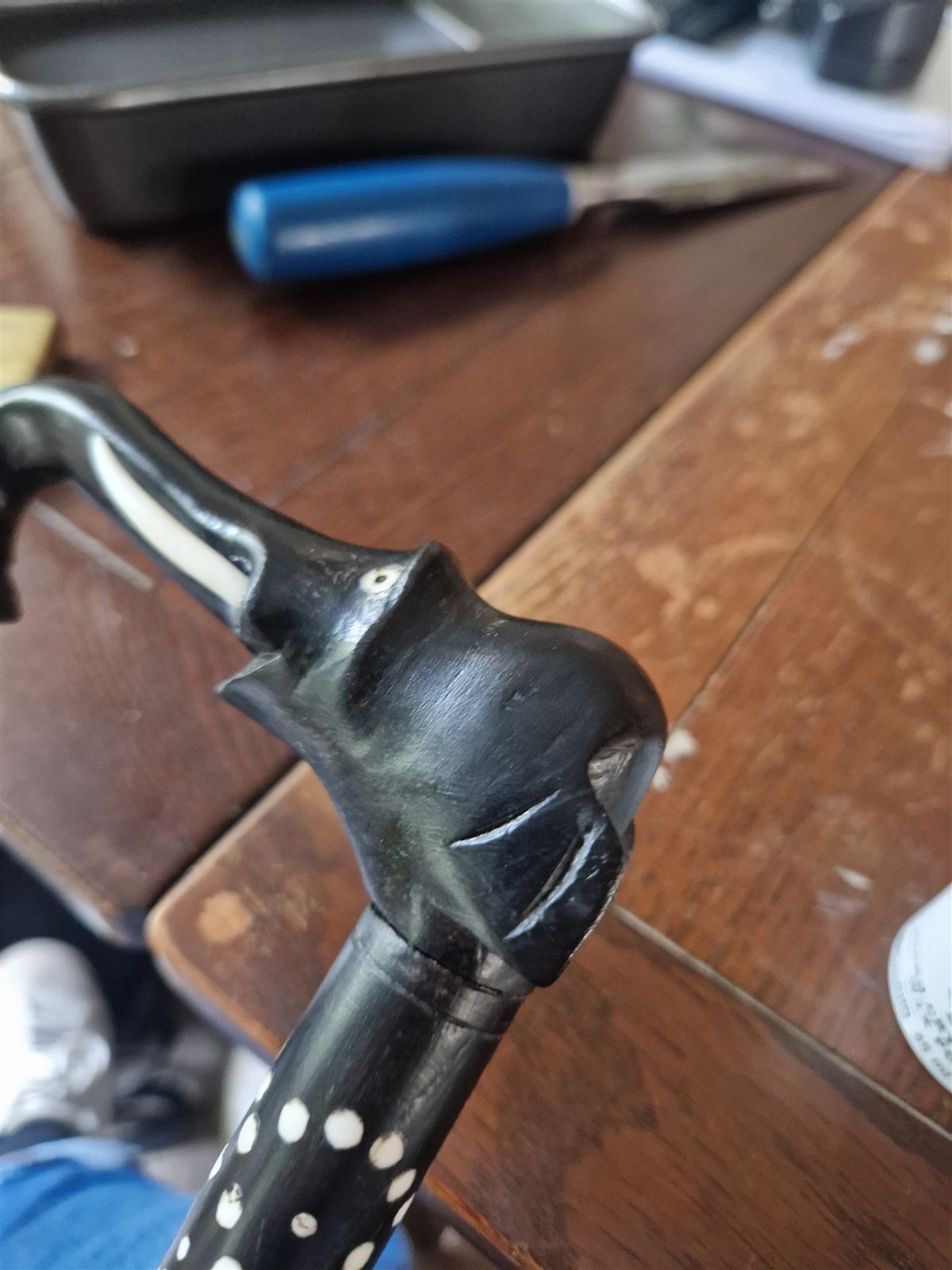
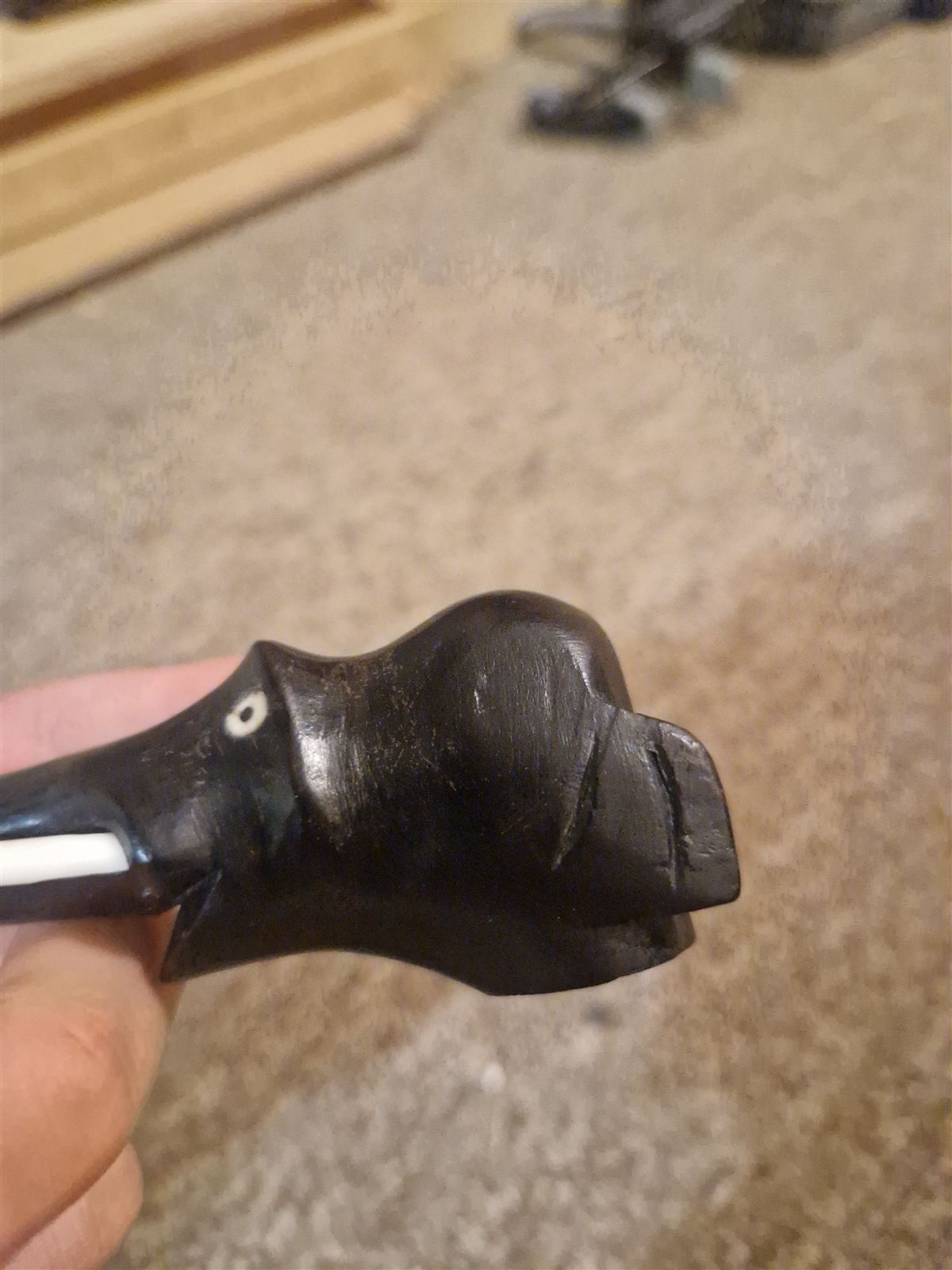
The head had been glued back on with superglue, there was a split in the back of the head, and the shaft was damaged where the head joins it.
Before, photographed by the client
Under light: discolouration and the wrong colour from earlier repairsAn earlier filler repair falling outDamage to the shaft where the head joins
The head, previously repaired with superglueA split in the back of the head
02
Stripping back
The whole cane was stripped with alcohol, and the poorly repaired sections were sanded away. The old filler, which looked to be a kind of hard bitumen, had to be carved out by hand.
Where the damage went too deep to fill, we grafted in new pieces of ebony.
The old finish cleaned off the inlay
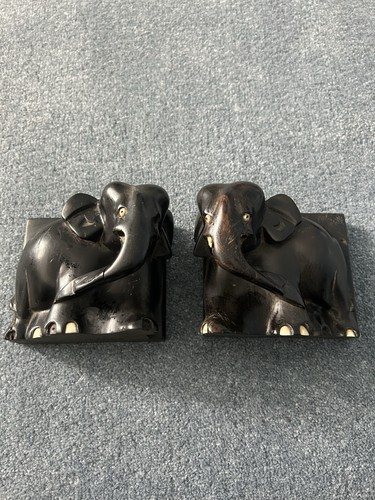
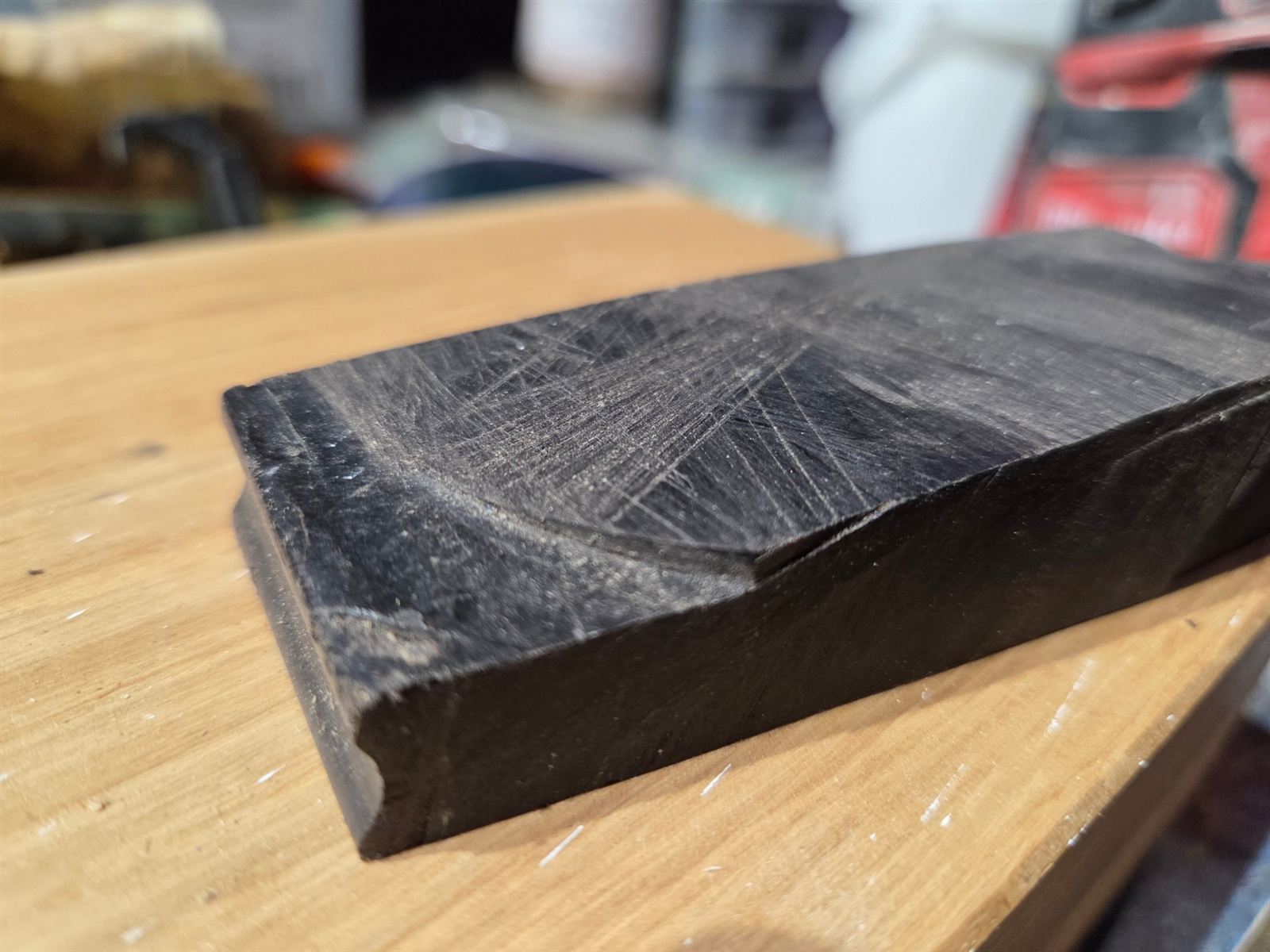
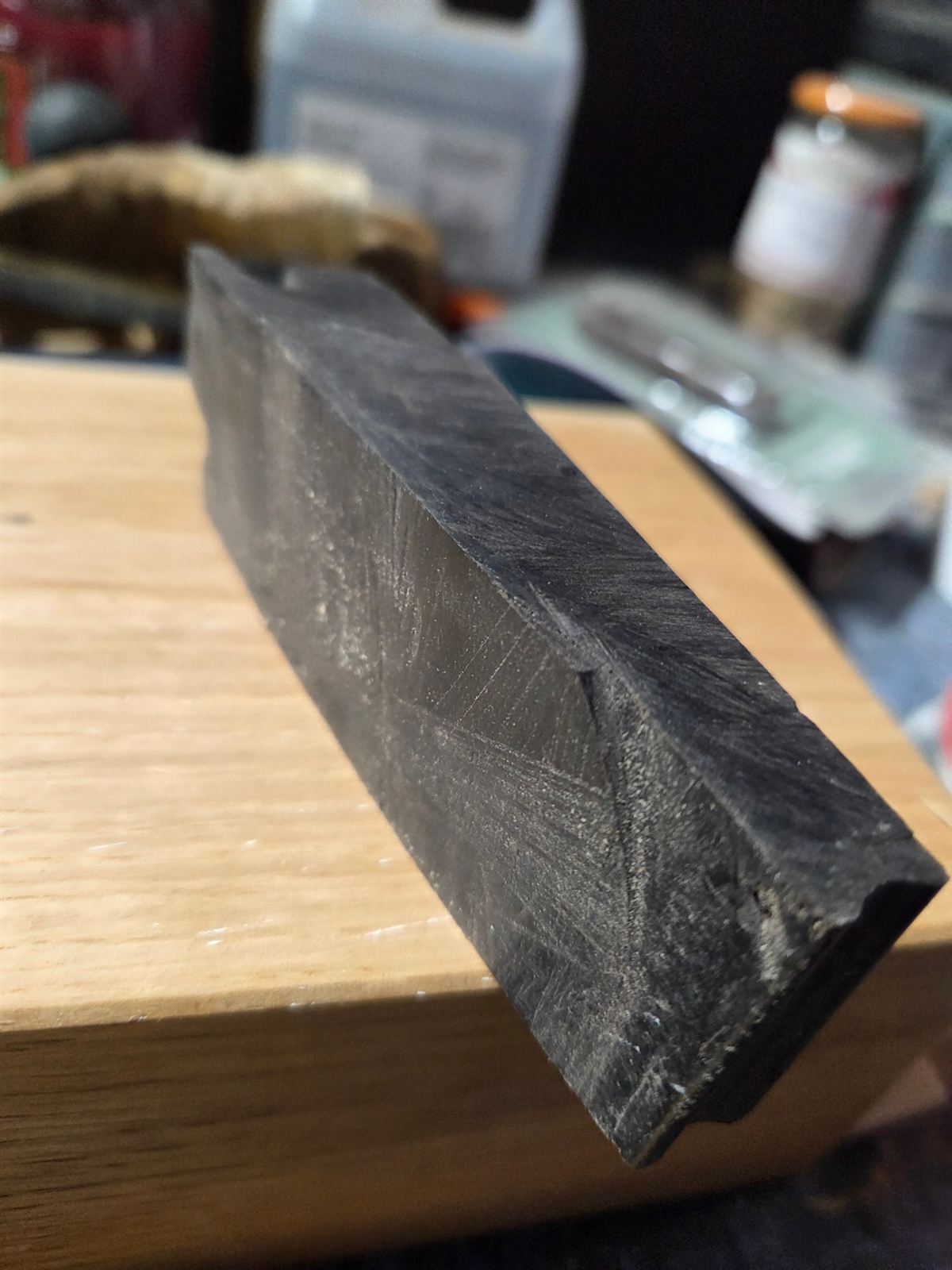
Matching ebony meant finding the same timber. We sourced a damaged antique bookend in Sri Lankan ebony from an antique dealer. It was far too damaged to be repaired itself, but it made an ideal donor, giving us ebony of the same kind as the cane for the grafts.
Antique Sri Lankan ebony bookends, the donor for the graftsDonor ebony, ready to be cut for the graftsThe donor ebony up close
03
Filling
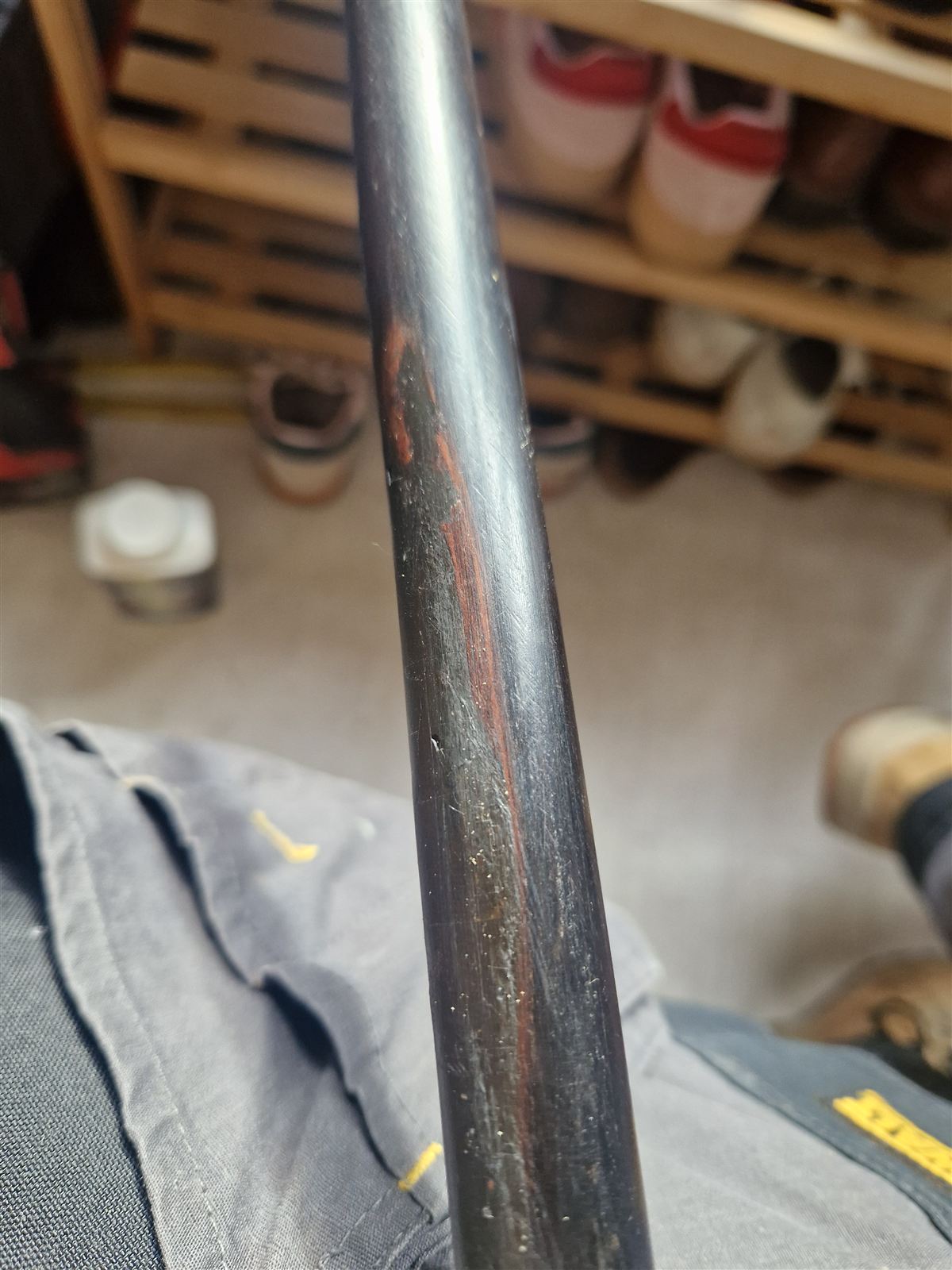
The repairs were refilled with Liberon shellac filler in the correct colour, and hairline cracks were filled with shellac and wax.
Refilled in the correct colourShellac and wax to fill hairline cracksAfter filling, before polishing
04
The head
The head was re-jointed with hide glue, so it can be taken off again in the future if it ever needs to be. The ear was repaired and recoloured to match.
Ear repair and recolouring in progressThe remade ear
05
Inlay and tusks
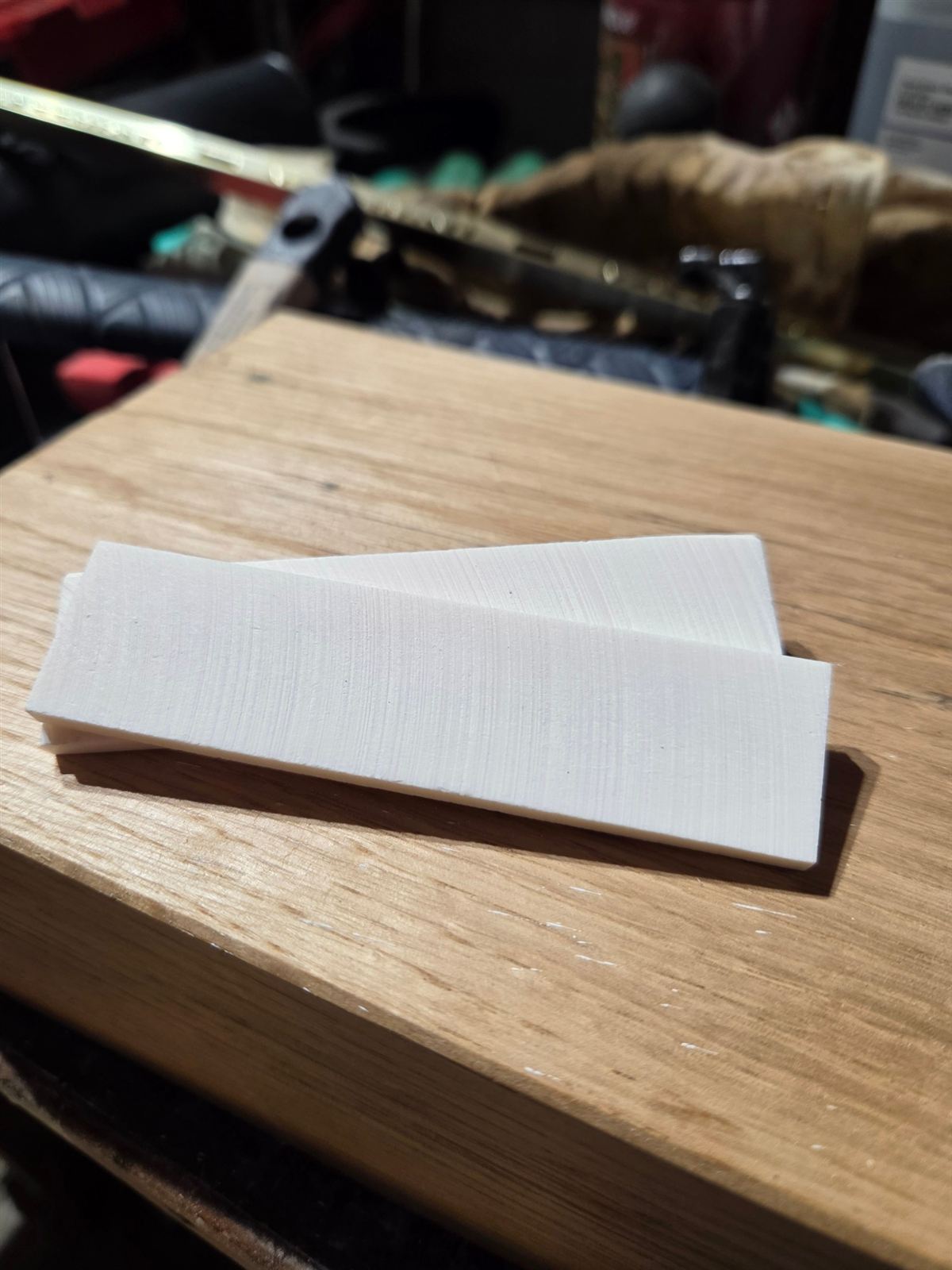
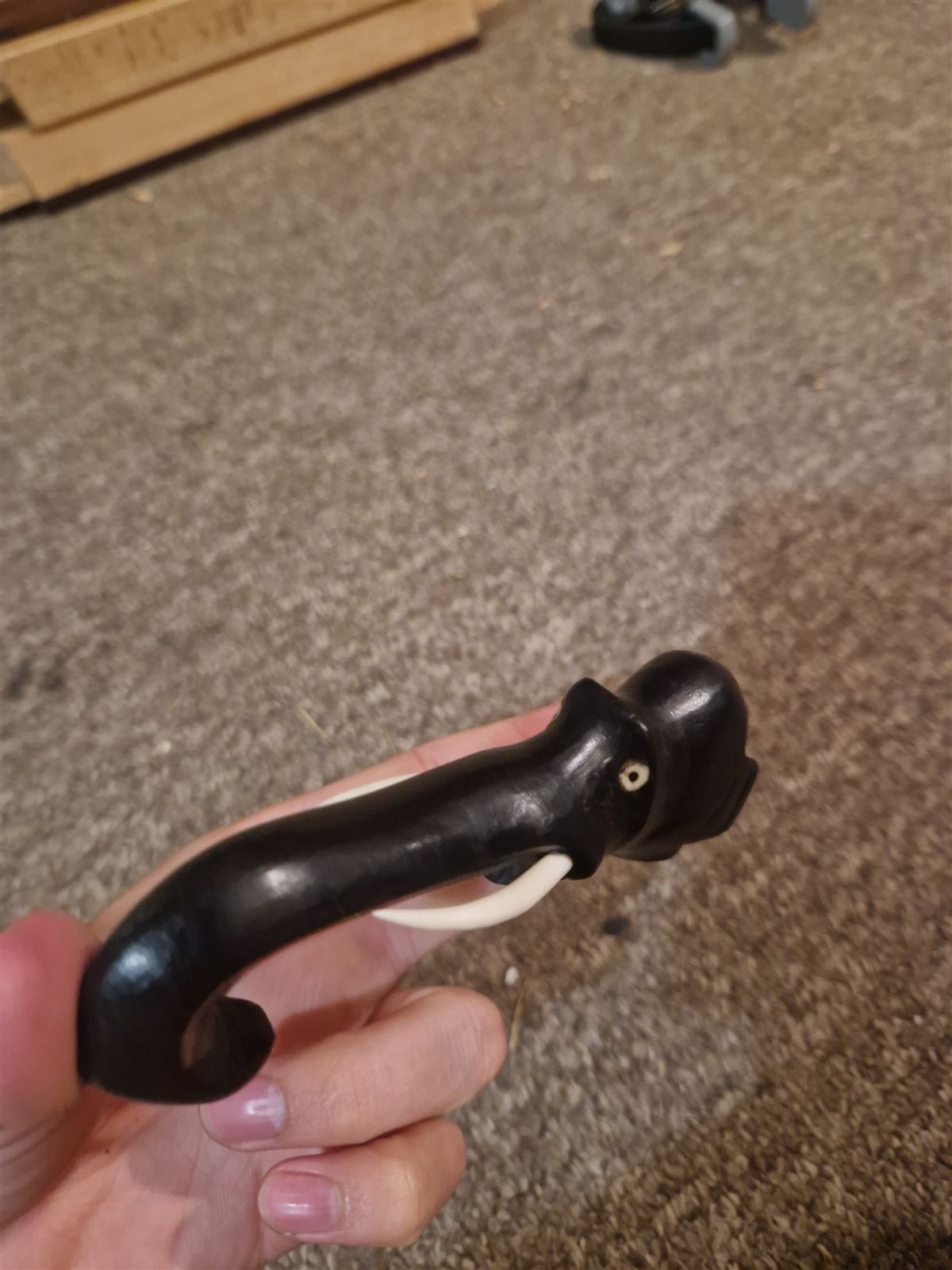
Matching old ivory is difficult. To get the colour right, we imported knife handle blanks made from bleached buffalo bone from America. From these we replaced the missing pieces of inlay and carved new tusks by hand.
New ivory was never an option, ethically or legally: the UK's Ivory Act 2018 bans dealing in elephant ivory. Bleached bone gives the colour and character of the original without it.
Bleached buffalo bone blanks, imported from AmericaNew tusks, hand-carved from bleached buffalo bone
06
Ebonising and polish
The whole piece was ebonised with a mix of Winsor & Newton India ink and our own ebonising recipe, then wet sanded to give an even sheen across old and new.
It was then French polished with button polish for an antique look: not too clean, not too dirty.
Re-ebonising in progressThe filled section after polishing
07
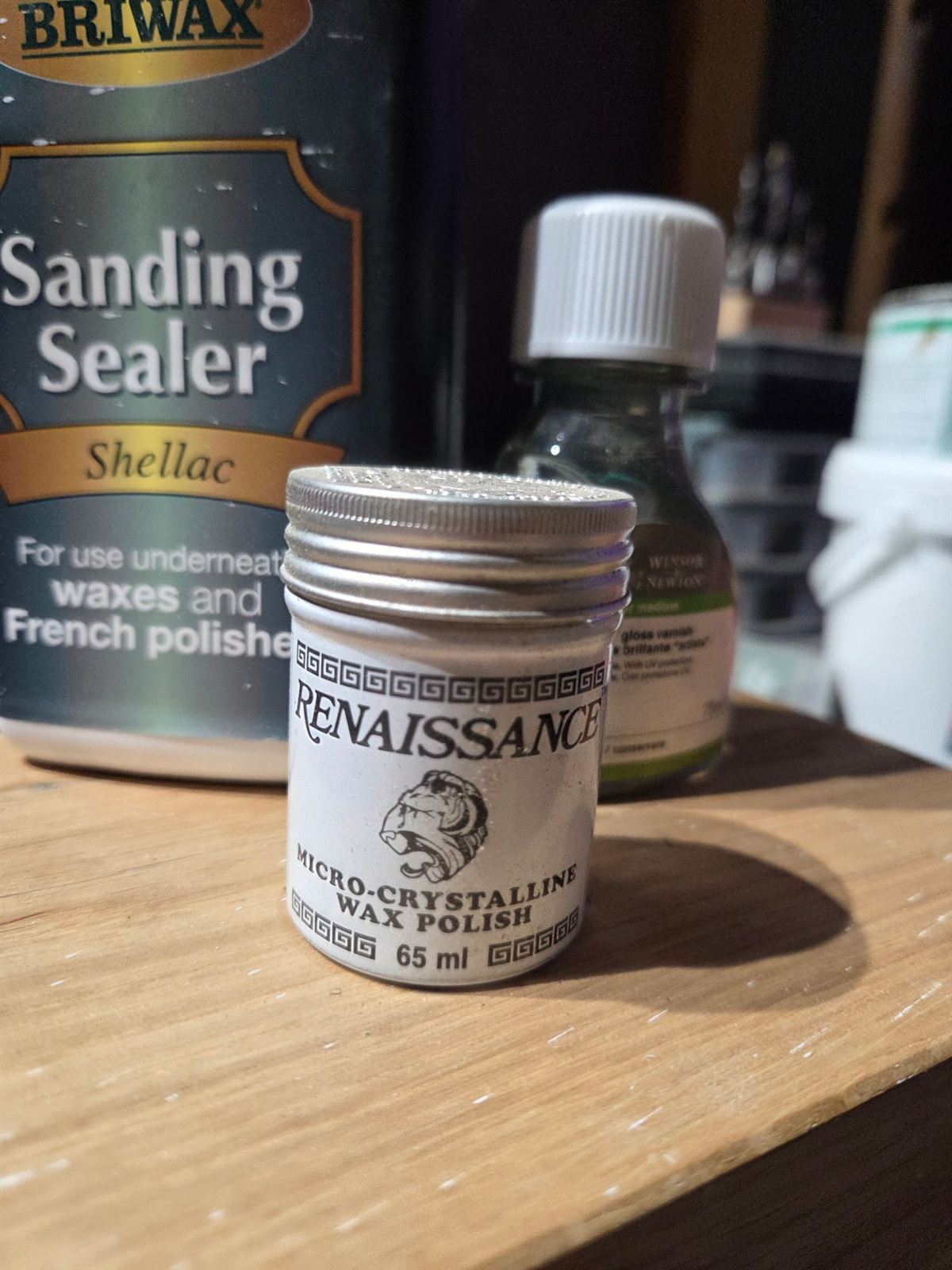
Renaissance Wax
The ivory was carefully cleaned with spirits, and the whole cane was finished with Renaissance Wax, which brings the sheen of the French polish down to a softer, more natural level.
Renaissance Wax was developed in the British Museum's research laboratory in the 1950s, after its scientists found that ordinary waxes contained acids that could, in time, damage original finishes. It is still used by museums and conservators today, and its maker holds a Royal Warrant as a supplier of products for restoration and conservation.
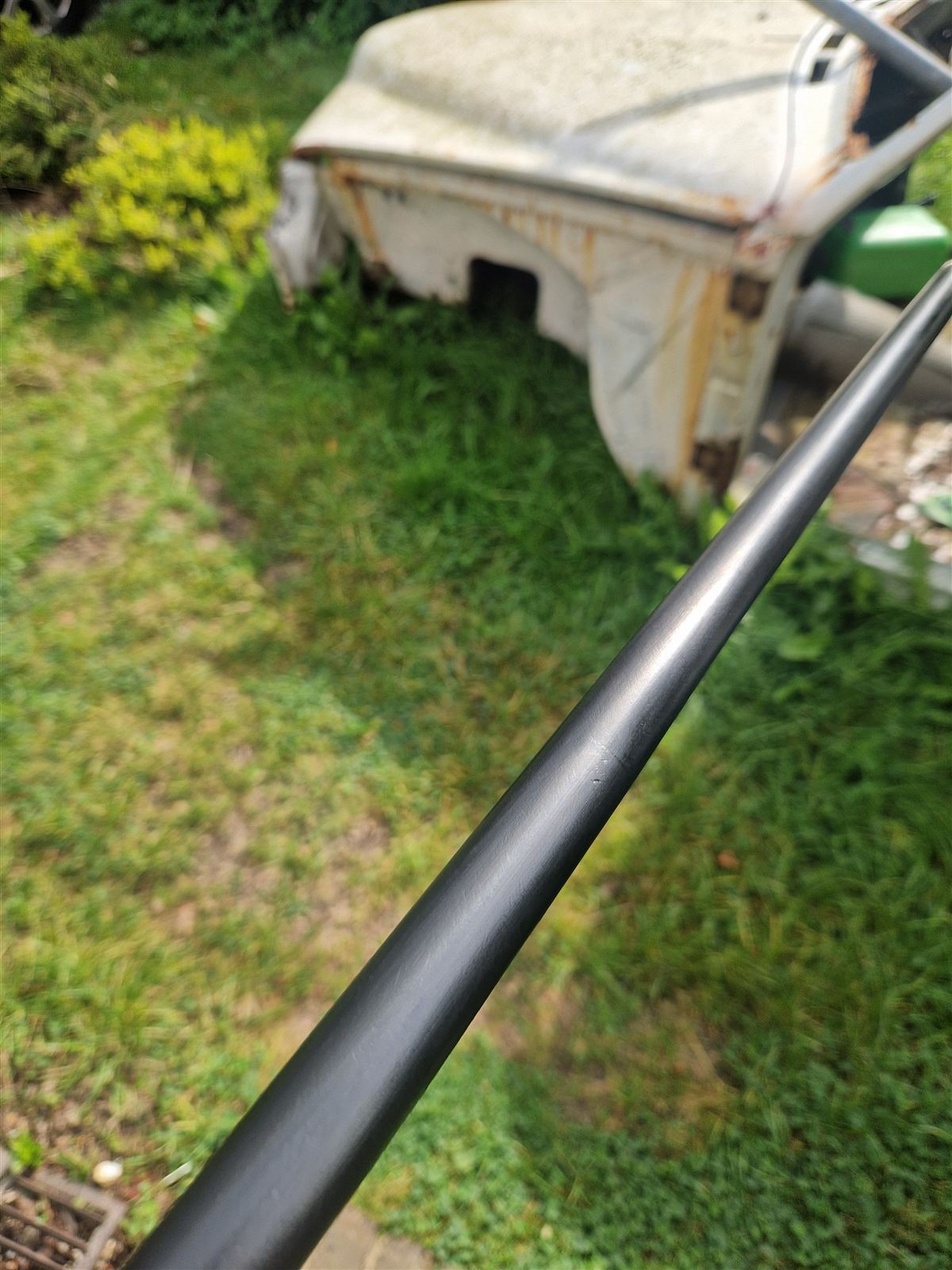
Renaissance WaxThe finished sheen
08
Finished
Every material used, from the hide glue to the shellac and wax, is reversible. If the cane ever needs work again, a future restorer can undo ours without harming what is original, which brings this close to a conservation repair.
Replacement inlay alongside the original
09
Ceylon ebony
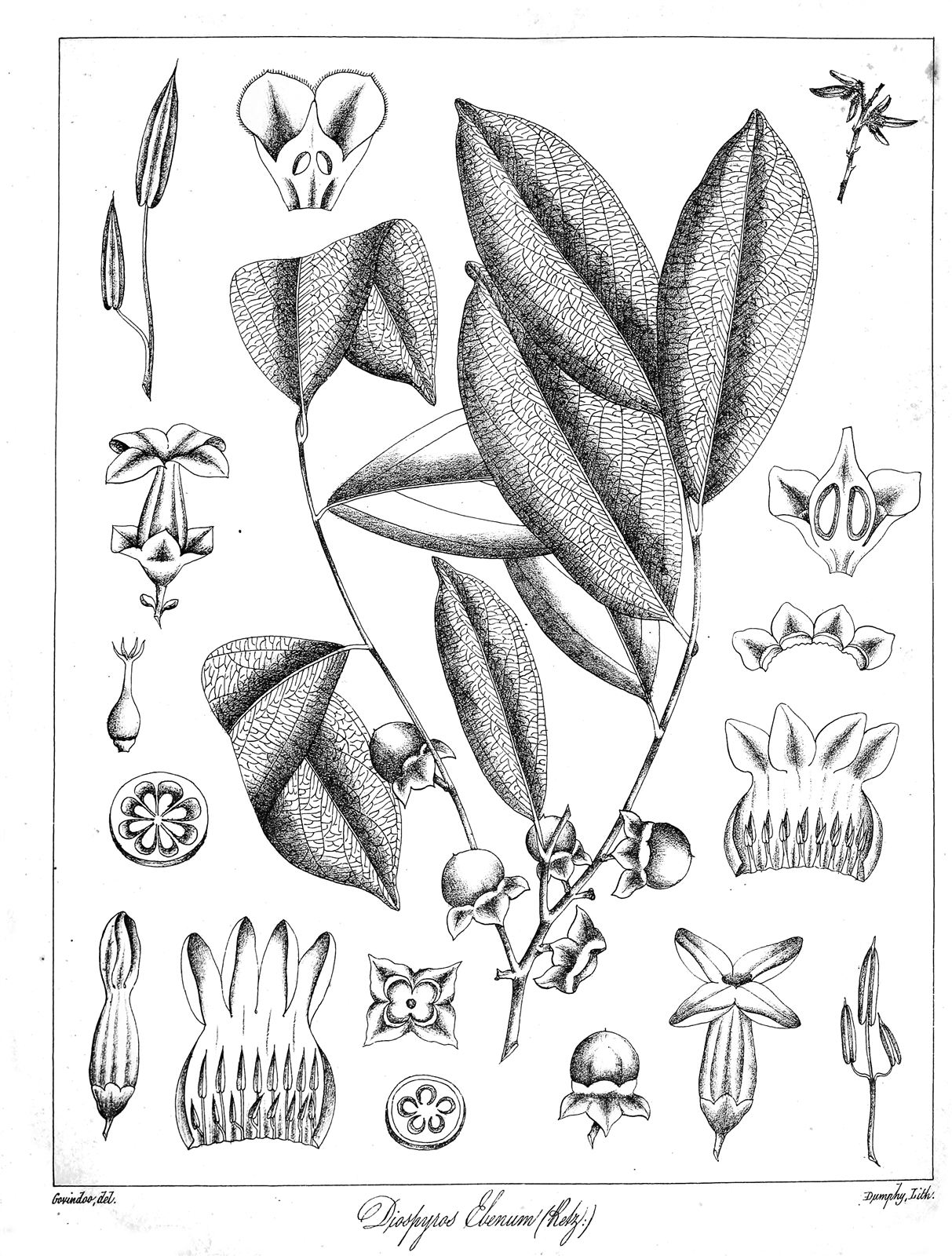
Sri Lankan ebony, Diospyros ebenum, is often described as the original black ebony of commerce, and was long considered the finest, traded to Europe as a fancy wood and to China for furniture. Today the tree is classed as nationally endangered in Sri Lanka, and its timber can no longer be exported except as licensed handicraft.
Carved ebony canes like this one, with an elephant head, a twisted shaft and inlay, are a style made since the 19th century, and Galle in the south of the island was known for its inlaid ebony work. With so little new ebony available, a piece like this is worth repairing rather than replacing.
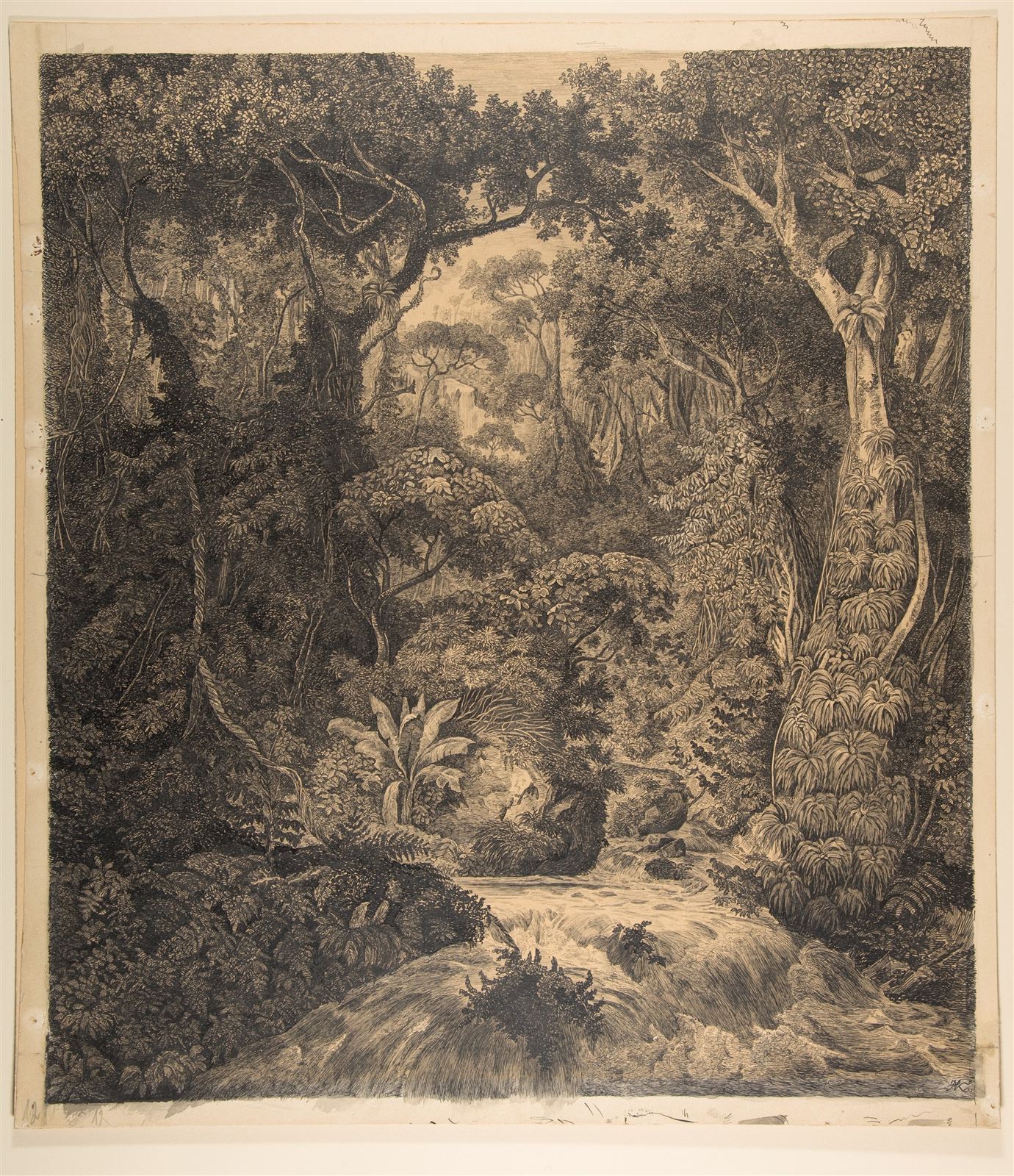
Diospyros ebenum, drawn by Govindoo for Beddome's Flora SylvaticaCeylonese Jungle, Hermann von Königsbrunn, 1851–65
Plate: R.H. Beddome, The Flora Sylvatica for Southern India (1869–73), pl. LXV, drawn by Govindoo, public domain via Wikimedia Commons. Drawing: Hermann von Königsbrunn, Ceylonese Jungle (1851–65), The Metropolitan Museum of Art, Open Access.