← Portfolio
Chair repair and reupholstery

Shield-back Carver

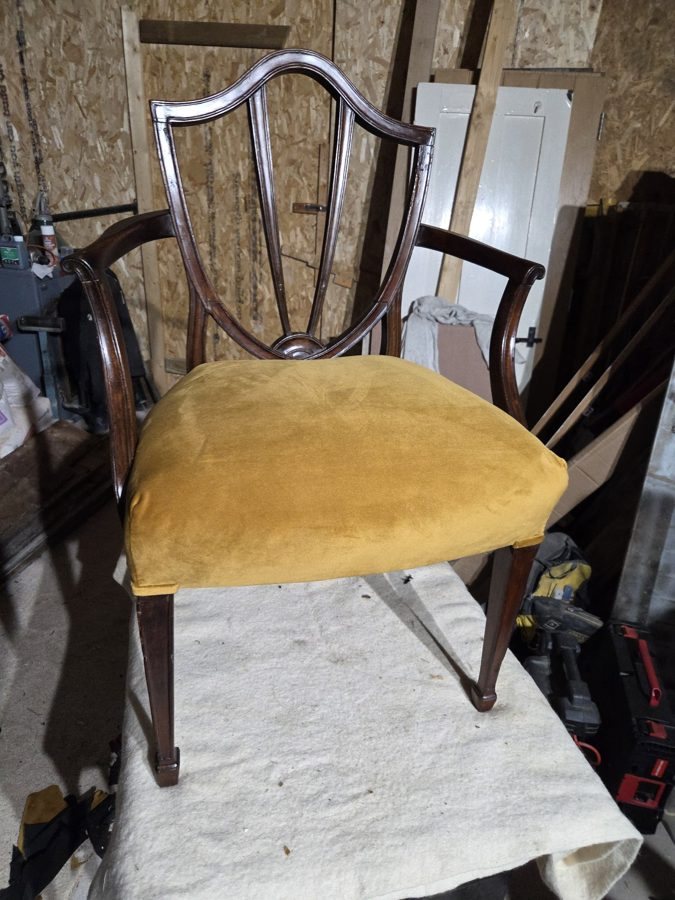
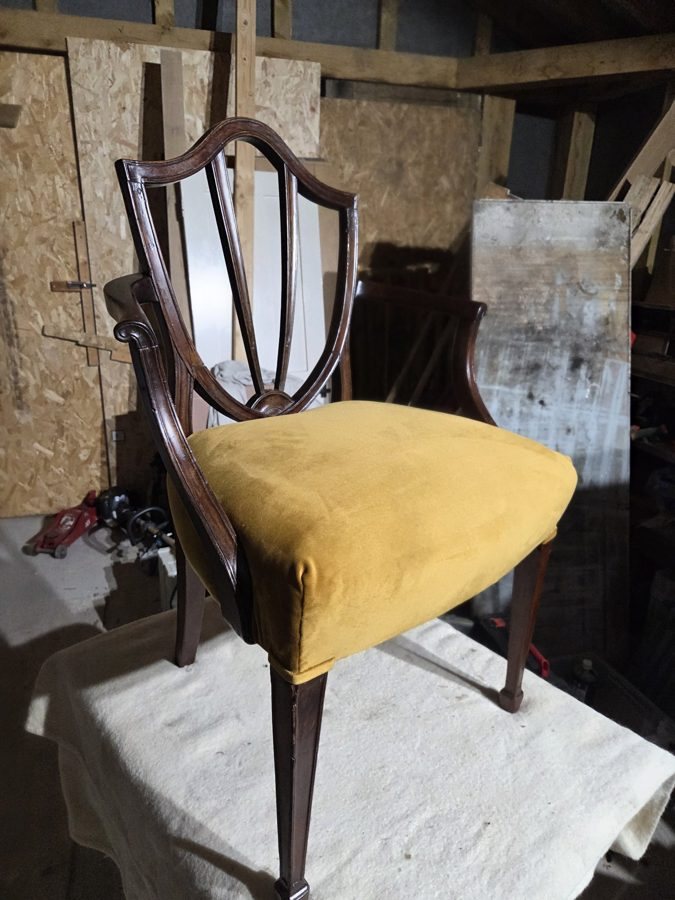
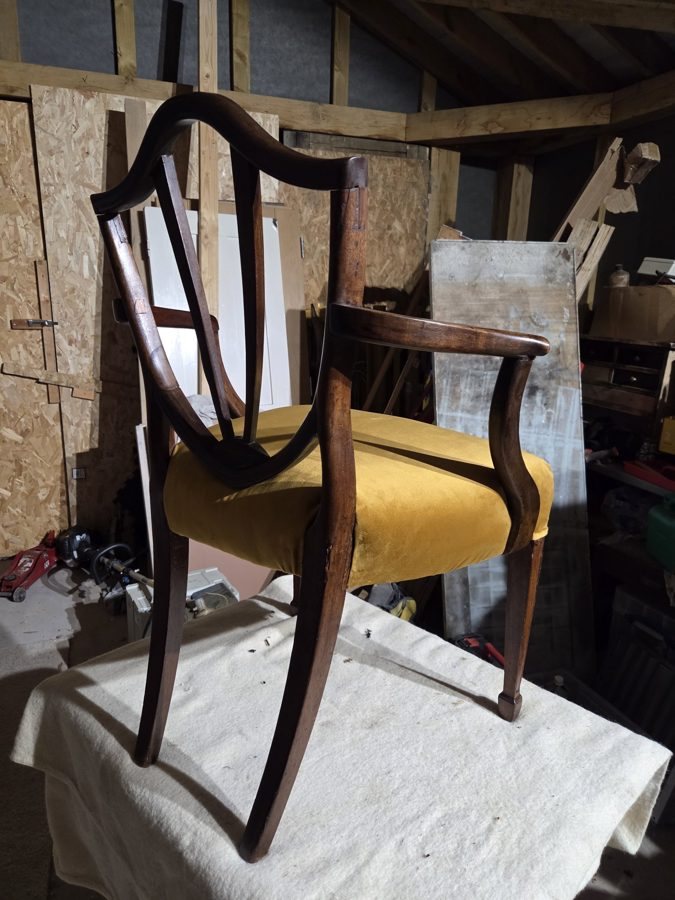
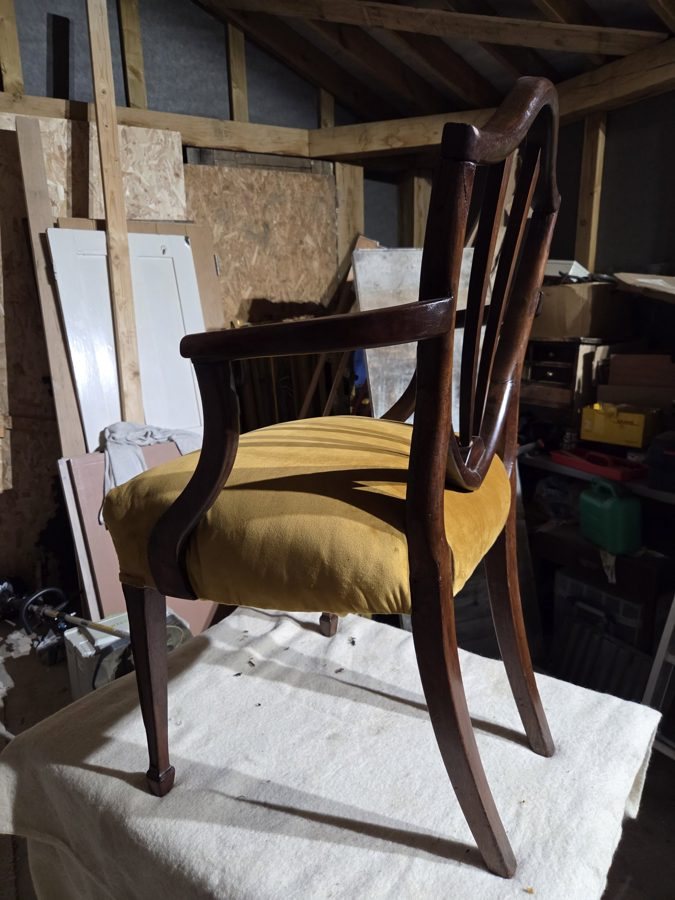
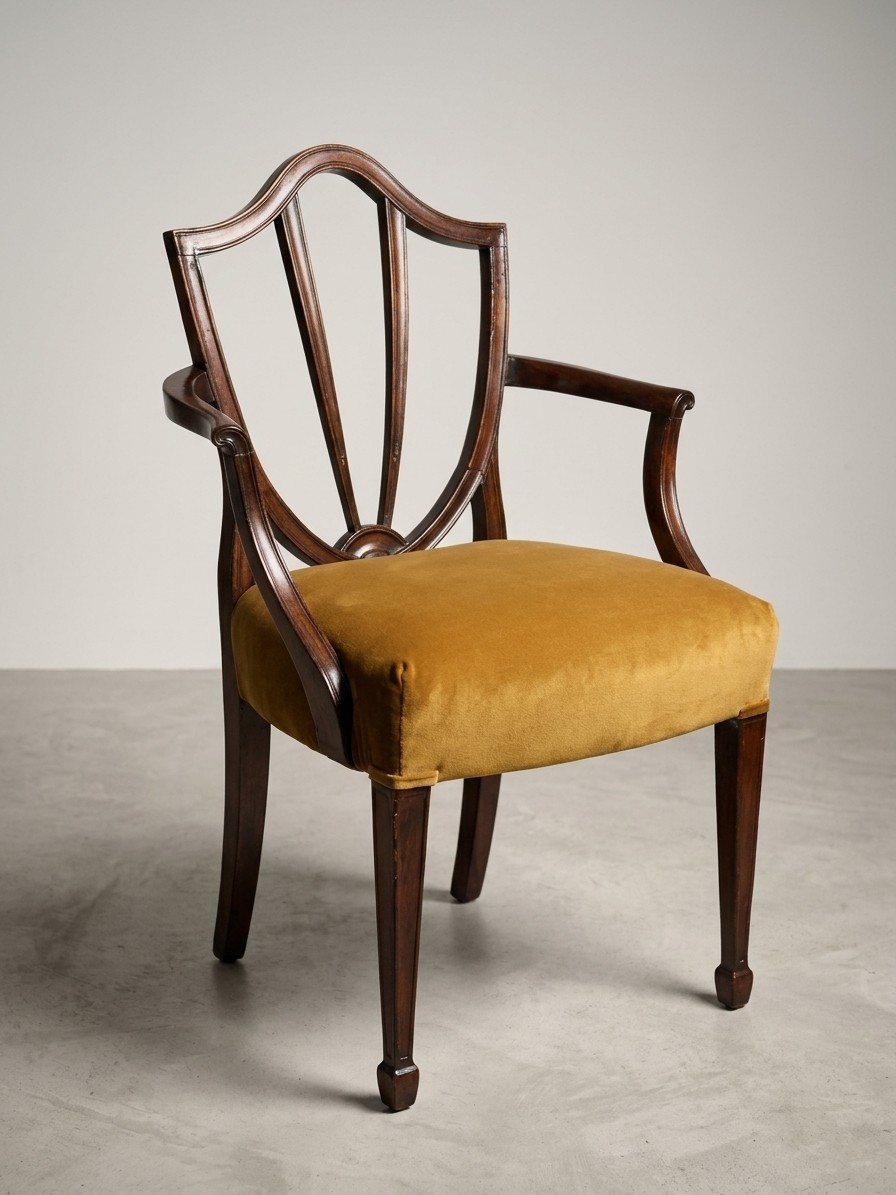
Georgian-style mahogany open armchair with a stuffover seat

A mahogany shield-back carver that had been poorly repaired at some point in its life, with replacement seat rails that had pulled the frame out of true. The work was to make the existing frame sound again, then refinish and reupholster it traditionally.

Style
Georgian-style shield-back carver
Timber
Mahogany
Upholstery
Traditional stuffover, gold velvet
Labour
Around 48 hours hands-on
The repaired shield-back carver in mahogany with a gold velvet seat
01

The assessment

The chair had been poorly repaired at some point. Both seat rails had been replaced, and not symmetrically, which had pulled the arms out of position, and the original mortices had been cut into.

With so much of the original joinery already lost, a true restoration was not possible. The aim instead was to make good the existing frame properly, so it is sound, square and fit to be used again.
02

Dismantling

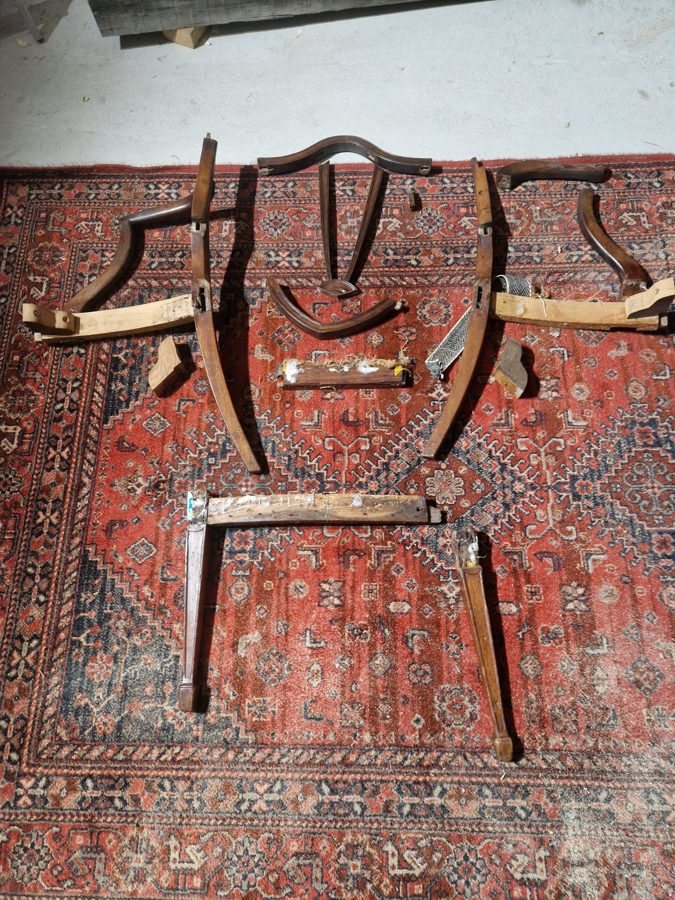
The upholstery was stripped and the frame fully dismantled. Every joint was cleaned of old glue, and the nails, staples and screws left behind by earlier repairs were removed.

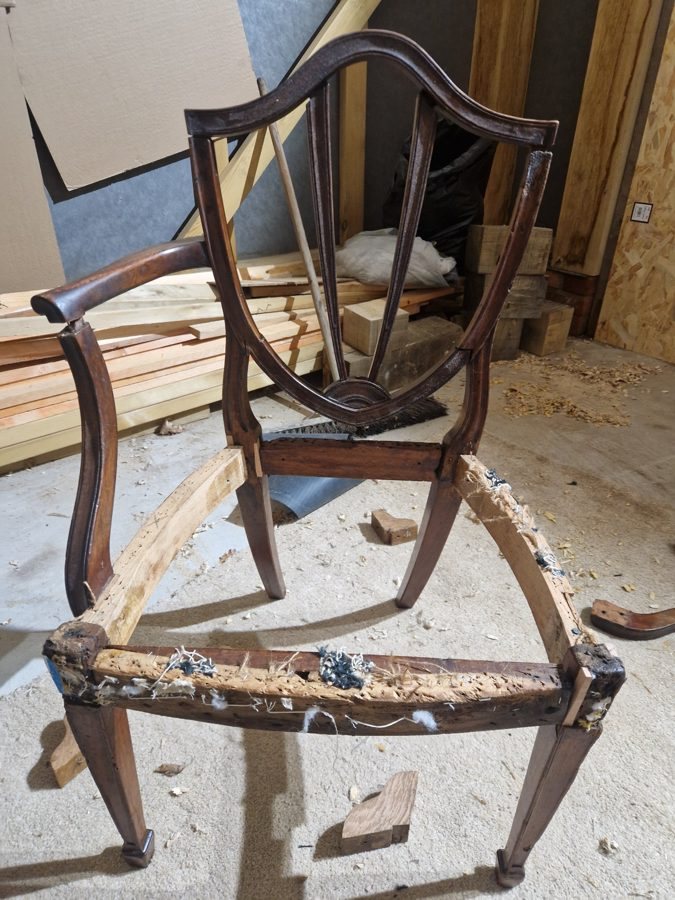
The chair frame fully dismantled and laid out
The frame fully dismantled

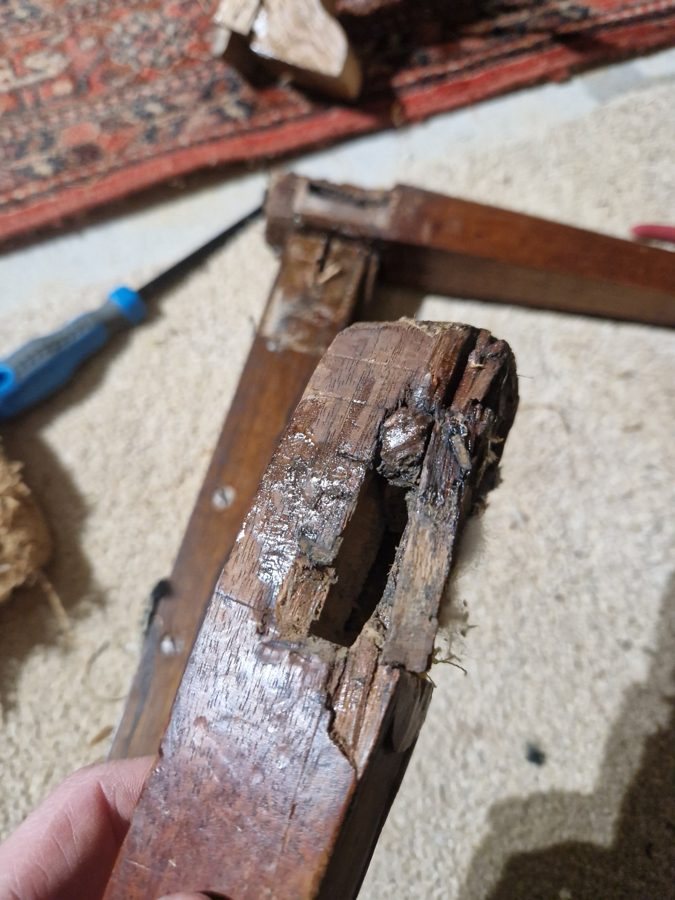
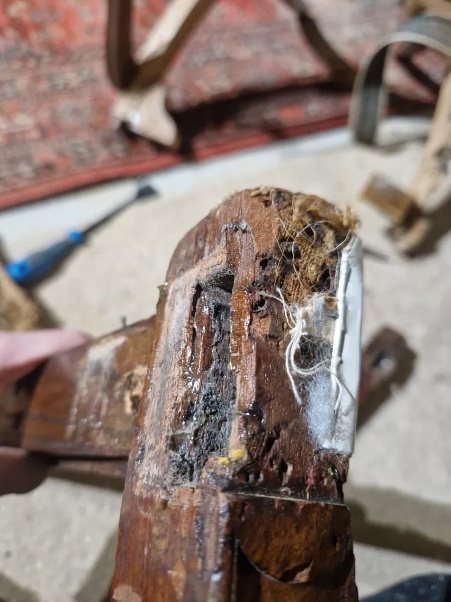
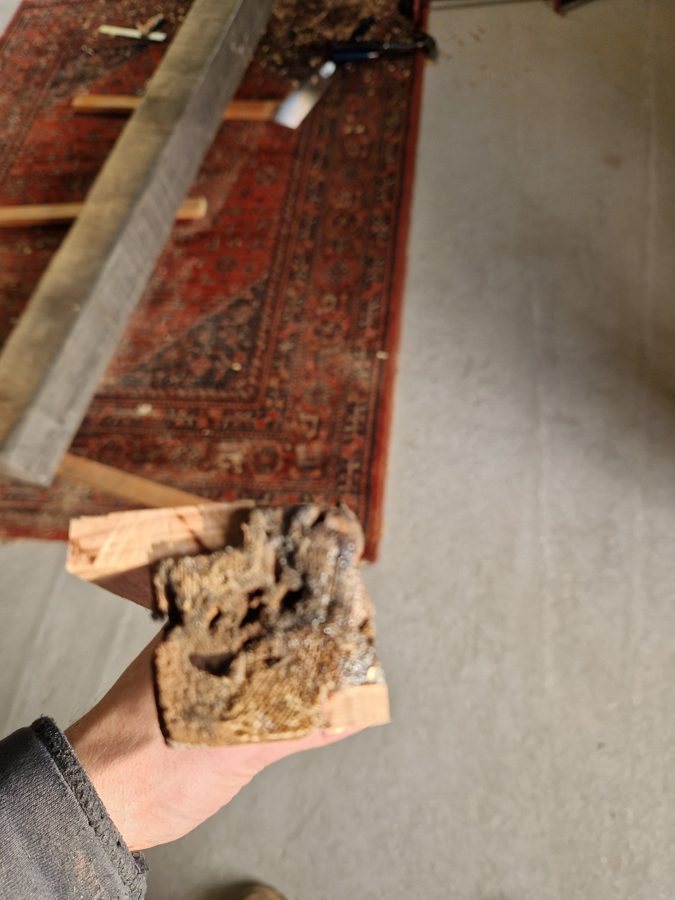
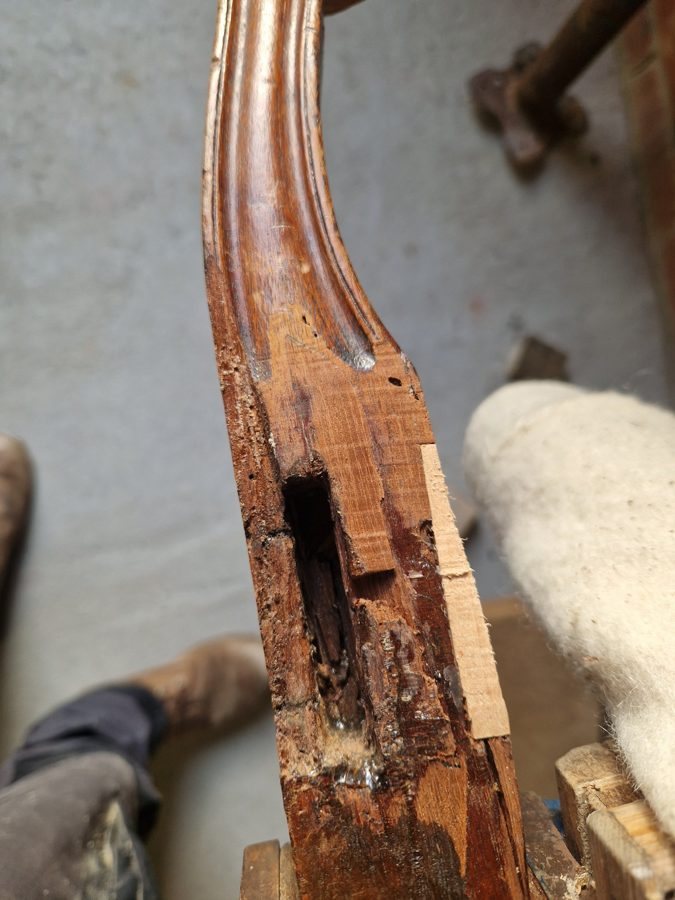
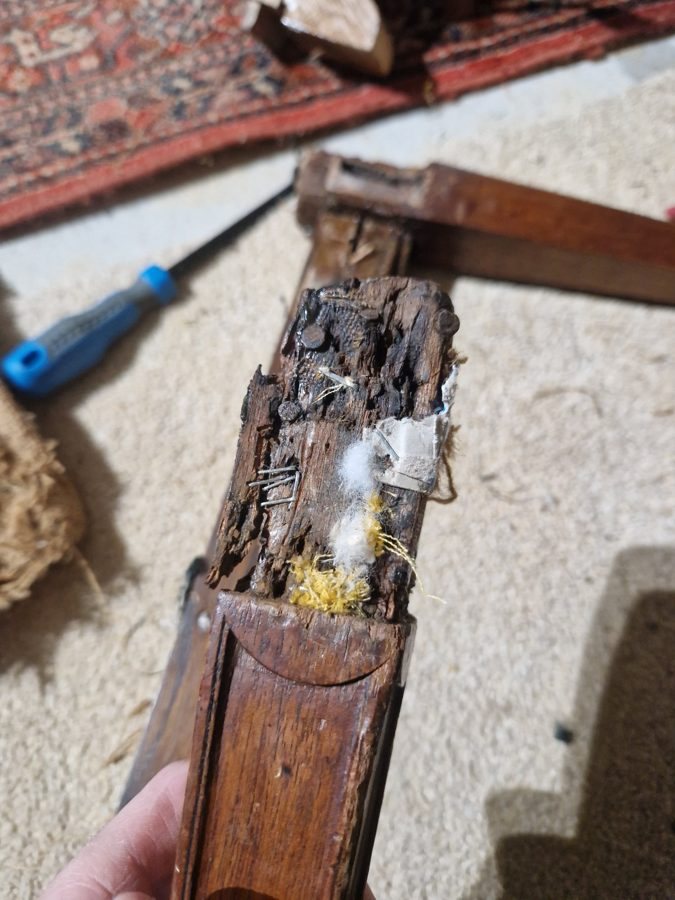
Once it was apart, the extent of the damage was clear: a rotted leg top full of old nails and staples, a failed mortise in the rear leg, and decayed corner blocks.

Rotted leg top full of old nails and staples
Rotted leg top with old nails and staples
A failed mortise in the rear leg
Failed mortise in the rear leg
Damage around a corner block
Corner block damage
A decayed corner block removed from the frame
A decayed corner block
03

Woodworm treatment and consolidation

Affected timber was treated for woodworm and consolidated with an epoxy consolidant, so as much of the original wood as possible could be kept.

04

Stripping the old finish

The old finish was stripped back to bare timber.

The frame stripped back to bare timber
The frame stripped back
05

The joinery

This was the bulk of the work. The side seat rails were repaired and spliced, new timber was spliced into the leg tops, and the rear-leg mortises were cut back and rebuilt. The arms and arm supports were also repaired.

A rear-leg mortise cut back ready to be rebuilt
A mortise cut back for rebuilding
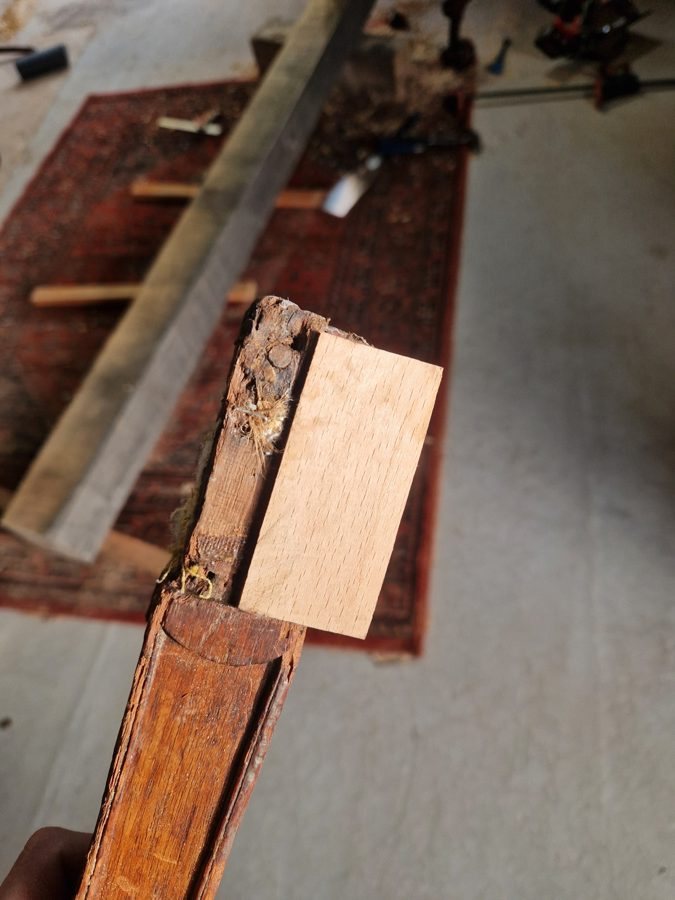
New timber spliced into a leg top
New timber spliced in
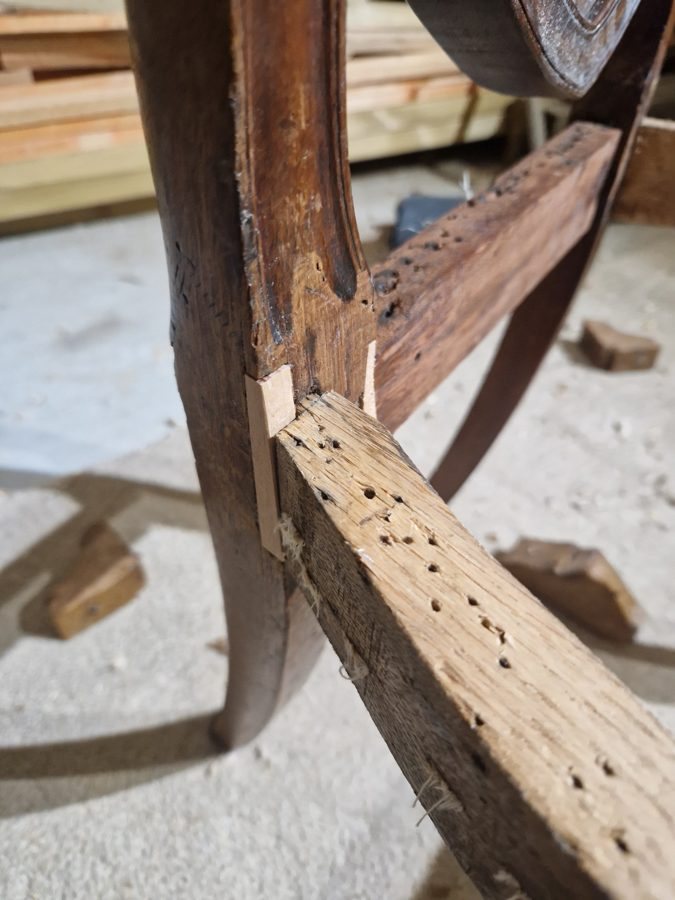
New joinery repair to a side rail where the old timber was damaged; the small holes are tack holes from the old upholstery
New joinery where the old timber was damaged. The small holes are tack holes from the old upholstery.
06

Reassembly

The frame was reassembled with hide glue, the traditional adhesive for furniture of this kind. It is strong, but it can be softened again with heat and moisture, so any future repairs can be made without damaging the chair.

07

Colour and French polish

The new timber was colour-matched and stained to sit with the original mahogany. The whole frame was then French polished, with shellac built up over several sessions and finished with wax.

08

Traditional upholstery

The stuffover seat was rebuilt the traditional way: webbing, hair, scrim and calico, finished with a gold velvet top cover.

09

Finished

10

The shield-back style

The shield-shaped back is most closely associated with George Hepplewhite, whose pattern book, The Cabinet-Maker and Upholsterer's Guide, was published by his widow Alice in 1788. Its designs were widely copied by makers across Britain, and shield-back chairs have been made in the same spirit ever since.

A carver is the armed chair of a dining set, traditionally placed at the head of the table.

Have a piece with a history?

We would be glad to hear about it.

Get in Touch More Projects